This book describes the source parameters, faulting mechanism, slip distribution, rupture pattern, and aftershock behaviour of the Nepal Earthquake of 2015.
Manage a Hazard or Threat Effectively and Prevent It from Becoming a DisasterWhen disaster strikes, it can present challenges to those caught off guard, leaving them to cope with the fallout.
Papers presented at the International Symposium of Integrated Approaches to Water Pollution Problems [SISIPPA 89], Laboratorio Nacional de Engenharia Civil, Lisbon, Portugal, June 1989.
Watershed Health Monitoring: Emerging Technologies is a concise reference that defines the concept of watershed health and explains that monitoring the health of watersheds is a critical precursor to adaptive resource management on a watershed basis.
In this Very Short Introduction, Prof Lord John Krebs provides a brief history of human food, from our remote ancestors 3 million years ago to the present day.
Featuring contributions from leading experts in the field, Climate Change and Managed Ecosystems examines the effects of global climate change on intensively constructed or reconstructed ecosystems, focusing on land use changes in relation to forestry, agriculture, and wetlands including peatlands.
Geographic Information Systems (GIS), Remote Sensing, and environmental modelling are increasingly being used to address land use and land use management issues although much of the development in these applications is based in specific case studies that are not readily accessible to a wide audience.
This book is a ready reckoner of recent information regarding the impact of leachate landfills, leachate treatment, and heavy metals on a single platform.
This book discusses integral groundwater management with scale flow issues and presents methods for defining, preventing, controlling, and mitigating negative environmental impacts related to groundwater.
This book examines some of the successes and failures of actual implementation of modern water policy options in the light of the principles and concepts which have emerged from the Rio Earth Summit, the Dublin Statement and other international consensus.
Groundwater is integral to many human and environmental systems but there are significant challenges in dealing with the impact of anthropogenic activities on groundwater systems.
Geospatial tools to Groundwater Resources explain the most recent methods in Geographic Information Systems (GIS) and geostatistics as they apply to groundwater through complete case studies that demonstrate actual remote sensing applications in this field.
Exploring the implementation of participatory, multistakeholder, and transdisciplinary ecosystem health research, Integrated Assessment of Health and Sustainability of Agroecosystems combines the latest theories in complexity and management with practical tools and approaches for sustainable rural development research.
The idea of renewable energy has found application since the time of the ancient Egyptians, Romans, Chinese, Indians and more recently in Medieval Europe where windmills and watermills were used.
The Lake and Pond Management Guidebook is the successor to the bestselling Lake Smarts: The First Lake Maintenance Handbook, the "e;bible"e; for small-scale lake and pond improvements, published by the Terrene Institute in 1993.
This book provides an in depth, yet understandable description of the ecological, socioeconomic, and other parts of the natural environment that may be affected.
This thought-provoking book takes readers on a captivating journey through the realms of green urbanism, urban regeneration, and urban design, development, and preservation, providing an exploration of innovative approaches to creating sustainable and thriving cities of the future.
Emerging concerns and contexts of geological thinking seek to bring out how energopolitical interventions into the geokinetic "e;unfolding"e; of the Earth assume new dimensions and directions, owing to the complex and evolving intersections between "e;folds"e; and "e;fluxes"e; of energy in the context of oceans.
This book gives detailed information about how soil, water and wastes can be managed to overcome the various global issues via possible nexus thinking.
With all the current efforts to use non-fossil sources as a starting point for future energy solutions, consideration is also being given to using microbial activities as a direct or indirect source of energy production.
With all the current efforts to use non-fossil sources as a starting point for future energy solutions, consideration is also being given to using microbial activities as a direct or indirect source of energy production.
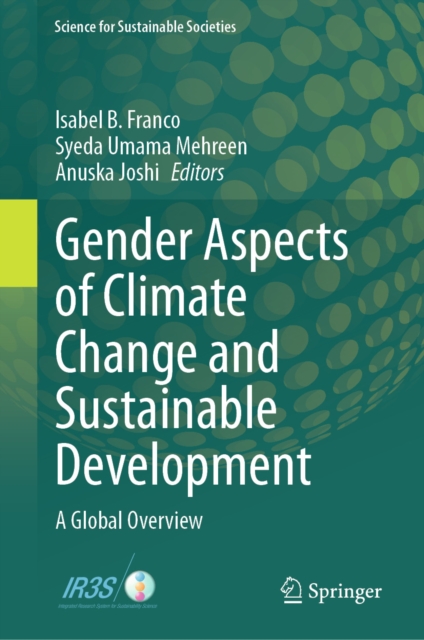
This book addresses how sustainability discourse and advocacy can translate to impactful policies especially when bridging the divide between sustainability, climate change and gender.