This book, for the first time, introduces comprehensively all main topics of lifeline earthquake engineering, including the structure analysis, network evaluation, and network design.
This book collects a series of review articles summarizing the outcomes of collaborative research projects on the 1999 Chi-Chi earthquake and the 2008 Wenchuan earthquake, two of the largest and most disastrous earthquakes in Asia in the last two decades.
This book focuses on mathematical theory and numerical simulation related to various areas of continuum mechanics, such as fracture mechanics, (visco)elasticity, optimal shape design, modelling of earthquakes and Tsunami waves, material structure, interface dynamics and complex systems.
The recent explosion of global and regional seismicity data in the world requires new methods of investigation of microseismicity and development of their modelling to understand the nature of whole earth mechanics.
This book presents in-depth coverage of laboratory experiments, theories, modeling techniques, and practices for the analysis and design of rock slopes in complex geological settings.
This book investigates individual companies' and industries' supply chain risk management approaches to identify risk drivers and verify effective risk-reduction measures and business continuity plans.
This book reviews the active faults around nuclear power plants in Japan and recommends an optimal method of nuclear power regulation controlled by the Nuclear Regulation Authority of Japan.
This book provides an overview of flood and drought in the Lower Mekong Basin, reviews the characteristics of flood and drought, and details structural and non-structural measures for flood and drought mitigation employed in the basin countries, as well as their flood and drought mitigation capacity.
This book presents review papers and research articles focusing on the 2008 Wenchuan earthquake in Sichuan, China, discussing cross-disciplinary and multiple thematic aspects of modern seismological, geophysical, geological and stochastic methodology and technology.
This is the first English language book to systematically introduce basic theories, methods and applications of disaster risk science from the angle of different subjects including disaster science, emergency technology and risk management.
This book provides valuable data on the outbreak, aggravation, treatment and prevention of respiratory diseases based on prior experiences of natural disasters such as earthquakes and tsunamis.
This book provides a unique blend of integrated disaster risk communication research conducted by authors with diverse backgrounds, including social psychology, sociology, civil engineering, informatics, and meteorology.
This book presents the outcomes of the workshop sponsored by the National Natural Sciences Foundation of China and the UK Newton Fund, British Council Researcher Links.
Through the lens of the Asian tsunami, this book problematizes concepts that are normally taken for granted in disaster discourse, including relief, recovery, reconstruction and rehabilitation.
This book presents water insecurity issues in urban areas while developing a water security index and explores the innovative approaches to water development and management with examples from Asian cities.
This book discusses the interconnected, complex and emerging risks in today's societies and deliberates on the various aspects of disaster risk reduction strategies especially through community resilience and responses.
The book contributes to understanding the pattern of strain release and the level of seismic hazard imposed by large-great earthquakes in the frontal fold-thrust belts of Kumaun and Garhwal regions of Uttarakhand.
This book shows the deformation characteristics of coseismic surface ruptures produced by the 2016 Kumamoto earthquake and the relationship between the Aso volcano and active faults.
This book scrutinizes the entire disaster trajectory history in the Republic of Korea: evolution, cross-over, and interconnection among natural, technological, and social disasters.
This book provides an analytical discussion of the status of disaster risk reduction and governance in an Indian context, drawing examples and lessons from the output of the national and regional level programs and projects and from other relevant experiences in the country.
Based on more than 12 years of systematic investigation on earthquake disaster simulation of civil infrastructures, this book covers the major research outcomes including a number of novel computational models, high performance computing methods and realistic visualization techniques for tall buildings and urban areas, with particular emphasize on collapse prevention and mitigation in extreme earthquakes, earthquake loss evaluation and seismic resilience.
This book is based on more than a decade of research the authors have pursued on the pseudo-seismic migration imaging of the transient electromagnetic method, and provides a series of important findings on the theory and applications in this area.
This study develops a methodology for rapidly obtaining approximate estimates of the economic consequences from numerous natural, man-made and technological threats.
This book is a comprehensive compilation of earthquake- and tsunami-related technologies and knowledge for the design and construction of nuclear facilities.
This book begins with the dynamic characteristics of the covering layerbedrock type slope, containing monitoring data of the seismic array, shaking table tests, numerical analysis and theoretical derivation.
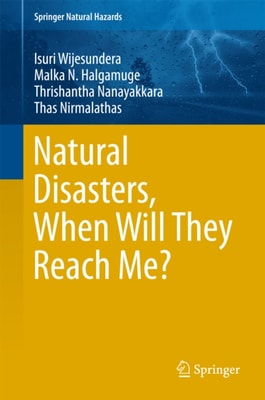
The expected time of impact, also known as the mean first passage time (MFPT) to reach failure, is a critical metric in the management of natural disasters.
Al entrar a los predios de la Reserva Biológica Encenillo (rbe), ubicada en la vereda Trinidad del municipio de Guasca (Cundinamarca), pocos se imaginan que allí operó una mina de piedra caliza por más de sesenta años.
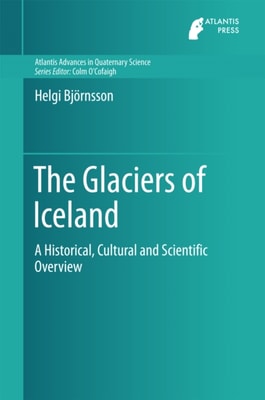
This book is the first comprehensive overview and evaluation of the origins, history and current size and condition of all of Iceland's major glaciers (including Vatnajokull, the largest in Europe) at the beginning of the twenty-first century.
This volume provides preliminary recommendations on ways to educate and develop experience-based expertise among disaster response, security and other professionals from diverse backgrounds, whose current and future interests relate to crisis management.
This volume is aimed at providing a comprehensive overview of the state of art of research related to geo-related hazards in the Caucasus and other orogenic regions; it is also devoted to shedding light on a broad array of geological phenomena as well as discussing innovative tools and strategies for geohazard assessment.