When a nation or region prepares for public health emergencies such as a pandemic influenza, a large-scale earthquake, or any major disaster scenario in which the health system may be destroyed or stressed to its limits, it is important to describe how standards of care would change due to shortages of critical resources.
This book presents a summary of the Workshop on Public Response to Alerts and Warnings on Mobile Devices: Current Knowledge and Research Gaps, held April 13 and 14, 2010, in Washington, D.
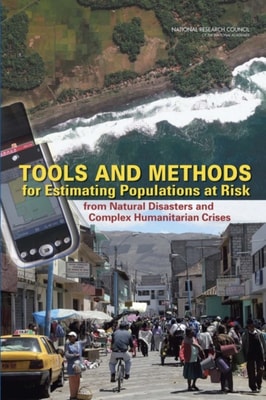
Natural disastersincluding hurricanes, earthquakes, volcanic eruptions, and floodscaused more than 220,000 deaths worldwide in the first half of 2010 and wreaked havoc on homes, buildings, and the environment.
Floodplain maps serve as the basis for determining whether homes or buildings require flood insurance under the National Flood Insurance Program run by the Federal Emergency Management Agency (FEMA).
This book presents a summary of the Workshop on Public Response to Alerts and Warnings on Mobile Devices: Current Knowledge and Research Gaps, held April 13 and 14, 2010, in Washington, D.
The National Spatial Data Infrastructure (NSDI) was envisioned as a way of enhancing the accessibility, communication, and use of geospatial data to support a wide variety of decisions at all levels of society.
Section 214 of the E-government Act of 2002 called on the Administrator of the Office of Electronic Government in the Office of Management and Budget, in consultation with the Federal Emergency Management Agency (FEMA), to "e;ensure that a study is conducted on using information technology to enhance crisis preparedness, response, and consequence management of natural and manmade disasters.
This book considers the effectiveness of insurance coverage for low-probability, high-consequence events such as natural disastersand how insurance programs can successfully be used with other policy tools, such as building codes and standards, to encourage effective loss reduction measures.
The National Research Council's Disasters Roundtable and the Institute of Medicine's Roundtable on Environmental Health Sciences, Research, and Medicine were established as mechanisms for bringing various stakeholders together to discuss timely issues in a neutral setting.
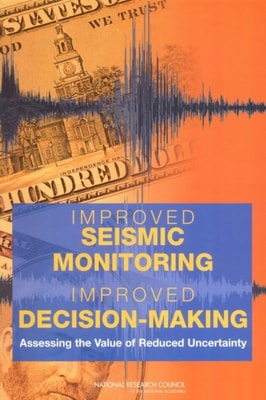
Improved Seismic MonitoringImproved Decision-Making, describes and assesses the varied economic benefits potentially derived from modernizing and expanding seismic monitoring activities in the United States.
Social science research conducted since the late 1970's has contributed greatly to society's ability to mitigate and adapt to natural, technological, and willful disasters.
Natural disastersincluding hurricanes, earthquakes, volcanic eruptions, and floodscaused more than 220,000 deaths worldwide in the first half of 2010 and wreaked havoc on homes, buildings, and the environment.
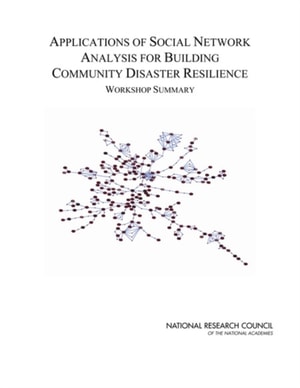
Social Network Analysis (SNA) is the identification of the relationships and attributes of members, key actors, and groups that social networks comprise.
Social Network Analysis (SNA) is the identification of the relationships and attributes of members, key actors, and groups that social networks comprise.
A groundbreaking account of the cataclysmic hurricane of 1938 and its devastating impact on New England’s inland forests The hurricane that pummeled the northeastern United States on September 21, 1938, was New England’s most damaging weather event ever.
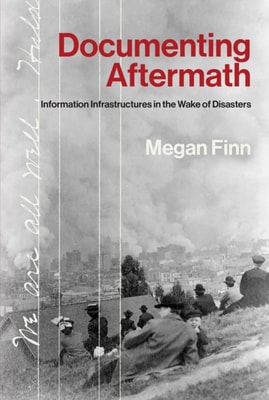
An examination of how changing public information infrastructures shaped people''s experience of earthquakes in Northern California in 1868, 1906, and 1989.
This book explores the multifaceted world of dark tourism and delves into the evolving perceptions and complex narratives surrounding tourism at sites of tragedy and historical significance.
Exploring the science behind climate change has never been easierCombining bold graphics with easy-to-understand text, Simply Climate Change is an essential introduction to the subject for those who are short of time but hungry for knowledge.
A geologist takes readers inside contemporary earthquake research to offer a new account of the Midwest's legendary New Madrid fault-"e;an exceptional read"e; (Choice).
Resilience and Urban Risk Management presents the latest progress made in designing resilient towns, and identifies leads to be explored for attaining the objective of systematically integrating risks into urban environments The aim of the book is to provide guidance in designing and planning future cities, and to create a new form of risk manageme
In The Big Muddy, the first long-term environmental history of the Mississippi, Christopher Morris offers a brilliant tour across five centuries as he illuminates the interaction between people and the landscape, from early hunter-gatherer bands to present-day industrial and post-industrial society.
Called the greatest storms on the planet, hurricanes of the North Atlantic Ocean often cause tremendous social and economic upheaval in the United States, Mexico, and the Caribbean.
Natural and man-made disasters--earthquakes, floods, volcanic eruptions, industrial crises, and many others--have claimed more than 3 million lives during the past 20 years, adversely affected the lives of at least 800 million people, and caused more than 50 billion dollars in property damages.
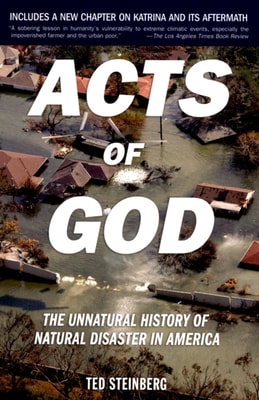
As the waters of the Mississippi River and Lake Pontchartrain began to pour into New Orleans, people began asking the big question--could any of this have been avoided?
As the waters of the Mississippi River and Lake Pontchartrain began to pour into New Orleans, people began asking the big question--could any of this have been avoided?