This book presents a comprehensive study of the environmental situation prevailing in the areas located near the Koshkar-Ata (Kazakhstan) tailings dump and the development of rehabilitation measures taking into account the area's soil and climatic features.
This book reviews principles, techniques and applications of metal, metal oxides, metal sulfides and metal-organic frameworks for removal and degradation of pollutants.
This edited volume sheds new light on the impact of rapid Land Use/Cover Changes (LU/CC) on greenhouse gases (GHG's) and aerosol emissions in South and Southeast Asia.
This brief critically reviews the structure and applications of polysaccharide based materials as a green and sustainable resource in water and water treatment operations.
As we know, rapid industrialization is a serious concern in the context of a healthy environment and public health due to the generation of huge volumes of toxic wastewater.
Water Quality in the Third Pole: The Roles of Climate Change and Human Activities offers in-depth coverage of water quality issues (natural and human-related), the monitoring of contaminants, and the remediation of water contamination.
Life Cycle Sustainability Assessment for Decision-Making: Methodologies and Case Studies gives readers a comprehensive introduction to life cycle sustainability assessment (LCSA) methodology for sustainability measurement of industrial systems, proposing an efficiency methodology for stakeholders and decision-makers.
This book is the result of remarkable contribution from the experts of interdisciplinary fields of Science with comprehensive, in-depth and up-to-date research and reviews.
The book presents the state-of-the-art document describing the knowledge, data, cost-effectiveness and technologies employed to manage the waste in several countries such as Morocco, Tunisia, Egypt, Jordon, Syria, Palestine, Lebanon, and Yemen.
This book covers the latest in recycling and reuse research focused toward greater sustainability and includes chapters authored by the world's leading thinkers and practitioners in the field.
This book analyses and quantifies how and where energy and water are consumed by the ceramic sanitary-ware industry and provides solutions as to how to reduce this.
This book reviews advances in the toxicity of nanomaterials, with a focus on nanosensors and nanotoxicity testing, biomagnification, biotransformation, nanosafety, genotoxicity, human health and remediation.
This book aims to define the concept of Nature Based Solutions (NBS) by using case studies from members of the European Innovation Partnership (EIP) Water Action Group - NatureWat.
Climate change policy and the reduction of greenhouse gas emissions are currently discussed at all scales, ranging from the Kyoto Protocol to the increasingly frequent advertisement of 'carbon neutrality' in consumer products.
This book presents a novel picture in current advances in research of theoretical and practical frameworks of environmental problems and solutions taken from the latest empirical research findings.
This third volume on environmental nanotechnology includes chapters dealing with topics such nanoremediation, waste water purification, nanosensors, nanomedicine, and nanofiltration.
This book presents an intensive study on the biogeochemical cycle of mercury in a river-reservoir system in Wujiang River Basin, the upper branch of the Yangtze River.
This book is dedicated to the atmosphere of our planet, and discusses historical and contemporary achievements in meteorological science and technology for the betterment of society.
This book introduces readers to the fundamentals of simulating and analyzing built and natural environments using the Computational Fluid Dynamics (CFD) method.
This book discusses the bioremediation of both solid and liquid waste, including regional solutions for India as well as globally relevant applications.
This book focuses on value addition to various waste streams, which include industrial waste, agricultural waste, and municipal solid and liquid waste.
This book addresses the threats that hamper the achievement of sustainable soil management: soil erosion by water and wind, soil organic carbon loss, nutrient imbalance, salinization, contamination, acidification, loss of soil biodiversity, surface sealing, compaction and water logging.
This book covers topics related to bioenergy production from various biomass sources, including agricultural residues and waste biomass from both domestic and industrial use.
In recent decades, scientific insight into the chemistry of water has increased enormously, leading to the development of advanced wastewater and water purification technologies.
Based on the water footprint (WF) concept, this book reviews WF-based water stress evaluation methods at the city, provincial and river basin levels respectively.
The 3-volume set highlights the behavior of radionuclides in the environment and focusing on the development of related fields of study, including microbiology and nanoscience.
Whether on personal health, politics, or climate change, we are constantly bombarded with more numerous 'breaking news' articles than we have time for.
In the context of climate change and fossil fuel pollution, solar energy appears as a cheap and sustainable fuel for many environmental applications, yet the efficiency of techniques has to be improved.
This book presents the latest developments and recent research trends in the field of plankton, highlighting the potential ecological and biotechnological applications.
This book provides an essential overview of ecotechnologies (also known as green infrastructure or nature-based solutions) which are considered to be relatively resilient to variations in stormwater and wastewater inflow.
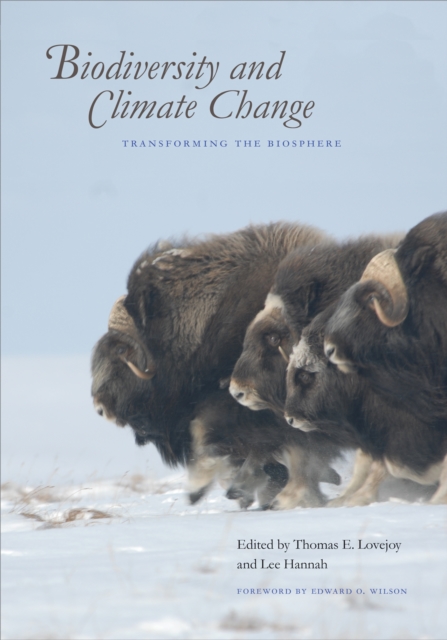
An essential, up-to-date look at the critical interactions between biological diversity and climate change that will serve as an immediate call to action The physical and biological impacts of climate change are dramatic and broad'ranging.
Adaptation to Climate Change: ASEAN and Comparative Experiences presents a dynamic and comprehensive collection of works from legal scholars around the world that delves into a relatively new frontier on legal aspects of climate change adaptation with focus on the ASEAN region, both at the regional level as well as at the national level in some ASEAN countries - such as Malaysia, Philippines, and Thailand.