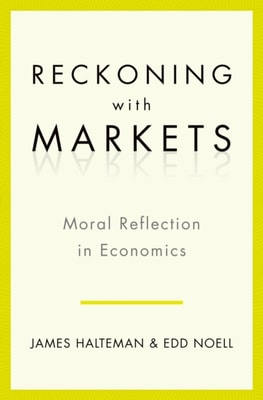
This book provides an introduction to the relationship between economics and ethics, explaining why ethics enters economics, how ethics affects individual economic behaviour and the interactions of individuals, and how ethics is important in evaluating the performance of economies and of economic policies.
Against the backdrop of globalization and mounting evidence of the corporate subversion of the Universal Declaration of Human Rights paradigm, Anna Grear interrogates the complex tendencies within law that are implicated in the emergence of 'corporate humanity'.
MacIntyre's narrative based virtue ethics have for the first time in this book been applied to an organization undergoing change driven by market forces and a society that wants more for less with scant regard for the means by which that is achieved.
Recent events suggest liberal capitalism harbours two dangerous seeds of self-destruction; growing inequality and a tendency for markets to spiral out of control.
Organizational values are a hot topic as private and public organizations are not only evaluated according to their products and profits, but also according to the circumstances of the product - labour conditions, materials, risks, human rights and social responsibility.
For all of the technical explanations for meltdown in the financial markets during the banking crisis, the most readily accepted and almost universal explanation is the single word 'greed'.
While 'union organising' has developed over time and in many different environments, it has become apparent that a number of key problems have developed.
The four main tenets of life are explored in this unique new book that examines the issues that touch each executive, or for that matter, people in general.
By analysing the rationales for sustainability strategies, this book addresses a timely question for managers, academics and MBAs: 'when does it pay to be green?
By looking at the three most recent economic crises, the S&L crisis, the dot-com bubble, and the recent subprime mortgage disaster, the author explains why and how corporate managers led their organizations toward disasters in the long-run.
Blending the deep traditions of Jewish humanism with modern philosophical expressions, this book argues that Jewish values are not fixed propositions embedded in written form that can be easily handed off from one generation to the next.
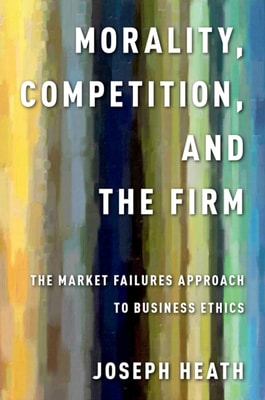
In this collection of provocative essays, Joseph Heath provides a compelling new framework for thinking about the moral obligations that private actors in a market economy have toward each other and to society.
Japanese philosophy is now a flourishing field with thriving societies, journals, and conferences dedicated to it around the world, made possible by an ever-increasing library of translations, books, and articles.
Decisions made by the food, tobacco, alcohol, pharmaceutical, gun, and automobile industries have a greater impact on today's health than the decisions of scientists and policymakers.
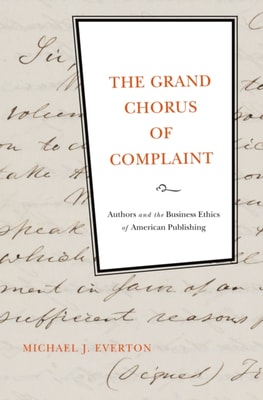
An engaging study of authorship, ethics, and book publishing in 18th- and 19th-century America, The Grand Chorus of Complaint considers the uneasy relationship between art and commerce with readings of correspondence, newspaper articles, and works by Thomas Paine, Herman Melville, and Fanny Fern.
"e;Doubt is our product,"e; a cigarette executive once observed, "e;since it is the best means of competing with the 'body of fact' that exists in the minds of the general public.
As commonly understood, professional ethics consists of shared duties and episodic dilemmas--the responsibilities incumbent on all members of specific professions joined together with the dilemmas that arise when these responsibilities conflict.
An engaging study of authorship, ethics, and book publishing in 18th- and 19th-century America, The Grand Chorus of Complaint considers the uneasy relationship between art and commerce with readings of correspondence, newspaper articles, and works by Thomas Paine, Herman Melville, and Fanny Fern.
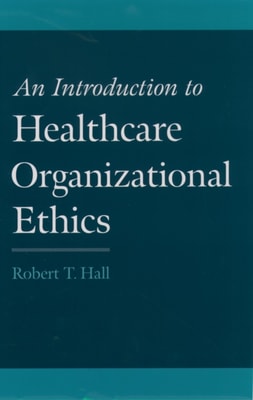
This is a lucid, readable discussion of ethical questions in health care as they arise on the business or organizational level: an effort to spell out an ethical perspective for healthcare organizations.
In development circles, there is now widespread consensus that social entrepreneurs represent a far better mechanism to respond to needs than we have ever had before--a decentralized and emergent force that remains our best hope for solutions that can keep pace with our problems and create a more peaceful world.
In development circles, there is now widespread consensus that social entrepreneurs represent a far better mechanism to respond to needs than we have ever had before--a decentralized and emergent force that remains our best hope for solutions that can keep pace with our problems and create a more peaceful world.
"e;Doubt is our product,"e; a cigarette executive once observed, "e;since it is the best means of competing with the 'body of fact' that exists in the minds of the general public.
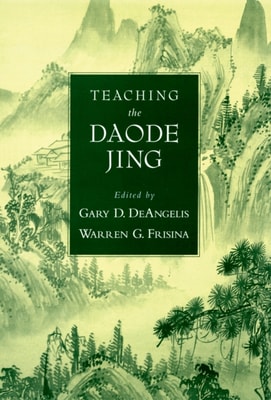
The Daode Jing, a highly enigmatic work rooted in ancient Chinese cosmology, ontology, metaphysics, and moral thinking, is regularly offered to college and high-school students in religion, philosophy, history, literature, Asian studies, and humanities courses.