This book explores how business organizations incorporate socially responsible approaches into their diverse functional strategies, decisions, and practices.
Departing from the traditional approach of surveying current and future trends and developments, this unique Handbook brings phenomena, theories, and concepts from multiple disciplines together to advance entrepreneurship.
This textbook examines the extent to which moral values play a role as productive forces for the economy, and explores the effect of ethical and unethical Behavior on the economy.
Bringing together conceptual, theoretical and evidence-based contributions from a diverse set of experts, this book provides a comprehensive analysis of energy in Africa, from a management perspective.
This book considers ethical issues arising in professional and business settings and the role of individuals making decisions and coping with moral dilemmas.
Highlighting the motivations of B Corp entrepreneurs in Chile, this book explores the phenomenon behind for-profit organisations that are committed to social and ecological sustainability as well as human welfare.
This book features articles by more than twenty experienced teachers of ethics who are committed to the idea that ethics can and should be taught virtually anywhere in the education curriculum.
The world of business is constantly evolving and management education institutions will likely face a number of challenges in keeping up with these changes.
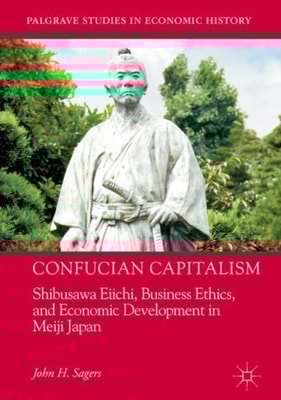
With the life story of Shibusawa Eiichi (1840-1931), one of the most important financiers and industrialists in modern Japanese history, as its narrative focal point, this book explores the challenges of importing modern business enterprises to Japan, where the pursuit of profit was considered beneath the dignity of the samurai elite.
Investigating how international market actors create market morality on a global level, this book reflects on the unresolved questions and debates regarding the relationship between business and society.
Reflecting increasing investment in entrepreneurship in the United Arab Emirates (UAE), this new book offers extensive coverage of the factors that enable Emiratis to start and grow a business.
This book brings together a variety of international, cross-cultural case studies of management education programmes and discusses the results in light of the present higher social expectations on managerial behaviour.
Addressing the need for further theorisation and operationalisation of social entrepreneurship in India, this edited collection provides a critical and deeper understanding of the social entrepreneurial ecosystem.
This edited volume comprises ideas, visions, strategies, and dreams of entrepreneurs, managers, scientists and political experts who share their best practice experience relating to the joint goal of a more sustainable, humanistic, and responsible fashion industry.
This volume celebrates the work of Laszlo Zsolnai, a leading researcher and scholar in the field of the ethical and spiritual aspects of economic life, who has made significant contributions to the connection between ethics, spirituality, aesthetics and economic theory.
This book outlines the various elements involved in ethical decision-making for nonprofit leaders, and whose rights to prioritize when facing complex situations.
This book analyzes how and under what conditions collaborating corporations can effectively manage relationships with their suppliers in order to decrease the risk of suppliers' noncompliance with codes of conduct and standards.
This book explores how the interrelated concepts of responsible citizenship, corporate social responsibility (CSR) and sustainability can be interpreted, researched and taught.
This international Handbook provides a comprehensive overview of key topics, debates and issues within the now well-established field of Knowledge Management (KM).
This handbook is based on the premise that in order for sustainability to be sustainable, a profound psychological transformation has to take place at the individual and collective level.
This book presents conscious business as a constantly expanding and powerful approach to reinvent and shape organizations in a human and beneficial manner.
This book addresses the increasing overlap between Corporate Social Responsibility (CSR) and law with a particular focus on company law and corporate governance.