This book makes an important contribution to the recent evolution in Information and Communication Technologies (ICT) that are human-centred and socially desirable, environmentally sustainable, and ethically acceptable.
This book utilizes critical discourse analysis to illuminate the ways in which one of the largest agribusinesses in operation, Tyson Foods, disguises their actions whilst simultaneously presenting the image of a benign, good corporate citizen.
This book shows how the Bhagavad Gita (part of the great Indian epic - the Mahabharata) can be approached as a powerful tool for change management and as a catalyst for organizational transformation.
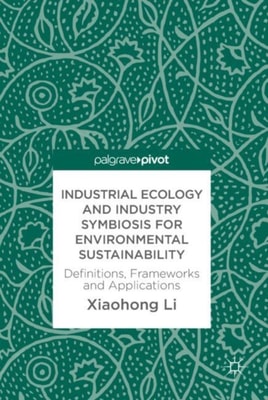
This book opens up a critical dimension to the interdisciplinary field of Industrial Ecology (IE) and one of its four areas - Industrial Symbiosis (IS).
This book advocates a holistic reform of the current monetary and financial system dealing with the issues of money creation, central banks, loans, stock markets, tax justice, pension security and the international monetary system - "e;Bretton Woods II"e;.
This volume is the first to combine textual analysis of food media texts with interviews with media production staff, reality TV contestants, celebrity chefs, and food producers and retailers across the artisan-conventional spectrum.
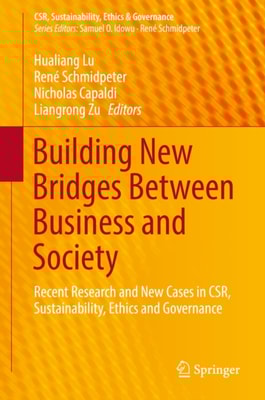
This book provides a comprehensive understanding of the linkages between business and society by addressing key issues in corporate social responsibility (CSR), sustainability, ethics and governance.
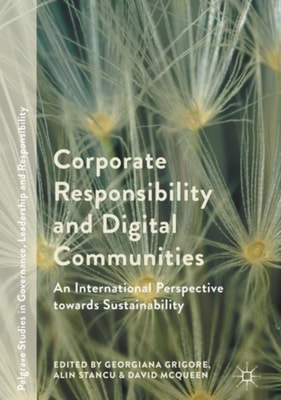
This book explores conceptualizations of CSR and sustainability in the digital economy, focusing upon points of intersection between CSR and online communities.
Questioning why research centers so often fail to commercialize discoveries, this book explores the concept of linked innovation, which promises to drive economic sustainability while preserving academic quality at research centers.
This book examines the changing reciprocal relationships between corporations and their various social obligations over the very long term - from the seventeenth to the twentieth century.
This book argues that separation consciousness has kept a collective demand for corporate social responsibility at bay, even providing justification for business to neglect society.
This book presents and analyses exemplary cases of progressive business, understood as ecologically sustainable, future-respecting and pro-social enterprise.
This book provides transdisciplinary analyses of the automotive plastics production and recycling system, including prognoses, scenarios and solutions for corporate sustainability management.
This edited collection provides a structured and in-depth analysis of the current use of multiple approaches beyond quotas for resolving the pressing issue of gender inequality, and the lack of female representation on corporate boards.
This book disseminates the current trends among innovative and high-quality research regarding the implementation of conceptual frameworks, strategies, techniques, methodologies, informatics platforms and models for developing advanced industrial tools and techniques and their application in different fields.
This book offers a comprehensive critique of the Kantian principle that 'objects conform to our cognition' from the perspective of a Copernican world-view which stands diametrically opposed to Kant's because founded on the principle that our cognition conforms to objects.
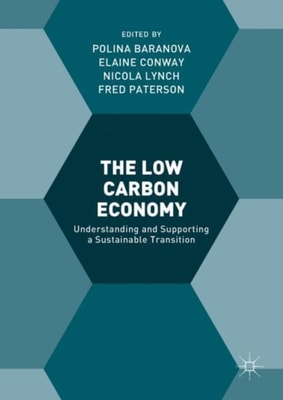
This edited collection explores the challenges and opportunities presented by the transition to a low carbon economy, and outlines the different approaches taken to ensure the sustainability of such a transition.
This book contributes to the discussions on the role of spirituality in organizing and leading, taking a philosophically and theologically rigorous perspective.
This book aims to bridge the gap between general CEO research, which is traditionally focused on positive aspects of leadership, and lesser understood research into CEO misconduct and crime.
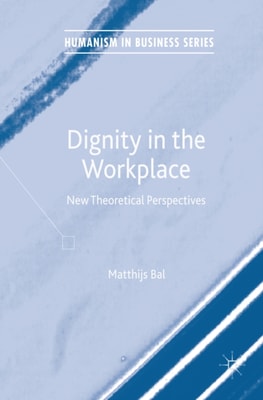
Introducing a theory of workplace dignity into the field of management studies, this innovative new book presents an alternative paradigm based on principles of human dignity which is integrated into a theoretical approach to the topic.
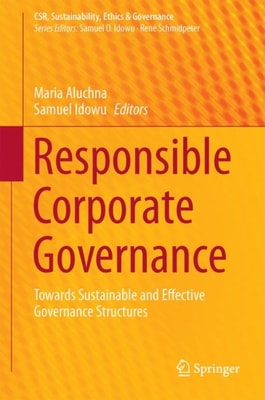
This book discusses the tasks and functions of corporate governance in the light of current challenges and the dynamics that arise from a broader approach to company management and the integration of corporate governance with corporate social responsibility (CSR) and sustainability.
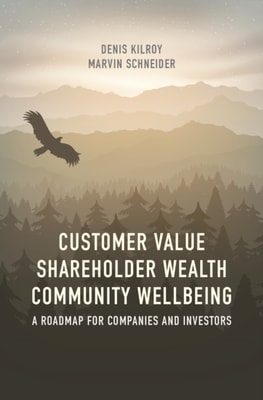
This book provides a roadmap for leaders of listed companies to follow in order to build enduring institutions that create value for customers and wealth for shareholders on an ongoing basis, in ways that also enhance the wellbeing of all other legitimate stakeholders - including the wider community and the environment.
This book approaches the question of the relation between financial crises and earnings management from two philosophical perspectives: positivism and critical realism.
This book is a comprehensive, road-tested framework for managing Corporate Social Responsibility (CSR) based on years of award winning performance in senior management roles in a multinational business.
This book explores national and transnational companies' Corporate Social Responsibility (CSR) activities in times and settings in which they are confronted with economic and social challenges and analyzes these situations, ranging from the financial crisis to fourth generation sustainability.
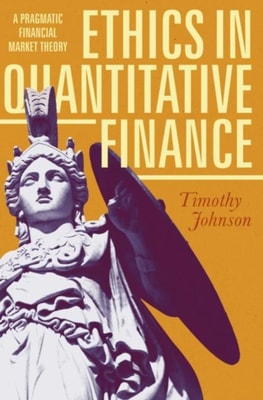
This book challenges amoral views of finance as the leading realm in which mammon - wealth and profit - is pursued with little overt regard for morality.