This book constitutes the proceedings of the 17th International Conference on Perspectives in Business Informatics Research, BIR 2018, held in Stockholm, Sweden, in September 2018.
This book examines the ways in which cultural and creative industries can drive entrepreneurship, innovation, sustainability and overall regional development.
Compiling best practices and original research, this book examines the factors that influence the sustainability of creativity and innovation in organisations and proposes a toolkit to assess gaps within existing strategy.
The second volume of this edited collection offers a number of contributions from leading scholars investigating Blockchain and its implications for business.
The purpose of this book is to provide public health, disability, and rehabilitation professionals and practitioners evidence-based science with respect to health disparities faced by people with disabilities, especially people with mobility limitations; alternative methods of rehabilitation and exercise science for this population; assistive device technology; and, improved access to health care, employment, and social participation.
This book provides essential insights into how to rapidly and safely develop new sustainable products, no matter whether it is in the private sector, the public sector or the non-profit sector, and regardless of the specific national or business culture.
This book offers a dynamic perspective on regional entrepreneurship, knowledge, innovation and economic growth, with a particular focus on the role that history and culture play.
Across several industries, we are observing a paradigm shift from traditional, firm-centric and top-down value creation to more open and collaborative approaches, also referred to as bottom-up economics.
This book offers a dynamic perspective on regional entrepreneurship, knowledge, innovation and economic growth, with a particular focus on the role that history and culture play.
This book aims at clarifying the role of materiality, spaces, digitality and embodiment in institutional dynamics from the perspective of Management & Organization Studies.
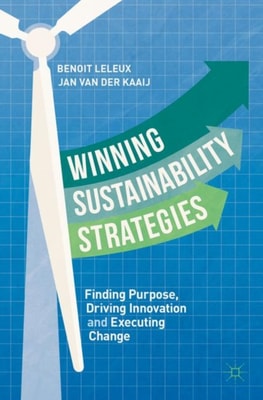
Despite recent optimism and global initiatives, the implementation of corporate sustainability programs has been slow at best, with less than a third of global companies having developed a clear business case for their approach to sustainability.
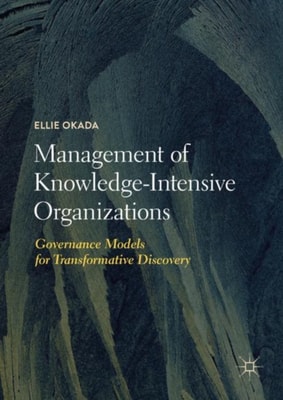
This book focuses on enhancing management theories of Knowledge-Intensive Organizations (KIOs), analyzing academic and research institutions and multilateral agencies such as the World Health Organization (WHO).
Extensive research conducted by the Hasso Plattner Design Thinking Research Program at Stanford University in Palo Alto, California, USA, and the Hasso Plattner Institute in Potsdam, Germany, has yielded valuable insights on why and how design thinking works.
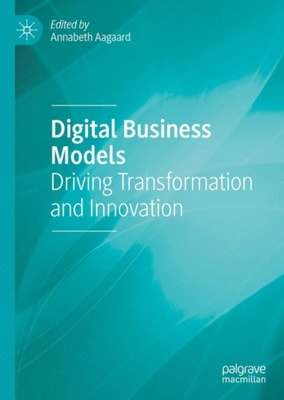
This innovative edited collection explores digital business models (DBMs) in theory and practice to contribute to knowledge of how companies, organizations and networks can design, implement and apply DBMs.
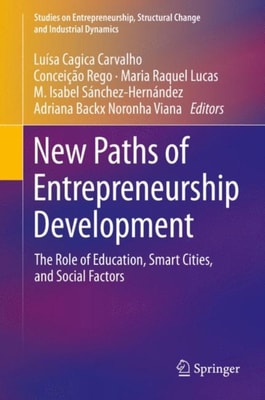
Structural change is an evolutionary process that is often cumulative within territories, improving the quality of life and achieving higher development levels.
The recent data controversy with Facebook highlights that the tech industry as a whole was utterly unprepared for the backlash it faced as a result of its business model of selling user data to third parties.
These proceedings include a collection of papers on a range of topics presented at the 12th World Congress on Engineering Asset Management (WCEAM) in Brisbane, 2 - 4 August 2017.
This book introduces readers to the core principles and methodologies of product development, and highlights the interactions between engineering design and industrial design.
This book presents a rich compilation of real-world cases on digitalization, the goal being to share first-hand insights from respected organizations and to make digitalization more tangible.
This book examines how digital technologies enable collaboration as a way for individuals, teams and businesses to connect, create value, and harness new opportunities.
This book explores the concept of reverse entrepreneurship, providing real-life examples of innovative start-ups and ventures hoping to internationalize.
This book provides essential insights into how to rapidly and safely develop new sustainable products, no matter whether it is in the private sector, the public sector or the non-profit sector, and regardless of the specific national or business culture.