Information Security Policies, Procedures, and Standards: A Practitioner's Reference gives you a blueprint on how to develop effective information security policies and procedures.
Risk Management for Nonprofit Organizations is a straightforward, yet comprehensive guide that can be used to easily communicate effective risk management ideas among the various stakeholders who comprise a nonprofit organization.
This new edition of The SAGE Handbook of International Corporate and Public Affairs builds on the success of the first edition (2005) by comprehensively updating and enhancing the material and structure, setting a new standard for the practitioner and student of the global public affairs discipline.
This new edition of The SAGE Handbook of International Corporate and Public Affairs builds on the success of the first edition (2005) by comprehensively updating and enhancing the material and structure, setting a new standard for the practitioner and student of the global public affairs discipline.
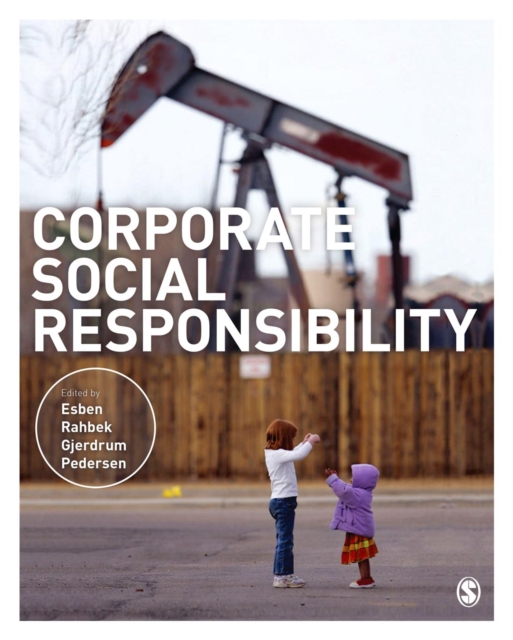
*Shortlisted in the Management and Leadership Textbook Category at CMI Management Book of the Year Awards 2016* Why has CSR become part of the mainstream business and academic agenda in the 21st century?
*Shortlisted in the Management and Leadership Textbook Category at CMI Management Book of the Year Awards 2016* Why has CSR become part of the mainstream business and academic agenda in the 21st century?
In equal parts a fascinating glimpse behind the scenes of some of our best-loved institutions and a guide on how governing boards should work - HRDirectorThroughout the world, thousands of people give their time, skill and energy to serving on a board.
In equal parts a fascinating glimpse behind the scenes of some of our best-loved institutions and a guide on how governing boards should work - HRDirectorThroughout the world, thousands of people give their time, skill and energy to serving on a board.
The Ethical Leader showcases the necessity and practicality of using an ethics-based business model for competitive advantage and long-term organizational success.
The Ethical Leader showcases the necessity and practicality of using an ethics-based business model for competitive advantage and long-term organizational success.
This book provides an analysis of the impact of the climate crisis on corporate law and theory in the coming decades as the world seeks to meet the target of net zero carbon emissions by 2050.
The workplace landscape has evolved dramatically over the past few decades, and with this transformation comes an ever-present threat: cybersecurity risks.
In the era of globalization and ease of international connectivity and business interactions, professionals from all over the world benefit from having a well-rounded view of business culture and organizational practice at the regional level.
Despite a clear and compelling need for an intelligence-led approach to security, operational, and reputational risks, the subject of corporate security intelligence remains poorly understood.
This updated and completely revised edition of a bestseller extends the concepts and considerations of modern project management into the realm of project management oversight, control, and support.
Corporate governance has become increasingly central to corporate reporting and management as businesses face growing pressure to address their responsibilities in sustainability and corporate accountability.
Corporate Governance in a Nordic Setting focuses on the historical, cultural and political development of the Swedish corporate governance code and model.
In the boardroom, executive and non-executive directors must frequently make decisions balancing competing interests and conflicting moral norms, with their actions impacting employees, customers, shareholders, and society at large.
Existing research on corporate social responsibility (CSR) is written from a largely Westernized viewpoint, but what is the relationship between CSR, organizational - and wider - culture on the sustainability of businesses in the Arab region?
Providing a much-needed critique of Corporate Social Responsibility (CSR) practice and scholarship, this book seeks to redress CSR advocacy, from a political and critical perspective.
Providing a much-needed critique of Corporate Social Responsibility (CSR) practice and scholarship, this book seeks to redress CSR advocacy, from a political and critical perspective.
This book focuses on the legitimacy of corporate power wielded by corporate groups, integrating legal doctrine, economic analysis, and theoretical approaches.
This book provides an analysis of the impact of the climate crisis on corporate law and theory in the coming decades as the world seeks to meet the target of net zero carbon emissions by 2050.
Corporate Boards: Managers of Risk, Sources of Risk deals with the highly timely topic of the Corporate Board and its relationship to risk, both in terms of its management and its creation.
The modern hospital represents a complex community in which life and death decisions are made on the front lines of patient care, and difficult operational and strategic initiatives are developed in the offices of institutional leaders.
The modern hospital represents a complex community in which life and death decisions are made on the front lines of patient care, and difficult operational and strategic initiatives are developed in the offices of institutional leaders.
It is now widely recognised that rising inequality of income and wealth on the one hand and a slowdown in the rate of economic growth on the other are two of the most important challenges faced today by the global economy as well as by most of the developing economies.