First published in 1997, this volume examines the implications of Japanese corporate practices post-World War II for the experiences of capital markets in modern developing economies based on theoretical and empirical analyses of Bangladeshi and Japanese markets.
In her book, Dr Ulpiana Kocollari presents a unique contribution to the debate on Corporate Social Responsibility and Sustainability by clearly expressing how the configuration of a firm's social dimension can help identify inclusive corporate governance models, define innovative management processes and reshape performance measurement systems for the evaluation and assessment of sustainable economic, social and environmental results.
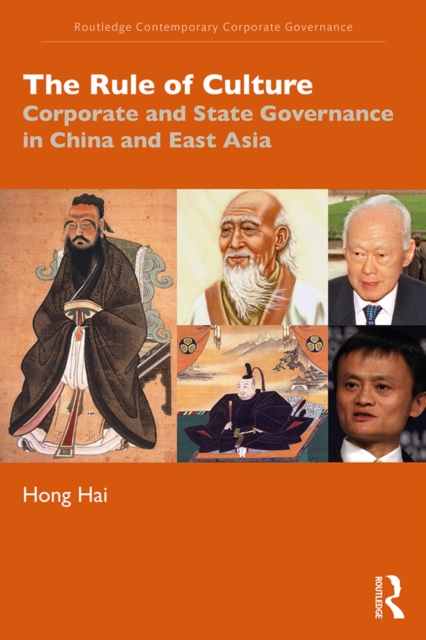
When China's economic reforms were beginning, there was an expectation in the west that China's financial markets would be opened to western banks and that China's banks would be reformed along western lines.
When China's economic reforms were beginning, there was an expectation in the west that China's financial markets would be opened to western banks and that China's banks would be reformed along western lines.
In her book, Dr Ulpiana Kocollari presents a unique contribution to the debate on Corporate Social Responsibility and Sustainability by clearly expressing how the configuration of a firm's social dimension can help identify inclusive corporate governance models, define innovative management processes and reshape performance measurement systems for the evaluation and assessment of sustainable economic, social and environmental results.
The growth of global corporations has led to the development of new business strategies whose complexity and configuration rest on corporate networks; corporate cross-culture and intangible corporate and product assets.
The growth of global corporations has led to the development of new business strategies whose complexity and configuration rest on corporate networks; corporate cross-culture and intangible corporate and product assets.
The Game Changer powerfully demonstrates how some organisations in business and sport have done more than raise their performance; they have also changed the rules of the game or the game itself within their industry.
First published in 2004, this volume recognises that, as society changes, so must its organisations; as organisations change, so must their management competencies.
First published in 2004, this volume recognises that, as society changes, so must its organisations; as organisations change, so must their management competencies.
This book focuses on efforts at formulating and implementing policies designed to make multinational enterprises accountable for their activities and to influence their behavior in the interest of the public good.
This book focuses on efforts at formulating and implementing policies designed to make multinational enterprises accountable for their activities and to influence their behavior in the interest of the public good.
This shortform book presents key peer-reviewed research selected by expert series editors and contextualised by new analysis from each author on government intervention and unexpected consequences in industrial history.
Due to the recent global financial crises, academic business schools have come in for much criticism, having, in the eyes of the public, failed in their responsibility to society by teaching future managers only how to increase their personal gain without any consideration as to their actions' social and cultural consequences.
Due to the recent global financial crises, academic business schools have come in for much criticism, having, in the eyes of the public, failed in their responsibility to society by teaching future managers only how to increase their personal gain without any consideration as to their actions' social and cultural consequences.
The Institutional Theory of the Firm examines recent and previous organization theory literature to advocate what Evans (1995) refers to as the "e;embedded autonomy"e; of the firm, as well as its role in being simultaneously anchored in, for example, corporate legislation and regulatory practices on the national, regional (i.
Large-scale investments in fragile states - in Latin America, Africa, the former Soviet Union and Asia - become magnets for conflict, which undermines business, development and security.
Large-scale investments in fragile states - in Latin America, Africa, the former Soviet Union and Asia - become magnets for conflict, which undermines business, development and security.
This book takes the central issues facing board members today and applies the giving voice to values framework while also providing insights from practicing board members who have faced these issues.
Originally published in 1959, the subject of this book is an aspect of economic development which, despite its importance, had rarely attracted more than incidental attention at the time.
This shortform book presents key peer-reviewed research selected by expert series editors and contextualised by new analysis from each author on how the specific field addressed has evolved.
Starting with Medici and Fugger and ending with Barings and Royal Bank of Scotland under neo-liberal de-regulation, the author gives an account of how a number of banks failed over a 500 year-period.
Starting with Medici and Fugger and ending with Barings and Royal Bank of Scotland under neo-liberal de-regulation, the author gives an account of how a number of banks failed over a 500 year-period.
Originally published in 1986, this volume brings together papers on the organisational structure of select public enterprises from nine countries, developed and developing.