Edwin Hartman offers an account of his intellectual journey from Aristotle to organization theory to business ethics to an Aristotelian approach to business ethics.
This scholarly handbook covers all aspects of people with disabilities entering the workplace, including the legal aspects, transitions, types, and levels of employments, the impact of different disabilities, and the consideration of the intersection of disability with other identities such as gender and ethnicity.
This book provides senior managers, project- and program managers, team coaches and team leaders with thought and management tools for potentiating self-organization and creating collaborative intelligence in teams.
This book is the fourth in the series on leadership, interprofessional education and practice, following on from Leadership Development for Interprofessional Education and Collaborative Practice (2014), Leadership and Collaboration: Further Developments for IPE and Collaborative Practice (2015) and Leading Research and Evaluation in Interprofessional Education and Collaborative Practice (2016).
This textbook covers the fundamentals of organizational development and change (ODC) theory while offering a comprehensive, structured, and systematic approach to guide change management strategies at the organization level.
This book guides readers through the broad field of generic and industry-specific management system standards, as well as through the arsenal of tools that are needed to effectively implement them.
Addressing the effect of big data analytics-capable information systems on organizational ambidexterity, this book investigates how these systems can be used to enhance organizational agility and flexibility, generally considered to be two key determinants of organizational ambidexterity.
This book explores how and why an event is a precursor to the emergence of a crisis and how a given crisis affects an organization and its stakeholders.
Change is a part of any organization, but in order to compete in the globally connected business environment, organizations also need to incorporate an entrepreneurial focus.
Shedding new light on the human side of big data through the lenses of emotional and social intelligence competencies, this book advances the understanding of the requirements of the different professions that deal with big data.
This book brings together a number of important essays on the intersection of servant leadership and social entrepreneurship, examining them through a shared focus on 'the will to serve'.
Interfirm networks include franchising, retail and service chains, cooperatives, financial networks, joint ventures, strategic alliances, licensing, public-private partnerships and new network forms in the digital economy.
Contributing to the debate on work performance evaluation in a time of technological transformation, this book explores the impact of digitisation on production and organisation models, as well as on the rights and interests of the stakeholders involved.
The design process for organizational structures sometimes resembles a random walk, especially when it is embedded in an arena of competing personal interests and power games.
This book presents a new approach to organizational culture based in the ontologies of process metaphysics, complexity theory, and social constructionism.
Developing better employment and management practices for a diverse workplace is quickly becoming a major concern amongst most modern organisations; however, a lack of research into good practices has a limiting effect.
Though the majority of Americans claim faith in God and adults spend the majority of their time working, these two important dimensions of life are rarely effectively integrated.
This book draws on the author's own experience as a practitioner, collaborations with professionals from small and medium-sized businesses with international scope in North Macedonia and Belgium, and academic research.
The recent surge of interest in digital ecosystems is not only transforming the business landscape, but also poses several human and organizational challenges.
This book, written by an interdisciplinary team of authors, explores the transformation of organizations in today's volatile, uncertain, and ambiguous (VUCA) world.
Exploring the diversity of small firms, this contributed volume focuses on the crucial topic of work and the ways in which it is regulated, and offers reflections on the future of labour more generally.
Addressing emotional workplace abuse, this Palgrave Pivot takes a multidisciplinary approach which combines feminist research on violence with organisation and management studies, in order to offer a new approach on workplace violations.
This book investigates the influence of personal values on managerial behaviour in modern organizations, and how this impacts upon company performance and relationships.
Reflecting on the evolving organisation of multinational enterprises (MNEs) and their growing presence in international business, this book focuses on value creation by subsidiaries in transition economies, and uses Poland as an example.
The agility paradigm suggests that knowledge management is central to an organisations' capability to proactively anticipate environmental changes and respond to them effectively.
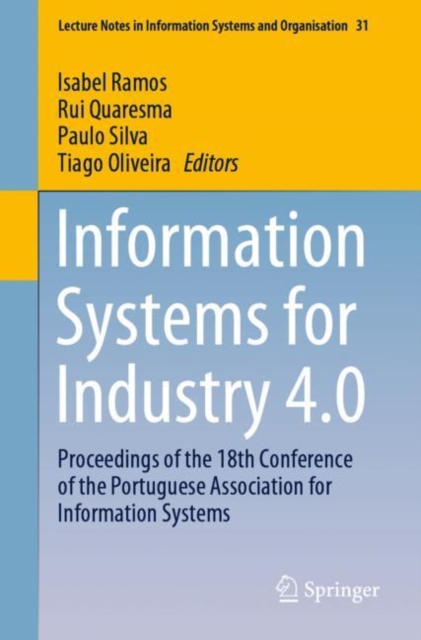
This book provides a selection of the best papers presented at the 18th Conference of the Portuguese Association for Information Systems (CAPSI), which was held in 2018.