Our interactive world can take a creative product, such as a Hollywood film, Bollywood song, or Latin American telenovela, and transform it into a source of cultural anxiety.
Digital technologies have fundamentally altered the nature and function of media in our society, reinventing age-old practices of public communication and at times circumventing traditional media and challenging its privileged role as gatekeepers of news and entertainment.
Rapid growth, reduced poverty, and stable societies: the announced benefits of the world economy celebrated by neoliberal proponents of "e;the Washington consensus"e; have failed to materialize.
An anthology Malcolm Gladwell has called "e;riveting and indispensable,"e; The Best Business Writing is a far-ranging survey of business's dynamic relationship with politics, culture, and life.
The Economists' Voice: Top Economists Take On Today's Problems featured a core collection of accessible, timely essays on the challenges facing today's global markets and financial institutions.
From the streets of Seattle to corporate boardrooms to new factories in third-world nations, globalization is subject to very different and often explosively divergent interpretations.
Conventional wisdom holds that television was a co-conspirator in the repressions of Cold War America, that it was a facilitator to the blacklist and handmaiden to McCarthyism.
Bill Grueskin, Ava Seave, and Lucas Graves spent close to a year tracking the reporting of on-site news organizations some of which were founded over a century ago and others established only in the past year or two and found in their traffic and audience engagement patterns, allocation of resources, and revenue streams ways to increase the profits of digital journalism.
This books looks specifically at ICT adoption and learning trajectories in developing countries; a context characterized by skill deficiencies and weak institutional support.
This work describes California-based wine producer Robert Mondavi's failure to set up business in a small, world-renowned wine-producing village in southern France.
In celebration of IESE's 50 years of bridging the gap between theory and practice, this essential compilation brings together today's top researchers to tackle the real-life issues that family business owners face on a daily basis, shedding new light on the values that shape these special types of companies.
The sponsorship of the entrepreneur as an agent of economic growth is now at the centre of a vast promotional industry, involving politicians, government departments and higher education.
Management of nonprofit organizations is characterized by several distinctive aspects in relation to human resources, communications, strategic planning and the fallacy of using profitability as an indicator of success.
An authoritative examination of how small firms in developing countries acquire technological capability - the knowledge and skills required to operate technology effectively and to adapt it to local conditions.
Focusing on social innovation broadly conceived in the context of social entrepreneurship and social enterprise in their global context this book is organised to address three of the most important themes in social innovation: strategies and logics, performance measurement and governance, and finally, sustainability and the environment.
The Modernisation of the Public Services and Employee Relations provides an integrated and up-to-date account of changes in work and employment in the public services.
An exploration of the interplay between social responsibility, entrepreneurship and the common good which is organized into four sections: business and the common good; educating responsible entrepreneurs; corporate social responsibility (CSR) challenges and the common good; and CSR and entrepreneurship in emerging economies
Public sector organizations are facing unprecedented problems due to the influence of population ageing, globalisation and the public deficit crisis facing developed nation economies.
Captures the insights of leading academics and practitioners based on decades of research around the globe on factors of success and failures of private wealth, over time.
Leading international scholars provide a timely reconsideration of how and why entrepreneurship matters for economic development, particularly in emerging and developing economies.
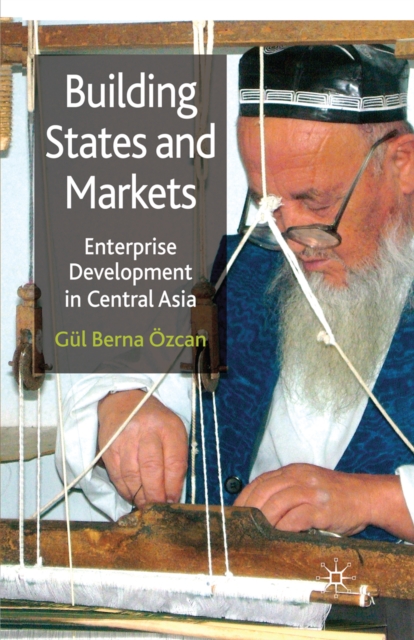
The transition economies of Central Asia are faced with the most daunting challenge of modern capitalism: the move from vassal pseudo-states of the former Soviet Union to competitive nations.
The authors explore how effective planning and communication helps business families around the world address growth challenges as they strive to become high performing multi-generation family enterprises.
Rather than having to choose between the family and the business, the authors argue that if family-owned businesses can consciously manage and over time, perhaps, synthesize these contradictions, the Family Enterprise will have a long-term strategic and competitive advantage and the family will remain committed to continuity.
The family business has been the most prevalent and pervasive form of business in many countries and raises particular questions concerning succession and governance and in particular the relationships between management, board members and family members.
The relative importance of various drivers of economic growth and prosperity has evolved over time and for a growing number of countries, innovation, in its many dimensions, is emerging as a leading factor.