This book is the first comprehensive presentation of a Kaiyu Markov model with covariates and a multivariate Poisson model with competitive destinations.
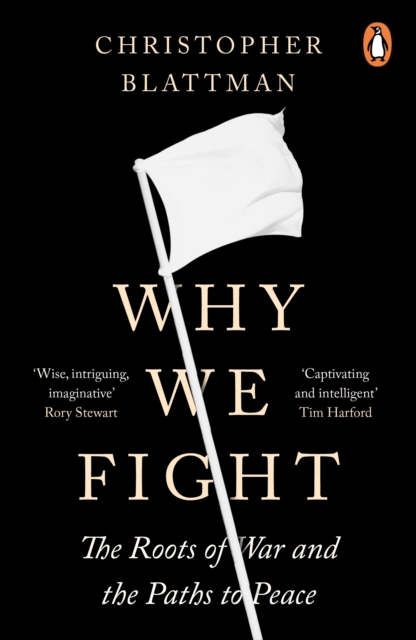
A timely exploration of intellectual dogmatism in politics, economics, religion, and literature-and what can be done to fight itPolarization may be pushing democracy to the breaking point.
From Nobel Prize-winning economist and New York Times bestselling author Robert Shiller, a groundbreaking account of how stories help drive economic events-and why financial panics can spread like epidemic virusesStories people tell-about financial confidence or panic, housing booms, or Bitcoin-can go viral and powerfully affect economies, but such narratives have traditionally been ignored in economics and finance because they seem anecdotal and unscientific.
'Original, thought-provoking and a joy to read' Tim HarfordWinner of best smart thinking book (Business Book Awards) and a Guardian best books of 2021When it comes to what we believe, humans see what they want to see.
FT BUSINESS BOOK OF THE MONTH'A comprehensive, concise, and practical guide that will enable anyone, in any situation, to develop their strategic thinking' Tiffani Bova, Chief Growth Evangelist, Salesforce, WSJ bestselling author, Growth IQ'A must read for everyone who ever deals with complex important challenges.
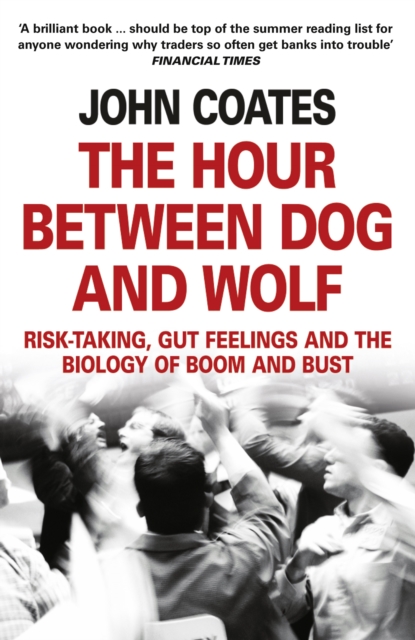
Now shortlisted for the 2012 Financial Times Business Book of the Year Award and the Wellcome Trust Book Prize, The Hour Between Dog and Wolf is a resonant exploration of economic behaviour and its consequences.
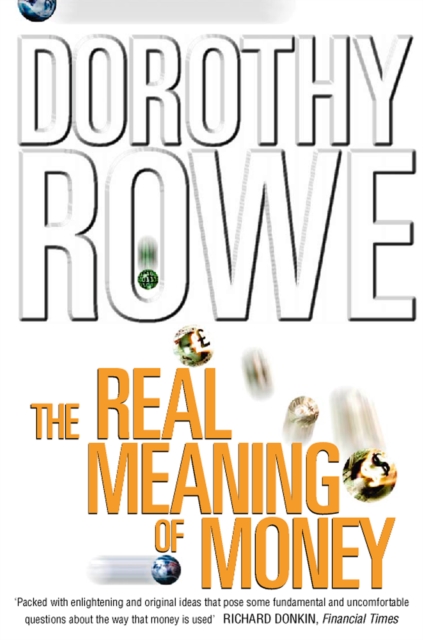
'A very important book about one of the last social taboos - with fascinating implications for us all' Helena Kennedy, QCA groundbreaking book in which Dorothy Rowe brings her insight and wisdom to the fascinating subject of money and its place in our lives.
In this fascinating and often hilarious work - winner of the Royal Society of Science Prize 2007 - pre-eminent psychologist Daniel Gilbert shows how - and why - the majority of us have no idea how to make ourselves happy.
How small, innovative grassroots groups are discovering a new kind of economy and a richer quality of life Many of today’s most troubling environmental and economic issues have come to seem insoluble: carbon emissions, overshoot, inequality, joblessness, and a dysfunctional food system.
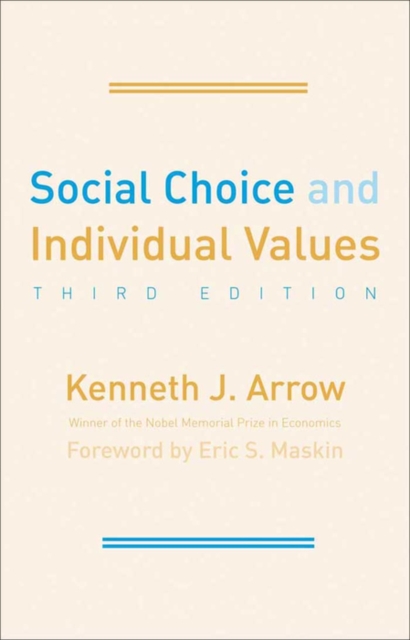
Originally published in 1951, Social Choice and Individual Values introduced “Arrow’s Impossibility Theorem” and founded the field of social choice theory in economics and political science.
A rich collection of current research in the growing field of social economics, covering such issues as culture, gender, ethics, and philanthropic behavior.
Although encouraging people to eat more nutritiously can promote better health, most efforts by companies, health professionals, and even parents are disappointingly ineffective.
SHORTLISTED FOR THE CMI MANAGEMENT BOOK OF THE YEAR INNOVATION AND ENTREPRENEURSHIP AWARDToday's consumers prefer the advantages of access over the hassles of ownership.
'It is going to change the way in which we understand many modern debates about economics, politics, and society' Ha Joon Chang, author of 23 Things They Don't Tell You About CapitalismOver the past fifty years, the way we value what is 'good' and 'right' has changed dramatically.
Most CEOs say the same thing: finding good people is difficult, and a matter of luck rather than skill, as being good on paper doesn't always translate to being good in practice.
This book provides students and line managers in organizations with the means to create better scenarios and to use them to create winning business strategies.
This book explores organizations as not simply rational, technological structures and networks for organizing people around tasks and services; it defines organizations as relational, experiential, and perceptual systems.
Through 'live' material from consulting practice and an historical review of advice-giving to pre-modern leaders, this book uncovers a distinctive 'feminine' discourse of management consulting.
Drawing on a heterogeneous body of literature including art, music and media theory, as well as philosophical and historical studies of perception, this book demonstrates that everyday work in organizations is strongly shaped by and embedded in human perception.
Presents an ultimate theory of knowledge-based management and organizational knowledge creation based on empirical research and an extensive literature review.
The second volume in a series of three focuses on organizational virtues and vices, as well as abilities of organizations, and legendary organizations that have become mythical in themselves.
The first volume in a series of three focuses on myth in everyday organizational life, pertaining to individual actors: heroes and heroines, and the roles they play in organizations.
Debate about organization and workplace learning has now moved on from viewing learning as a way of fostering control, to paving the way for viewing learning, working and living in the context of organizational complexity.
Downsizing, delayering, corporate liposuction, lean manufacturing, empowerment, knowledge management and networked organization have shaken traditional assumptions about management to their foundations.
Managing Creativity in Organizations addresses the notion of organizational creativity and innovation in general, and explores in some detail how it is achieved.
The promotion of workplace partnership in the high performance workplace has become central to policy debates on the 'modernization' of employment relations in British industry.
An interdisciplinary study of retail crime as a cultural phenomenon, drawing on economics, criminology and management to present a comprehensive explanation for the growth in retail thefts.
This non-traditional, OB-oriented book is designed to provide teachers in Organizational Behavior and management courses, as well as corporate workshops, with a highly effective way to address important issues in modern-days' management and organizational behavior-related issues.
Explores the impact of country and firm specific factors, the role of institutions and governments, the strive for compensation of initial disadvantages and the struggle in finding ways to counterbalance late coming into the international arena in the process of internationalization.