As a result of the regional debt crisis, most governments of Latin America in the 1980s entered into a process of profound policy change, from an import substitution oriented strategy to a focus upon export-promotion, with an emphasis upon market liberalisation.
This book contains papers addressing the major problems and possible reforms in the international monetary and financial system from the perspective of developing countries.
'The book's radical message "e;save livelihoods not just lives"e; should be on the desk of every policy-maker concerned with relief and development and demands a rethink of policy and practice across the board.
In the 1980s a large number of Latin American countries undertook stabilization and structural adjustment programmes similar, though smaller in magnitude, to the ones that Eastern Europe is now undergoing.
This book contains an analysis of the economic problems encountered in Mongolia during the transition from a centrally planned to a market economy, when poverty increased dramatically, unemployment rose sharply, health and education indicators deteriorated, and the economic and social position of women declined.
'Professor Krongkaew is one of Thailands best known academic economists, and he has brought together an impressive number of authorities on the modern Thai economy.
The book examines in depth the problematic effects of state intervention in agricultural markets of developing countries against the background of the current transition of interventionism to neo-liberalism.
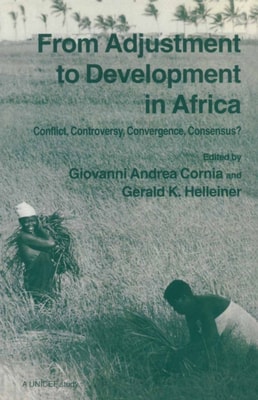
This book considers the principal sources of agreement and disagreement among policymakers and analysts concerning the current economic problems of Sub-Saharan Africa.
'Readers will find in these pages a very lucid, creative, and highly readable version of many of the ideas that have taken shape through the medium of the Human Development Reports during the last four years.
This collection is concerned with revisiting and redefining the political economy - both empirical and theoretical - of 'foreign policy' in the South as we approach the twenty-first century: the position of post-colonial states and societies in the post-Bretton Woods and Cold War world.
The book examines the nature of development and diversification in the oil and gas exports, development planners have sought to implement a range of strategies for diversifying the economy in order to secure sustainable levels of growth and development.
The Dreyfus Affair, or simply L'Affaire, was the defining event in French life between the disasters of the Franco-Prussian War and the First World War.
Examines the economic impact of aid, but not in the sense that it questions the relevance of this objective, or tries to measure whether aid works or not.
This book identifies that problems that China must face to develop its economy and elucidates the structural deficiencies which lay behind these problems.
The increasing liberalization and globalisation of the world economy has not been accompanied by covergence in the various indicators of economic and social development.
Agriculture was a major item on the agenda of the Uruguay Round of multilateral trade negotiations under the auspices of the General Agreement on Tariffs and Trade (GATT), launched in 1986.
Based on original data obtained from a purpose-designed nationwide household sample survey, the volume contains studies of the overall distribution of income, inequality and poverty in rural areas, wage employment in rural industries, urban wage inequalities, and the relationship between education and income.
This volume reports the proceedings of a conference of highly qualified practitioners and theorists from East and West, dealing with competition and the important part it plays as an essential element of the market economic system.
The Politics of Global Debt is a detailed political analysis of the origins and consequences of the `global debt crisis' which emerged in the early 1980s.
This book analyzes various important aspects of methodology and substance regarding economic, social, and political policy in Africa directed toward achieving more effective, efficient, and equitable societal institutions.
The US twin deficit, Western European economic integration, Eastern Europe's transition towards a market economy, the debt burden of the Less Developed Countries, the growing and deepening discrimination against the rest of the world by new homogeneous areas such as the North America free trade area, the new Europe, and Japan are the issues at the heart of global disequilibrium in the world economy.
Conditionality has long been used by the IMF, and more recently by World Bank and bilateral donors, as an instrument for improving the effectiveness of international finance.