Recent debt crises and consequent dislocations and distress in the underdeveloped world have shown that the development strategies of the last forty years were misconceived.
The most pressing problem for most developing countries is how to reverse the adverse trends of the 1980s and create the conditions for sustainable development.
This rigorously written book on the areas of Islamic principle theory and application is expected to break new ground in modern economic analysis, both for the Islamically inclined and others.
This book attempts to understand economic developments in Malaysia in the early and mid-Eighties, focusing on growth, balance of payments, fiscal and debt trends.
Providing overviews of states and sectors, classes and companies in the new international division of labour, this series treats polity-economy dialectics at global, regional and national levels.
This is a report about developing country participation both in the current Uruguay round and beyond, arguing that over the post war years a climate of mistrust has evolved between developed and developing countries over trade issues.
In the present stage of international capitalist development, women are increasingly being drawn into paid employment by multinational and state investment in the Third World.
The objective of this book is to present the problems and possibilities of transferring technology from the developed countries to the developing countries to raise their standard of living.
This volume of papers from the Eighth World Congress deals with changes in proportions and growth rates of sectors of the economy in relation to economic development.
A guide to China since the death of Mao Zedong, explaining and assessing the political conficts and developments of the post-Mao era and the dramatic economic transformations launched by the new leadership.
Having provided theoretical models of such items as capacity, network, scheduling, costs, organisation, environment and forecasting, the author uses these models to compare and evaluate the city transport problems in London, Paris, Copenhagen and Los Angeles, as well as in Cairo, Singapore and Rio de Janeiro.
The starting point of Paul Streeten's book is the dilemma, faced by policy makers in many developing countries: should the price of food be high, in order to stimulate production, or low, in order to prevent poor food buyers from starving?
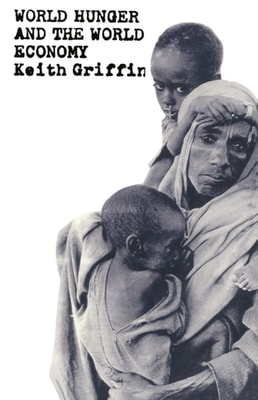
Written in a style that makes it accessible to everyone interested in development studies, not just to economists, the focus of this collection of essays is on hunger, poverty and inequality.
The book analyses and evaluates the development role and impact of the state in East Asia, in both capitalist (South Korea and Taiwan) and socialist (China) contexts.
A guide to the experiences of economic reform since the second World War, and system reform and economic integration across the world in the past decade.
This book brings together academics in the fields of economics, political science, and law, with business practitioners in the fields of risk assessment and portfolio management.
In contrast to the bulk of the literature on foreign aid, which deals with it as an instrument of foreign policy or focuses on problems of implementation, this book examines the role of the aid agencies themselves, from a recipient's perspective, and provides longitudinal as well as comparative analysis.
This authoritative collection brings together contributions from well-known international scholars which demonstrate how management education as practised in the U.