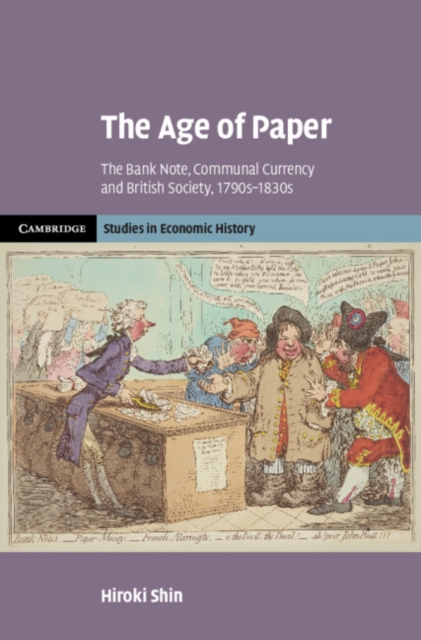
Makes Japanese sources accessible in EnglishAlthough much of the work on Japanese economic history is inaccessible to Westerners, many of Japan's leading economic historians have published widely in English.
Drawing on a detailed examination of Venetian commerce in the Middle Ages, this book explores the business practices and structures that enabled merchants to compete in a challenging international market.
The subject of this volume is the relationship between production and consumption, considered not only as the supply and demand sides of economic life, but within the broader context of the societies of the Low Countries between the 12th and the 16th centuries.
This collection brings together a comprehensive selection of documents from the history of US and Canadian economic thought from the seventeenth century through to 1900.
This volume assembles a broad selection of rare primary resource materials in the form of essays, reports, books and compendia informing on US public finances in the early nineteenth century.
This collection presents the key developments in the 120-year history of the Austrian School of Economics from the 1870s to the writings of Mises and Hayek.
The volumes in this collection are organized thematically and examine the history of key financial institutions before and after the establishment of the Federal Reserve.
Die Digitalisierung als „total social fact“ wirkt sich nicht nur auf nahezu alle sozialen Praktiken aus, sondern auch auf alle wissenschaftlichen Disziplinen.
Westra explores a nuanced literature on post-capitalism which claims that instead of constituting the end of history or ending in its supplanting by socialism, capitalism has transmuted into something else.
The second edition of this successful and pioneering textbook takes a thematic approach to the subject, resulting in a comprehensive understanding of the historic development of economic issues in the United States.
The role of banks and banking systems in facilitating and shaping the pattern of economic growth has been much explored in an attempt to understand differing levels of economic success in industrializing and mature economies.
The volumes in this collection are organized thematically and examine the history of key financial institutions before and after the establishment of the Federal Reserve.
Zambia is one African country which has evolved from being a classic example of a colonial economy to become an independent state with a large export enclave.
Professor Noonan here sets out to examine what Islamic silver coins (dirhams) reveal about the great trade between the Islamic world, European Russia, and the Baltic during the early Viking Age.
This volume assembles a broad selection of rare primary resource materials in the form of essays, reports, books and compendia informing on US public finances in the early nineteenth century.
This edition brings together the most important English language tracts and pamphlets and other material on the origins and development of private banking, joint stock banking, central banking and other important related questions.
In einer zunehmend komplexen globalen Wirtschaft spielt die Rolle des Staates eine entscheidende Rolle bei der Gestaltung von Inflation und Wettbewerbsfähigkeit.
This edition brings together the most important English language tracts and pamphlets and other material on the origins and development of private banking, joint stock banking, central banking and other important related questions.
Institutional economics is recognised as a peculiarly American development in economics - nothing quite like it emerged in Britain or continental Europe.
This book investigates the mixed economy of welfare that assisted socially marginalised people in interwar Europe, namely the state, local authorities, and a combination of voluntary and informal actors.