The articles in The World of the Indian Ocean, 1500-1800 describe the activities of people living on the coasts of the Indian Ocean, generously defined, during the early modern period.
This edition brings together the most important English language tracts and pamphlets and other material on the origins and development of private banking, joint stock banking, central banking and other important related questions.
First published in 1985, The European Crisis of the 1590s (now with a new preface by Peter Clark on the current literature on crisis and catastrophe) investigates in depth for the first time the origin and scale of the critical problems of the 1590s and their impact on European society.
This edition brings together the most important English language tracts and pamphlets and other material on the origins and development of private banking, joint stock banking, central banking and other important related questions.
Looks at the origins and consequences of seminal financial crises throughout history, combining contemporary texts from nineteen financial disasters between 1763 and 1994, with academic interpretations of the major causes and consequences of each crisis.
This volume assembles a broad selection of rare primary resource materials in the form of essays, reports, books and compendia informing on US public finances in the late eighteenth century.
First published in 1986, The Bulgarian Economy (now with a new preface by the author) traces the rapid growth of the Bulgarian economy throughout the twentieth century.
This collection brings together a comprehensive selection of documents from the history of US and Canadian economic thought from the 17th century through to 1900.
Originally published in 1938, and as a third edition in 1974, this volume presents the results of original research into the economic aspects of the transition from the medieval manuscript to the modern printed book.
First published in 1988, The Mexican Economy presents a comprehensive survey of the Mexican economy and its problems and argues that the crisis has more complex roots within the Mexican economy.
The financial crisis of 2007 required the economics discipline to thoroughly re-evaluate its prevailing theories about economic cycles and economic growth.
Institutional economics is recognised as a peculiarly American development in economics - nothing quite like it emerged in Britain or continental Europe.
This collection brings together a comprehensive selection of documents from the history of US and Canadian economic thought from the 17th century through to 1900.
United by a common interest in the institutions, the social life and the commercial activities of the Ottoman empire in its heyday, these studies fall into three sections.
This collection of essays, two of which appear in print for the first time, documents the late Holden Furber's discovery that private ventures, most manifestly deployed in the 'country trade' between Asian ports, played a major role in the European expansion in India before the age of empire.
Drawing on a detailed examination of Venetian commerce in the Middle Ages, this book explores the business practices and structures that enabled merchants to compete in a challenging international market.
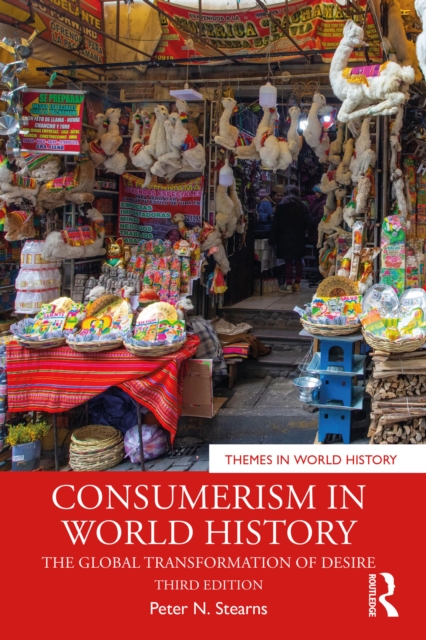
The third edition of Consumerism in World History explores the nature of consumerism and its evolution, with particular emphasis on the modern "e;consumer revolution"e; and its global scope.
In his four-volume "e;Principles"e;, Steuart noted, for example, the economic consequences of the Seven Years' War in Germany, the state of agriculture in Picardy, and the problem of depopulation in the cities of the Austrian Netherlands.
In his four-volume "e;Principles"e;, Steuart noted, for example, the economic consequences of the Seven Years' War in Germany, the state of agriculture in Picardy, and the problem of depopulation in the cities of the Austrian Netherlands.
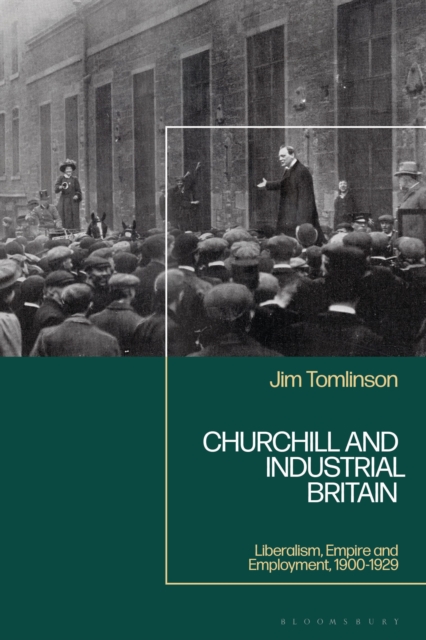
This book offers a new understanding of the main economic and political trends of 20th-century Britain, through the lens of Churchill's early career and approach to industrialisation.
This collection brings together a comprehensive selection of documents from the history of US and Canadian economic thought from the 17th century through to 1900.
This collection brings together a comprehensive selection of documents from the history of US and Canadian economic thought from the 17th century through to 1900.
Exploring the changing economic, social and political role of the Anglo-American firm, this two-part collection of rare texts covers the period 1700-1850.
This collection brings together a comprehensive selection of documents from the history of US and Canadian economic thought from the 17th century through to 1900.
This collection brings together a comprehensive selection of documents from the history of US and Canadian economic thought from the 17th century through to 1900.