From a leading economic historian, this is the history of the institutions and individuals who have managed the global economy, from the World Monetary and Economic Conference in the wake of the Great Depression to the presentSince the Second World War, organisations created at Bretton Woods - the International Monetary Fund and the International Bank of Reconstruction and Development - and afterwards - the General Agreement on Trade and Tariffs and the Organisation for Economic Co-operation and Development - have left an indelible mark on our contemporary world.
En sus páginas y en la amplia base de datos que componen el libro, el lector encontrará que nuestra investigación conjugó las grandes posibilidades que ofrece la digitalización de documentos de gran envergadura tales como la Guía general descriptiva de la República Mexicana, historia, geografía, estadísticas, etc.
Food consumption and nutrition are historically among the most characteristic features of inequality in living standards driven by socioeconomic, gender, generational and geographical reasons.
Drawing on official, archival, and published sources, this book explores how the formative history of the European nation-state was embedded within economic globalization and associated with conceptions of the world overseas.
Drawing on official, archival, and published sources, this book explores how the formative history of the European nation-state was embedded within economic globalization and associated with conceptions of the world overseas.
Food consumption and nutrition are historically among the most characteristic features of inequality in living standards driven by socioeconomic, gender, generational and geographical reasons.
Comprising a collection of interview essays with nineteen public intellectuals and scholars from around the world, this book reflects on some of the most pressing questions of our age: what is global inequality; what causes it; and how should we deal with it?
A Brookings Institution Press and the Center for the New Economy publicationA non-incorporated territory of the United States, Puerto Rico operates under U.
Sovereign debt crises are a little like the weather: One can get ready to endure them and maybe take some steps to lessen their impact, but so far it hasn't been possible to prevent them.
This is the fifth collection of articles by Eliyahu Ashtor to be published by Variorum and focuses on the fundamental question of why, during the later Middle Ages, technology and industry declined, even collapsed, in the Muslim Levant, while simultaneously making enormous progress in the Christian West.
El libro se ocupa de la génesis de la llamada oligarquía peruana durante el siglo XX y descubre que los viejos estereotipos que la consideraban como una simple continuación histórica de la aristocracia mercantil de la Colonia o de la plutocracia costeña de la época del guano carecen de sustento.
This collection of research from Cuba scholars explores key conflicts, episodes, currents, and tensions that helped shape Cuba as a modern, independent nation.
The book aims to show that the deterministic vision embodied in conventional economic modelling is neither consistent with nor supported by the state of the art in mathematics, logic, and physical science.
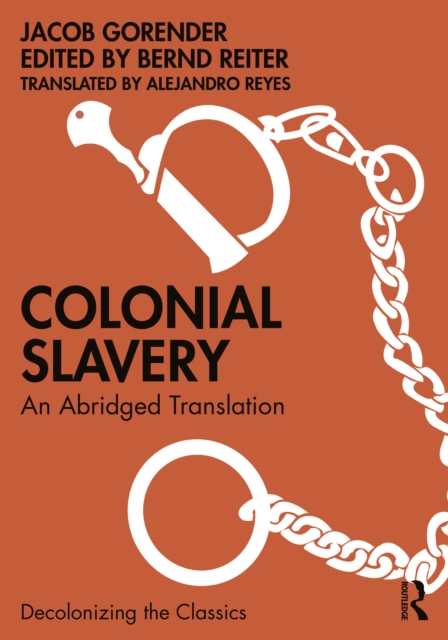
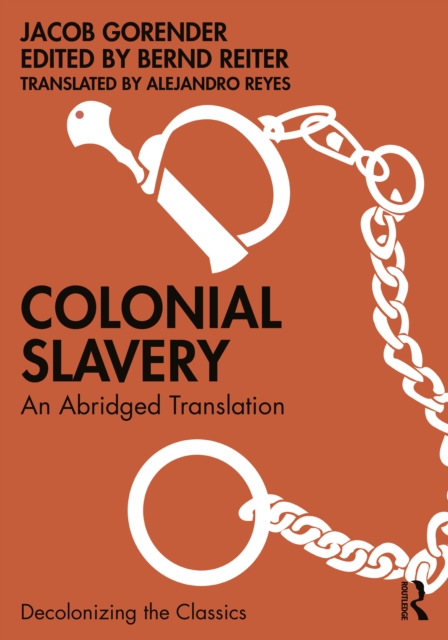
Jacob Gorender's (1923-2013) 1978 book, Colonial Slavery (O Escravismo Colonial), comes alive for English language readers thanks to Bernd Reiter and Alejandro Reyes's brilliant translation.
The Londoner John Blackwell (1624-1701), shaped by his parents' Puritanism and merchant interests of his iconoclast father, became one of Oliver Cromwell's New Model Army captains.
Jacob Gorender's (1923-2013) 1978 book, Colonial Slavery (O Escravismo Colonial), comes alive for English language readers thanks to Bernd Reiter and Alejandro Reyes's brilliant translation.
The Londoner John Blackwell (1624-1701), shaped by his parents' Puritanism and merchant interests of his iconoclast father, became one of Oliver Cromwell's New Model Army captains.
Business Statistics of the United States is a comprehensive and practical collection of data from as early as 1913 that reflects the nations economic performance.
Volume 41A of Research in the History of Economic Thought and Methodology features a symposium on "e;Religion, the Scottish Enlightenment, and the Rise of Liberalism,"e; a new research essay by Syed Mohib Ali, and a roundtable on the institutionalist economics of Geoffrey Hodgson.
Originally published in 1969, this book discusses the growth of foreign trade between 1600 and 1775 which brought about a commercial revolution in England.
Originally published in 1969, this book discusses the growth of foreign trade between 1600 and 1775 which brought about a commercial revolution in England.
In this classic text, now in its fourth edition, Gilbert Rist provides a complete and powerful overview of what the idea of development has meant throughout history.
In this classic text, now in its fourth edition, Gilbert Rist provides a complete and powerful overview of what the idea of development has meant throughout history.
Dieses Buch verknüpft am Beispiel von acht Fallbeispielen aus Deutschland und der Schweiz erstmals die Krisenfestigkeit von Unternehmerfamilien historisch fundiert mit Befunden aus der Entwicklungspsychologie, Managementforschung und Ressourcenökonomik.
This book comprehensively investigates the position of China's working class between the 1980s and 2010s and considers the consequences of economic reforms in historical perspective.
This book focuses on several specific features characterizing China's economy in the Mao era (1952-1976), and discusses whether and how they are related to the new economic strategy called "e;reforms and opening-up"e; under Deng Xiaoping's leadership with the result of the aftermath of well-known rapid growth.
This collection of research from Cuba scholars explores key conflicts, episodes, currents, and tensions that helped shape Cuba as a modern, independent nation.