This second volume of Gyllenbok's encyclopaedia of historical metrology comprises the first part of the compendium of measurement systems and currencies of all sovereign states of the modern World (A-I).
A major theme of this book is that, contrary to what many experts believe, being endowed with a plenitude of natural resources is not a curse: rather it provides a potential advantage, if capitalized by the well-endowed economy.
This book brings together analysis on the conditions of agricultural sectors in countries and regions of the world's peripheries, from a wide variety of international contributors.
This book explains how and why the state-socialist regime in Hungary used technology and propaganda to foster industrialization and the conservation of natural resources simultaneously.
This book is a textual criticism of modern ideas about the work of Adam Smith that offers a new perspective on many of his famous contributions to economic thought.
This book challenges the wide-ranging generalizations that dominate the literature on the impact of export-led growth upon Latin America during the first export era.
This book examines the macroeconomic and regulatory impact of domestic and international shocks on the South African economy resulting from the 2009 financial crisis.
This book studies nineteenth-century American individualism and its relationship to the simultaneous rise of the market economy as articulated in the works of Ralph Waldo Emerson, Henry David Thoreau, and William Graham Sumner.
The coronavirus pandemic of 2019-20 and its associated global economic collapse has bluntly revealed that decision makers everywhere are ill-equipped to identify the innovative capacities of modern societies and, in particular, deploy managers to harness such capabilities.
This book repositions the groundbreaking Bretton Woods conference of July 1944 as the first large-scale multilateral North-South dialogue on global financial governance.
This contributed volume explores the political economy and socioeconomic aspects of the Greek Financial Crisis both within the country's borders and as part of the global economy.
This book examines the changing reciprocal relationships between corporations and their various social obligations over the very long term - from the seventeenth to the twentieth century.
This book studies King Charles II's decision to stop all payments from his royal exchequer, a sordid but little-known event in English history with eerie similarities to the cause of the Great Recession of 2008.
This book analyses the economic history of the nuclear program in Spain, from its inception in the 1950s to the nuclear moratorium in the early 1980s, and investigates the economic, financial and business origins of atomic energy in Spain.
This volume offers a snapshot of the resurgent historiography of political economy in the wake of the ongoing global financial crisis, and suggests fruitful new agendas for research on the political-economic nexus as it has developed in the Western world since the end of the Middle Ages.
This book and its companion volume offer a better understanding of the lessons that Indian policymakers can learn from China's economic experience over the last 40 years.
This book and its companion volume offer a better understanding of the lessons that Indian policymakers can learn from China's economic experience over the last 40 years.
This first of three volumes starts with a short introduction to historical metrology as a scientific discipline and goes on with an anthology of acient and modern measurement systems of all kind, scientific measures, units of time, weights, currencies etc.
This book provides an up-to-date overview of the development of the German financial system, with a particular focus on financialization and the financial crisis, topics that have increasingly gained attention since the crisis and the discussion on the secular stagnation started.
This book is an ethnographic case study, based on first hand observation, of family businesses in the northern Vietnamese village of Ninh Hiep along the Red River Delta, which became a major hub for textiles in the wake of the country's shift towards market socialism.
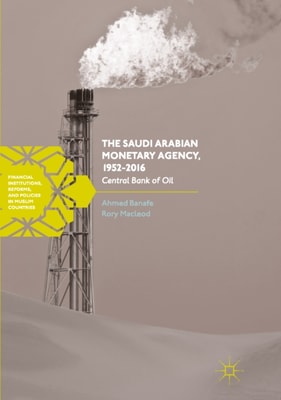
This book sheds new light on the critical importance of the Saudi Arabian Monetary Agency (SAMA), a remarkably successful central bank that is a model for developing oil exporters worldwide.
This book is an analysis of the political and philosophical foundations of the development of India's economy, including discussions of what's gone wrong in the past and what can be done to rectify it.