Early Modern Debts: 1550-1700 makes an important contribution to the history of debt and credit in Europe, creating new transnational and interdisciplinary perspectives on problems of debt, credit, trust, interest, and investment in early modern societies.
This book sheds new light on if and why, between 2009 and 2015, European governments succeeded or failed in initiating and actually realizing some of the farthest-reaching austerity plans in modern history.
This volume of intellectual biography takes the Italian economist, sociologist, political scientist Vilfredo Pareto (1848-1923) from his disillusionment with liberal and pacifist activism, to the original development of pure economics and the composition of his Treatise on General Sociology and the test of this latter on the war and post-war events.
This book explores the neglected contribution of the American and English "e;psychological"e; school to economic theory, especially to the development and refinement of the Austrian school of economics.
This book explores the diverse experience of Bangladesh's development over the last fifty years and provides systematic explanations of its success in socioeconomic development.
Reflecting the diverse and profound changes triggered by the latest wave of economic globalization, this book highlights various governance responses at national, regional and global levels.
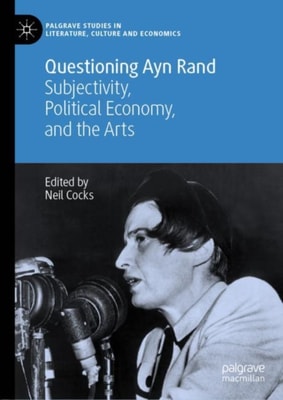
Questioning Ayn Rand: Subjectivity, Political Economy, and the Arts offers a sustained academic critique of Ayn Rand's works and her wider Objectivist philosophy.
This book analyses ancient Greek federalism by focusing on one of the most organised and advanced Greek federal states, the Achaean Federation Sympoliteia.
This collection brings together a range of case studies by both established and early career scholars to consider the nexus between business and development in post-colonial Africa.
This book discusses Samuel Pufendorf and his contributions to the development of the European Enlightenment and the emergence of economics as a social science.
There are two ways people coordinate their actions: through cooperation, exercised by economic power, and through control, exercised by political power.
This book examines the effect of banking on the real economy and society, focusing on banking supervision as the decisive factor in steering banking activities and determining the social outcome of the game of finance.
Standard histories of European integration emphasize the immediate aftermath of World War II as the moment when the seeds of the European Union were first sown.
This book not only analyzes and evaluates the current state of economic growth and development in Greece, but also investigates the potential for growth and development in the mid- to long-term horizon.
This book tells the untold story of how JPMorgan became a universal bank in the 1980s-1990s and the events leading to it being acquired by Chase in 2000.
This book offers an in-depth case study of Romania's land and agricultural reforms from mid-19th century and up to 2000, offering a historical account of agricultural reforms in post-communist Romania in the light of more than a century of social and economic development experiments.
The economic crisis of 2007/2008 has prompted much debate as to what caused it and what remedies may be implemented in order to regain a healthy economy.
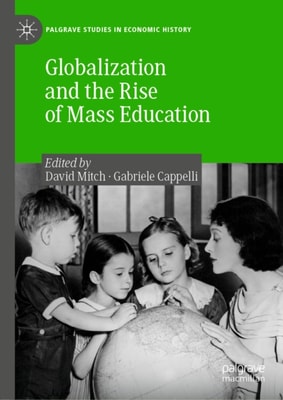
This edited collection explores the historical determinants of the rise of mass schooling and human capital accumulation based on a global, long-run perspective, focusing on a variety of countries in Europe, the Middle East, Asia, Africa and the Americas.
This book tells the untold story of how JPMorgan became a universal bank in the 1980s-1990s and the events leading to it being acquired by Chase in 2000.
This Palgrave Pivot reviews the history of the UK's Retail Prices Index (RPI) from its origins just after the Second World War to its controversial position today.
This book provides substantial background on what Adam Smith did during his stay in Toulouse and the Languedoc region of France during the 18th century.
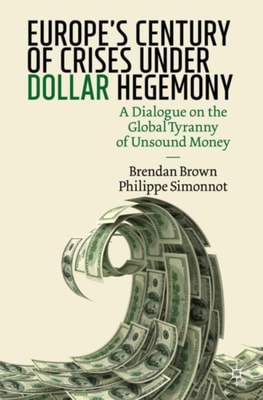
This book showcases written dialogue from Brendan Brown and Philippe Simonnot on the subject of European monetary turmoil past and present and what hope there could be for future reform.