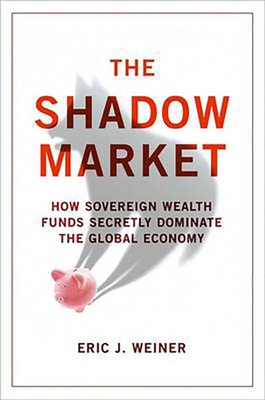
Inside the super-rich, super-secretive, unregulated funds that are wresting control of world financeThe most potent force in global commerce today isn't Wall Street, the multinational banks, or the governments of the G7 countries.
It may seem surprising that the economic choices we make in society are often determined by ideas rather than scientific evidence or financial resources.
Analysing the relationship between economic thought and capitalism from 1750 to the present, Douglas Dowd examines the dynamic interaction of two processes: the historical realities of capitalism and the evolution of economic theory.
Amongst other European and US focussed topics, Volume 27 addresses: the macroeconomic aggregates for England, 1209-2004; capital accumulation in Spain, 1850-2000; British Estate Acts, 1600 to 1830.
This book contains refereed articles on: contrasting relational conceptions of the individual in recent economics; the development of Adam Smith's style of lecturing; a comparison of problems encountered in the historian's work as editor, based upon editing Harrod's papers and Haberler's "e;Prosperity and Depression"e;; reminiscences on the New Deal by Jacob Viner; and Don Lavoie's lectures on comparative economic systems.
The Austrian tradition in economic thought had a profound influence on the development of post-war economics including neoclassical orthodoxy, game theory, public choice, behavioral economics, experimental economics and complexity economics.
This exciting book provides an illuminating account of contemporary globalisation that is grounded in actual transformations in the areas of production and the workplace.
The general assumption that social policy should be utilitarian--that society should be organized to yield the greatest level of welfare--leads inexorably to increased government interventions.
The collection includes refereed articles on topics in economic methodology and the history of economics, including Austrian economic methodology and Wesley Mitchell.
In The Reckoning, award-winning historian Jacob Soll shows how the use and misuse of financial bookkeeping has determined the fates of entire societies.
DAILY TELEGRAPH BOOKS OF THE YEARIf in the year 1411 you had been able to circumnavigate the globe, you would have been most impressed by the dazzling civilizations of the Orient.
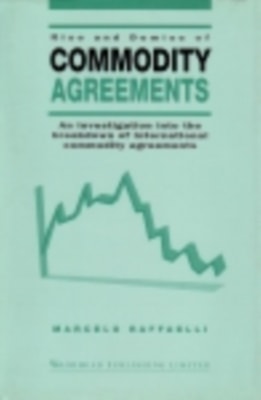
A detailed examination is provided of the circumstances which led to the negotiation of each of the international commodity agreements with economic provision included since the end of World War II.
Escaping the traditional focus on Paris, the author examines the divergent political identities of two occupational groups in Lyon, metal and silk workers, who, despite having lived and worked in the same city, developed different patterns of political practices and bore distinct political identities.
Despite the consensus that economic diplomacy played a crucial role in ending the Cold War, very little research has been done on the economic diplomacy during the crucial decades of the 1970s and 1980s.
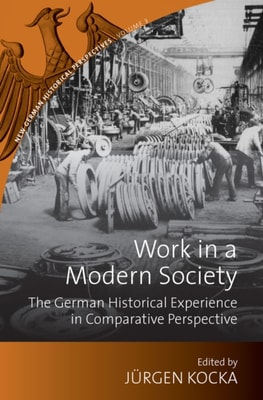
The number of studies discussing the labour relationship under industrial capitalism is overwhelming, but the literature on labour and its concrete, day-today shop-floor practices is much less abundant.
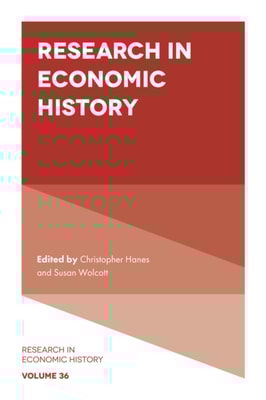
In this 36th volume of Research in Economic History, editors Christopher Hanes and Susan Wolcott assemble a cohort of experts to present new historical data, analyses of historical questions, and an investigation of historians' networks.
In this 36th volume of Research in Economic History, editors Christopher Hanes and Susan Wolcott assemble a cohort of experts to present new historical data, analyses of historical questions, and an investigation of historians' networks.
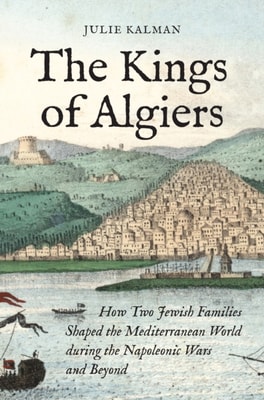
A richly detailed history of the Bacris and the Busnachs, two renowned Jewish families whose influence and reputation shook the capitals of Europe and AmericaAt the height of the Napoleonic Wars, the Bacri brothers and their nephew, Naphtali Busnach, were perhaps the most notorious Jews in the Mediterranean.
Volume 38C of Research in the History of Economic Thought and Methodology features a symposium guest-edited by Rebeca Gomez Betancourt on the economic thought of Sir James Steuart, author of perhaps the first English-language treatise on political economy.
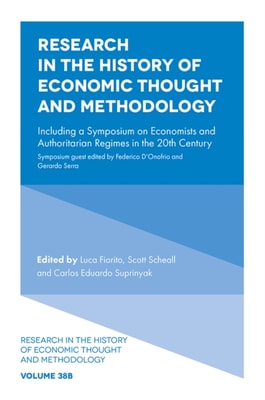
Volume 38B of Research in the History of Economic Thought and Methodology features a symposium on economists and authoritarian regimes in the 20th century.
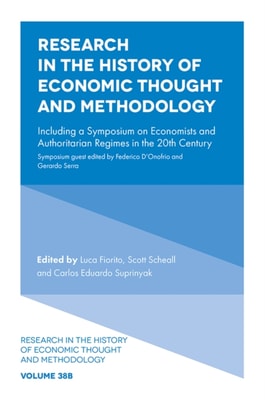
Volume 38B of Research in the History of Economic Thought and Methodology features a symposium on economists and authoritarian regimes in the 20th century.
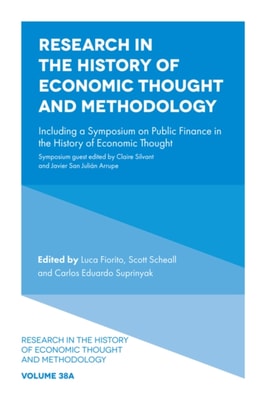
Research in the History of Economic Thought and Methodology Volume 38A features a symposium on public finance in the history of economic thought co-edited by guest editors Claire Silvant and Javier San Julian Arrupe, as well as general-research essays from Cosma Orsi and John Henry, and a heartfelt obituary by Mattheus Assaf of his friend, Gabriel Oliva, winner of RHETM's first Warren Samuels Prize for Interdisciplinary Research in the History of Economic Thought and Methodology.
Research in the History of Economic Thought and Methodology Volume 38A features a symposium on public finance in the history of economic thought co-edited by guest editors Claire Silvant and Javier San Julian Arrupe, as well as general-research essays from Cosma Orsi and John Henry, and a heartfelt obituary by Mattheus Assaf of his friend, Gabriel Oliva, winner of RHETM's first Warren Samuels Prize for Interdisciplinary Research in the History of Economic Thought and Methodology.
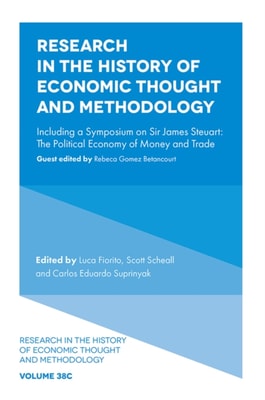
Volume 38C of Research in the History of Economic Thought and Methodology features a symposium guest-edited by Rebeca Gomez Betancourt on the economic thought of Sir James Steuart, author of perhaps the first English-language treatise on political economy.