Weber wrote that capitalism in northern Europe evolved when the Protestant (particularly Calvinist) ethic influenced large numbers of people to engage in work in the secular world, developing their own enterprises and engaging in trade and the accumulation of wealth for investment.
From the author of The Shifts and the Shocks, and one of the most influential writers on economics, a reckoning with how and why the relationship between democracy and capitalism is coming undone We are living in an age when economic failings have shaken faith in global capitalism.
'A well-reported and researched history of the ways in which plucky economists helped rewrite policy in America and Europe and across emerging markets.
In the decades since the end of the Second World War, it has been widely assumed that the western model of liberal democracy and free trade is the way the world should be governed.
There were only a few women economists who made it to the surface and whose voices were heard in the history of economic thought of Adam Smith, David Ricardo, John Maynard Keynes, and Milton Friedman right?
Japan is the great economic success story of the postwar period, growing at unprecedented rates to become one of the world's most advanced industrial nations.
The #1 New York Times bestseller that traces the rise of the Guggenheims, the Goldmans, and other families from immigrant poverty to social prominence.
In this book, one of Germany's most influential economists describes his country's economy, the largest in the European Union and the third largest in the world, and analyzes its weaknesses: poor GDP growth performance, high unemployment due to a malfunctioning labor market, and an unsustainable social security system.
A provocative new account of how India moved relentlessly from its hope-filled founding in 1947 to the dramatic economic and democratic breakdowns of today.
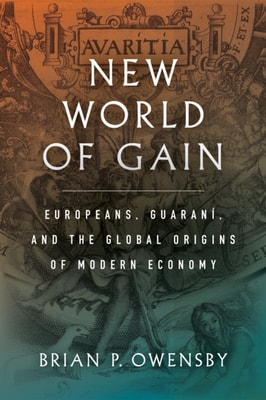
In the centuries before Europeans crossed the Atlantic, social and material relations among the indigenous Guarani people of present-day Paraguay were based on reciprocal gift-giving.
The global rise of neoliberalism since the 1970s is widely seen as a dynamic originating in the United States and the United Kingdom, and only belatedly and partially repeated by Germany.
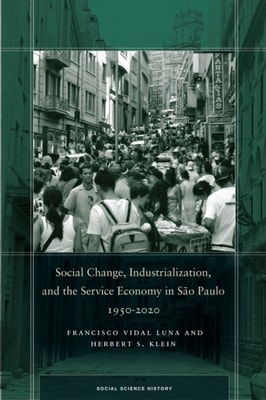
In the 1950s-80s, Brazil built one of the most advanced industrial networks among the "e;developing"e; countries, initially concentrated in the state of Sao Paulo.
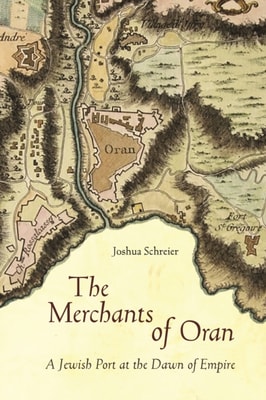
The Merchants of Oran weaves together the history of a Mediterranean port city with the lives of Oran's Jewish mercantile elite during the transition to French colonial rule.
Most of us are familiar with free-market competition: the idea that society and the economy benefit when people are left to self-regulate, testing new ideas in pursuit of profit.
Parler de croissance conomique pour rduire la pauvret dans laquelle Hati se trouvecondamne parait inadquat aux nouvelles thories avances en macroconomie.
A historical look at the early evolution of global trade and how this led to the creation and dominance of the European business corporationBefore the seventeenth century, trade across Eurasia was mostly conducted in short segments along the Silk Route and Indian Ocean.
A Nobel Prize-winning economist tells the remarkable story of how the world has grown healthier, wealthier, but also more unequal over the past two and half centuriesThe world is a better place than it used to be.
A humorous and keen look at the roller-coaster boom and bust of the 1960s and 1970s by the New York Times-bestselling author of Business AdventuresJohn Brooks blends humor and astute analysis in this tale of the staggering "e;go-go"e; growth of the 1960s stock market and the ensuing crashes of the 1970s.
From the New York Times-bestselling author of Business Adventures comes the chronicle of the stock market crash of 1929 and its aftermathLegend had it that anyone who passed through Golconda, a city in southern India, attained tremendous wealth.
A "e;stimulating"e; account of the capitalists who changed America in the late 19th and early 20th centuries, setting the stage for the 1929 crash and Great Depression (Kirkus Reviews).
In-spite of uninterrupted prosperity from 2003 until 2008 the main characteristic of the transition period in South-East European countries has been a plight and suffering of majority of population.
This book examines the role of international trade and finance in the Greek economy since the beginnings of the Greek state two centuries ago to the present day.
This book explores periodization in Big History against the background of complexity growth across the Universe, on our planet, and in biological, social, and cultural systems.