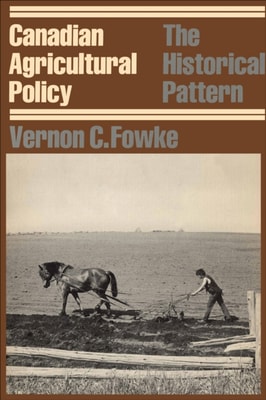
First published in 1946, this historical analysis of Canadian agricultural policy from 1600 to 1930 tests the assumption that agriculture has been Canada's basic industry, central in the economic and political life of the nation.
First published in 1957, this study traces the development of the national policy as it affected the growth of the Canadian trade and discusses the grain marketing problems of Western Canada in the decades that followed, with detailed attention to legislation and moves by various growers' groups in an attempt to meet these problems.
First published in 1957, this study traces the development of the national policy as it affected the growth of the Canadian trade and discusses the grain marketing problems of Western Canada in the decades that followed, with detailed attention to legislation and moves by various growers' groups in an attempt to meet these problems.
First published in 1946, this historical analysis of Canadian agricultural policy from 1600 to 1930 tests the assumption that agriculture has been Canada's basic industry, central in the economic and political life of the nation.
This book traces in an accurate and objective manner the sequence of events during the last twenty years which have influenced the organization fo the Canadian grain trade.
As free trade talks continue uncertainly, as Ottawa and Washington toss protective tariffs at each other's goods, and as the provinces continue to disagree among themselves and with the federal government, the search for a national economic policy goes on.
This book traces in an accurate and objective manner the sequence of events during the last twenty years which have influenced the organization fo the Canadian grain trade.
As free trade talks continue uncertainly, as Ottawa and Washington toss protective tariffs at each other's goods, and as the provinces continue to disagree among themselves and with the federal government, the search for a national economic policy goes on.
The concern of this volume is to explain why in some countries the relative decline in imports was smaller than the relative decline in exports, while in others it was greater, and why it was much smaller, or much greater, in some countries than in others, in the period following the Second World War.
Railways presented nineteenth century governments with political as well as economic problems: their inherently monopolistic tendencies were recognized almost from the start.
Some seventy years ago, at its peak, British investment in Canada accounted for over 20 per cent of British annual capital exports, and in the twenty-five years before World War I, for about 70 per cent of the capital flowing into Canada.
This study combines in one volume a history and sociopolitical analysis of the group now called the Ralliement des Creditistes, and thus explores the dynamics of a contemporary social and political phenomenon - right-wing protest.
This series, begun in 1978, will serve, it is hoped, as a vehicle for the publication of original studies in the general area of Canadian political economy and economic history, with particular emphasis on the part played by the government in shaping the economy.
The River Barons charts the development of the business community in Montreal through the crucial years between 1837 and 1853, when the small commercial fraternity of the 1830s, responding to the challenge of a transportation revolution, grew much more complex and diversified.
Before road or rail, the canoe routes followed by voyageurs formed a transport and supply system crossing a continent and covering more than a million square miles.
In the three or four decades before the first world war British industry was subject to increasing foreign competition particularly from America and Germany.
Killing Bugs for Business and Beauty examines the beginning of Canada's aerial war against forest insects and how a tiny handful of officials came to lead the world with a made-in-Canada solution to the problem.
Killing Bugs for Business and Beauty examines the beginning of Canada's aerial war against forest insects and how a tiny handful of officials came to lead the world with a made-in-Canada solution to the problem.
Shibusawa Eiichi (1840-1931) was a Japanese banker and industrialist who spearheaded the modernization of Japanese industry and finance during the Meji Restoration.
Shibusawa Eiichi (1840-1931) was a Japanese banker and industrialist who spearheaded the modernization of Japanese industry and finance during the Meji Restoration.
Economic Reforms in Eastern Europe and Prospects for the 1980s focuses on the institution of economic reforms and prospects in Eastern Europe, including manpower availability, scarce and expensive energy and raw materials, deficiency of technological innovation, and inflexibilities in management.
An examination of East-Central European history, this book looks to the past for the roots of the cleavage between the eastern and western regions of Europe and the reasons for the east-central countries' backward, reactionary nature; their slide into fascism and war; and the ultimate destruction of the region within the Stalinist orbit.
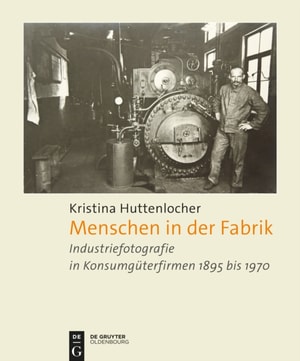
Die Industriefotografie, wie man sie kennt, präsentiert Maschinen und gewaltige Anlagen der Großindustrie, den arbeitenden Menschen aber meist nur in Gruppen oder für einen Größenvergleich der beeindruckenden Produktionsmaschinerie.