This book contains conversations with fifteen prominent Post Keynesian economists on the current state of economic theory and policy, and how both might be improved.
This revised edition updates the post-Keynesian analysis of the earlier edition by providing a greater emphasis on capital movements, the development of regional common markets and the global debt and payments problems spawned in the 1980s.
The book treats two approaches to decision theory: (1) the normative, purporting to determine how a 'perfectly rational' actor ought to choose among available alternatives; (2) the descriptive, based on observations of how people actually choose in real life and in laboratory experiments.
Anthony Crosland, a member of Harold Wilson's cabinet and the author of The Future of Socialism, was immensely influential in seeking to modernise the ideology of the Labour Party, to put opportunity and empowerment, the fairness of life chances and the sharing of social experiences at its centre in place of nationalisation.
The objective of this book is to study the economy as a complex system and to show that the presence of self-reinforcing mechanisms in very different economic problems gives rise to common regularities and common qualitative properties.
The Marxist theory of capitalist growth and transformation has often been shrouded in obscurity, either by endless recapitulation of Marx's texts or by excessive use of mathematical formalism.
This book aims to show how Sraffa's theoretical contributions could be pursued in new directions, in effect providing an alternative paradigm to the postclassical economic theory and challenging the persistent dominance of a widespread economic culture based on that theory.
This is a pioneering study based on original sources of the least researched aspect of Keynes, namely, the crucial formative role of his Indian connection in the making of Keynes as an economist and policy-maker.
This book reviews the paradigm which has come to be known as post-Keynesian economics, concentrating on the main issues that form the heart of this paradigm: money and finance; conflict in wage and price settings; the degree of monopoly and pricing in an open economy; divergence rather than convergence in the European Union; financial and economic development; economic policy and methodological issues.
This book focuses upon the development of economics at Oxford after the establishment of PPE and the contributions of Oxford economists during the 'years of high theory' and afterwards.
Western society moved from a period in which Christianity was the dominant spiritual force to one of nationalism and then to making the economy the object of public devotion.
This book presents the most significant theoretical articles by Bertram Schefold to illuminate the development and the present state of modern classical theory.
This book is about the history of neoclassical international economics, the century-old dominant paradigm of teaching and research in the area of international economic relations.
Less than fifty years after the publication of Marshall's Principles Cambridge once again set economics on a new path with the publication of Keynes's General Theory.
A critical perspective on the foundations of economic theory showing the importance of ethical considerations and focusing in particular on altruism, cooperation and equity.
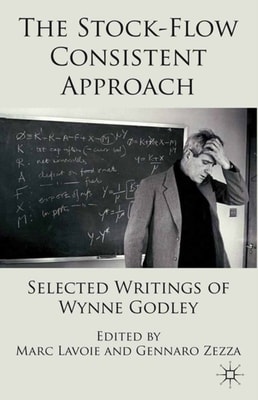
A collection of papers from leading thinkers to celebrate the work of the late Wynne Godley, and his enormous contribution to the field of monetary economics.
Read examines probability, risk, and uncertainty through the contributions of John von Neumann, Leonard Jimmie Savage, Kenneth Arrow and Harry Markowitz.
In June 2010 IE Business School, with King Abdulaziz University, gathered in Madrid some of the world's foremost scholars, academics and practitioners of Islamic Economics and Finance.
This is the first book to explain the expansion of multinational enterprises (MNEs) into a transition economy from a technology accumulation perspective.
Selected essays from the eminent economist, Wynne Godley, tracing the development of his work and illuminating the key theories and models that made his name.
The Making of a Post-Keynesian Economist: Cambridge Harvest gathers up the threads of the last decade of the author's twenty eight years in Cambridge, before his return to Australia.