How can the United States meet demands for agricultural production while solving the broader range of environmental problems attributed to farming practices?
This volume includes a selection of papers presented at the EURESCO Conference "e;The International Dimension of Environmental Policy"e; held in Kerkrade, The Netherlands, in October 2000.
The Intergovernmental Panel on Climate change (IPCC) was jointly established by the World Meteorological Organization (WMO) and the United Nations Envir- ment Programme (UNEP) to assess the scientific, technical and socio-economic information relevant for the understanding of the risk of human-induced climate change.
This book was initiated while the three major authors were at the Development Centre of Organisation for Economic Cooperation and Development (OECD) in Paris, working on its program on economic growth, trade, and sustainability.
In recent years, much work has been done in formulating and clarifying the concept of sustainable development and related theoretical and research issues.
The game-theoretic modelling of negotiations has been an active research area for the past five decades, that started with the seminal work by Nobel laureate John Nash in the early 1950s.
A blueprint for creating sustainable businesses, emphasizing the power and potential of cooperative models Drawing on both her extensive experience founding and directing social enterprises and her interviews with sustainability leaders, Melissa Scanlan provides a legal blueprint for creating alternate corporate business models that mitigate climate change, pay living wages, and act as responsible community members, including Certified B Corps and benefit corporations.
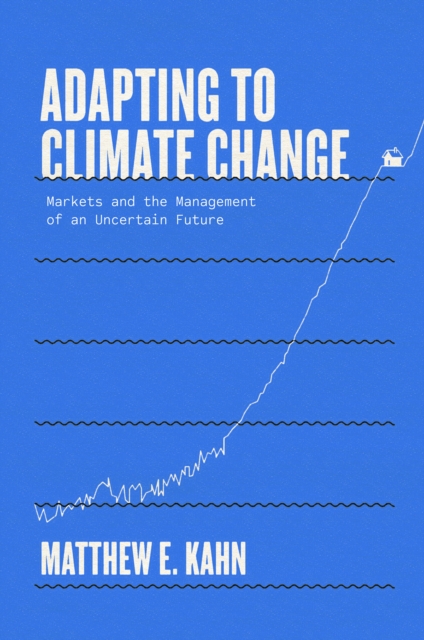
A revelatory study of how climate change will affect individual economic decisions, and the broad impact of those choicesSelected by Publishers Weekly as one of its Top Ten books in Business and Economics for Spring 2021It is all but certain that the next century will be hotter than any we've experienced before.
A radical new approach to tackling the growing threat of water scarcity Water is essential to life, yet humankind’s relationship with water is complex.
A provocative reassessment of the relationship between states and environmental politics in Africa From climate-related risks such as crop failure and famine to longer-term concerns about sustainable urbanization, environmental justice, and biodiversity conservation, African states face a range of environmental issues.
Hard-hitting recommendations for what must be done to manage global natural capital and reverse environmental destructionNatural capital is what nature provides to us for free.
An exploration of product certification programs and the factors that explain their varied success in becoming global governors equipped to tackle environmental and social problems effectively Consumers now encounter organic or fair-trade labels on a variety of products, implying such desirable benefits as improved environmental conditions or more equitable market transactions.
How small, innovative grassroots groups are discovering a new kind of economy and a richer quality of life Many of today’s most troubling environmental and economic issues have come to seem insoluble: carbon emissions, overshoot, inequality, joblessness, and a dysfunctional food system.
The Montreal Protocol has been cited as the most successful global environmental agreement, responsible for phasing out the use of ozone-depleting substances.
Post-World War II Oregon was a place of optimism and growth, a spectacular natural region from ocean to high desert that seemingly provided opportunity in abundance.
Emphasising human-scale, local, sustainable alternatives to globalised industry, Sulak Sivaraksa offers a way to restructure our economy on Buddhist principles and on a basis that will promote personal development.
What it means for global sustainability when environmentalism is dominated by the concerns of the affluent—eco-business, eco-consumption, wilderness preservation.
A new approach in commons theory to understand the interactions of technology, society, and nature, supported by case studies of new transnational European commons.
An interdisciplinary and quantitative account of human claims on the biosphere''s stores of living matter, from prehistoric hunting to modern energy production.
Experts investigate how states and other actors can improve inter-institutional synergy and examine the complexity of overlapping environmental governance structures.
A leading economist develops a supply-side approach to fighting climate change that encourages resource owners to leave more of their fossil carbon underground.
Combining the theoretical tools of comparative politics with the substantive concerns of environmental policy, experts explore responses to environmental problems across nations and political systems
An examination of how a transnational coalition of firms and NGOs influenced the emergence of emissions trading as a central component of global climate governance.