This volume defines and analyzes the Blue Economy, a system that encompasses all the economic activities which are happening in and around the ocean within a sustainable development framework, with focus on countries in Asia.
The main aim of this book is to provide a state of the art of the Levelized Cost of Energy calculation for energy communities from both a theoretical, defining a systematic analysis approach, and a practical point of view, providing results for three representative real case studies.
Employing a practice theoretical approach, this study centers on how German multinational enterprises transfer three selected production-related training practices to their subsidiaries in emerging economies: onboarding of new employees, shop floor inducting of machine operators, and German-style dual apprenticeship training for specialized technicians.
This volume uses historical epistemology in order to address several topics in the history of economic thought, with special emphasis on ecological economics, environmental metaphors of scarcity, and mathematical ecology.
This book describes the latest microeconomic concepts and operations research (OR) techniques needed to comprehend the design and operation of power markets, as well as the actions of their agents: producers, consumers, operators, and regulators.
This book includes the proceedings of the Mitigating Climate Change 2021 Symposium and Industry Summit (MCC2021), which brings together research from experts in academia, industry, and policy arenas to uncover the challenges, sharpen existing solutions, and formulate cutting-edge means to mitigate climate change.
This book presents new research on innovative financial instruments and approaches available to implement nature-based solutions (NBS) at various scales and in different contexts.
This book evaluates local conservation successes of global south in the climate milieu, as an empirical evidence of 'Bio-rights' of commons at community-ecosystem interface for sustainable intensification of nature's goods and services.
This book offers a lively account of the humanitarian, economic, societal, and planetwide impacts of the pandemics, the COVID-19 pandemic included, which are traced back to as early as the 14th century plague pandemic.
This book contains contributions from the international conference "e;Engineering Innovations and Sustainable Development,"e; organized by three Russian universities on June 17-18, 2021.
This book covers all aspects of the economics and management of geotourism, an increasingly important sector of nature tourism that focuses on the geology and landscape of different territories, providing a pleasurable and educational tourist experience.
This book gathers the latest advances, innovations, and applications in the field of environmental and construction engineering, as presented by international researchers and engineers at the 2nd International Conference on Efficient Production and Processing, held on February 25-26, 2021.
In this book, major issues surrounding importance of water and energy for food security in the United States and India are described representing two extremes in yield, irrigation efficiency, and automation.
This two-volume set presents the conference papers from the 1st International Conference on Economics, Development and Sustainability (EDESUS 2019), organized by the University of Economics and Business, Vietnam National University, Hanoi.
This two-volume set presents the conference papers from the 1st International Conference on Economics, Development and Sustainability (EDESUS 2019), organized by the University of Economics and Business, Vietnam National University, Hanoi.
This book contains a collection of studies on the interactions between businesses in Africa and Global Value Chains (GVCs) in terms of social, environmental and economic sustainability.
This is the first book that employs economics to develop and apply an analytical framework for assessing progress towards the Sustainable Development Goals (SDGs).
This book describes the alarming condition of agriculture in the Anthropocene, when the ethical conception of agriculture as a service of common utility for both society and environment has progressively been marginalized.
This Edited Collection provides a rigorous and rich overview of current bargaining research in economics and related disciplines, as well as a discussion of future directions.
Common wealth dividends are universal cash payments funded by fees on the private use of common resources like land, minerals, and the atmosphere as a carbon sink.
This book provides a critical perspective on several interconnected themes that relate to the implementation of both domestic and international environmental standards.
This book provides a novel and holistic perspective on the deployment of prepaid electricity meter technology among energy impoverished (vulnerable) households based in developing or under-developed communities of Sub-Saharan Africa.
This book provides the first comparative assessment of the energy-efficiency retrofit programs in the social housing sector of Canadian cities, focusing on program efficiency and effectiveness.
This book provides the first comprehensive overview of the most important water-related issues that centre on Italy, analysed from several disciplinary perspectives - such as hydrology, economics, law, sociology, environmental sciences and policy studies - in order to promote full understanding of the challenges the country is facing and the ways it could best tackle them.
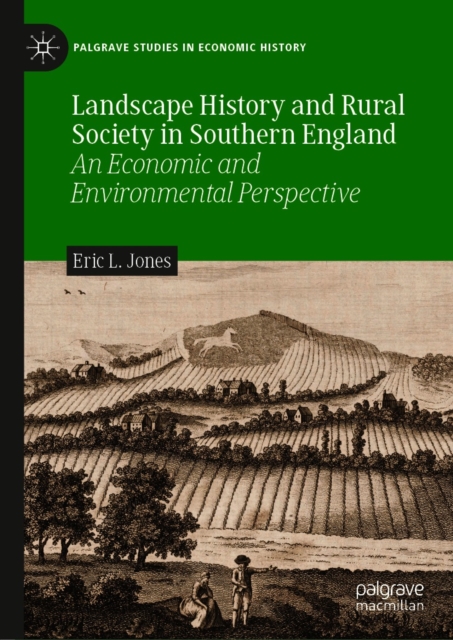
This book applies an economic and environmental perspective to the history of landscape and the rural economy, highlighting their inter-connections through specific case studies.
This textbook provides a broad introduction to the relationship between climate change, economics, and climate policy for young readers and future generations.
This textbook explains the main economic mechanisms behind energy markets and assesses how governments can implement policies to improve how these markets function.
This book explores three particular strategies in the extractives sector for creating shared wealth, increased labour opportunities and positive social, environmental and economic outcomes from corporate projects, namely: state wealth funds (SWF), local content policies (LCP) and corporate social responsibility (CSR) practices.