This book explains how environmental projects and improvements are achieved through the imposition of regulations, on the one hand, and financial incentives on the other.
Invasion of non-native plant species, which has a significant impact on the earth's ecosystems, has greatly increased in recent years due to expanding trade and transport among different countries.
Despite all the controversy and hype that climate change has generated, there now exists an overwhelming body of scientific evidence that the problem is real and that its effects are already being felt on a global scale.
The impact of invasive species is second only to that of human population growth and associated activities as a cause of the loss of biodiversity throughout the world.
Westra recounts how the unceremonious collapse of Soviet-style socialism, coupled with mounting awareness of unfolding environmental destruction and irreversible climate change opened the door to a new, wide-ranging, social change literature.
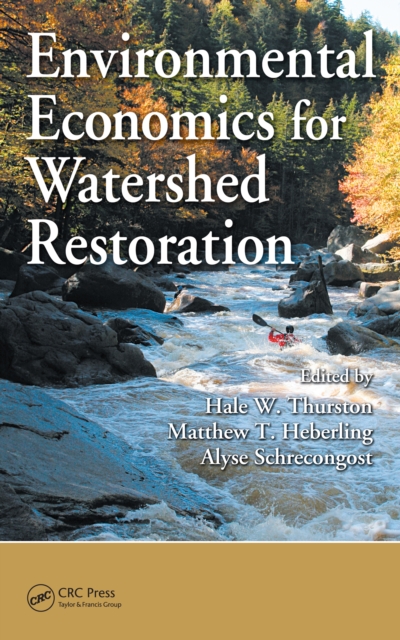
Whether addressing pollution problems or helping protect a specific use, watershed associations are finding that the competition for funds is getting harder.
Choosing the optimal management option requires environmental risk managers and decision makers to evaluate diverse, and not always congruent, needs and interests of multiple stakeholders.
Sustainable Agroecosystem Management: Integrating Ecology, Economics, and Society examines the challenges for developing integrated approaches to the management of agricultural ecosystems.
Evaluating a wealth of quantitative data, Biofuels: Biotechnology, Chemistry, and Sustainable Development discusses different types of biofuels, the science behind their production, the economics of their introduction to the marketplace, their environmental impacts, and their implications for world agriculture.
Economic Theory for Environmentalists is a much-needed and heralded new book that examines the implications of neoclassical economic theory and how it relates to the environment and environmental activity.
Balances Scientific and Economic Points of View to Thoroughly Address Management IssuesResponding to the need for clarification and benchmarks, Environmental Life Cycle Costing provides the fundamental basis on which to establish a definitive methodology.
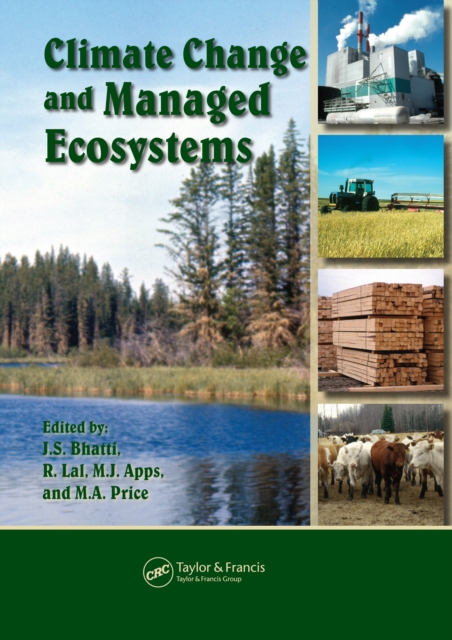
Featuring contributions from leading experts in the field, Climate Change and Managed Ecosystems examines the effects of global climate change on intensively constructed or reconstructed ecosystems, focusing on land use changes in relation to forestry, agriculture, and wetlands including peatlands.
The potential to mitigate greenhouse gas emissions and global climate change is one factor driving agricultural policy development of programs that might pay farmers for practices with a high potential to sequester carbon.
In recent years the increased awareness of environmental issues has led to the development of new approaches to product design, known as Design for Environment and Life Cycle Design.
How individuals and the government are changing life in China's polluted citiesOver the past thirty years, even as China's economy has grown by leaps and bounds, the environmental quality of its urban centers has precipitously declined due to heavy industrial output and coal consumption.
Sustainability Accounting and Reporting: Theory and Practice provides a comprehensive guide to understanding and applying the latest global framework for disclosing sustainability-related risks and opportunities by public-sector business entities, irrespective of whether the entity follows IFRS or GAAP.
A major new analysis and action plan to deal with two linked challenges to human ingenuity and human survival - the crisis of climate change and the world economic crash.
Rethinking Private Authority examines the role of non-state actors in global environmental politics, arguing that a fuller understanding of their role requires a new way of conceptualizing private authority.
This book offers a vision of the future of electricity supply systems and CIGRE's views on the know-how that will be needed to manage the transition toward them.
The Economics of the Environment and Natural Resources covers the essential topics students need to understand environmental and resource problems and their possible solutions.
The purpose of this book is to call for a wholesale rethinking of the way that markets treat both the labour and natural resources on which we all depend.
From the first vague idea to use Konrad Hagedorn's 60th birthday as an inspi- tion for taking stock of his vibrant academic contributions, this joint book project has been a great pleasure for us in many ways.
Adaptive management is the recommended means for continuing ecosystem management and use of natural resources, especially in the context of 'integrated natural resource management'.
Many potential questions regarding the risks associated with the development and use of wide-ranging technologies enabled through engineered nanomaterials.
International experts provide a comprehensive picture of the principles, concepts and methods that are applicable to problems originating from the interaction between the living/non-living environment and mankind.
This book stems from a four-year experience of a Training Programme addressing members of several Chinese governmental Institutions which, given the moment of extremely intense and fast development of their country, consider the issues of environment and sustainable growth among the foremost priorities.
R&D, Innovation and Competitiveness in the European Chemical Industry explores the science & technology base and the dynamic performance of the European "e;system of innovation"e; in the chemical industry, with particular attention to its contribution to economic growth through innovation and competitiveness, and its ability to translate its research into commercially useful products.
"e;Quantitative Eco-nomics"e; cuts through the fog of vision and advocacy by comparing and applying new quantitative tools of both environmental and ecological economics.
This volume includes a selection of papers presented at the conference "e;Susta- able Resource Use and Economic Dynamics"e; (SURED), held on Monte Verita ` in Ascona, Switzerland, in June 2004.