International experts provide a comprehensive picture of the principles, concepts and methods that are applicable to problems originating from the interaction between the living/non-living environment and mankind.
This book stems from a four-year experience of a Training Programme addressing members of several Chinese governmental Institutions which, given the moment of extremely intense and fast development of their country, consider the issues of environment and sustainable growth among the foremost priorities.
R&D, Innovation and Competitiveness in the European Chemical Industry explores the science & technology base and the dynamic performance of the European "e;system of innovation"e; in the chemical industry, with particular attention to its contribution to economic growth through innovation and competitiveness, and its ability to translate its research into commercially useful products.
"e;Quantitative Eco-nomics"e; cuts through the fog of vision and advocacy by comparing and applying new quantitative tools of both environmental and ecological economics.
This volume includes a selection of papers presented at the conference "e;Susta- able Resource Use and Economic Dynamics"e; (SURED), held on Monte Verita ` in Ascona, Switzerland, in June 2004.
In line with the Water Framework Directive, this book stresses the need for an Integrated Water Resources Management (IWRM) approach to balance the competing demands on water-domestic, agricultural, industrial, tourism and environmental/ecological- and promote economically efficient, socially equitable and environmentally sustainable water use in selected regions from Southern Europe, the Mediterranean and the developing world.
This book stems from a four-year experience of a Training Programme addressing members of several Chinese governmental Institutions which, given the moment of extremely intense and fast development of their country, consider the issues of environment and sustainable growth among the foremost priorities.
This book examines the economic impact of changes in the global demand and supply for fossil fuels both on the major producers in Middle Eastern countries around the Persian Gulf, other producers, as well as the world at large.
Integrated Water Resources Management and Security in the Middle East brings together diverse voices relating to the critical issue of water management in one of the world's most politically volatile areas: the Middle East.
In the past, lack of understanding at the nexus between the forest sector on the one hand and strategic management on the other, has led to failures in many countries to realise the potential that forest sector development offers.
Human experience has shown how great cities, nations, and empires have either collapsed or retired from their predominant stature when natural resources are depleted to an extent that exceeds the ability of the environment to restore or replenish their supply.
USING DISCRETE CHOICE EXPERIMENTS TO VALUE HEALTH AND HEALTH CARE In recent years, there has been a growing interest in the development and application of discrete choice experiments (DCEs) within health economics.
The transfer of environmental values in time and space has increased rapidly with the widespread use of cost benefit analysis in project evaluation and regulatory assessments over the last three decades.
A central asset of eco-efficiency analysis is that it does not depend on a specific evaluation of environmental impacts against economic effects, avoiding the often disputed results of neo-classical evaluation methods.
Environmental and Resource Valuation with Revealed Preferences: A Theoretical Guide to Empirical Models provides a systematic review of those economic approaches for valuing the environment and natural resources that use information on what people do, not what they say.
How can the Earth's finite water resources be managed sustainably to meet the growing needs of humans and of nature in ways that avert the looming crisis?
In the last few years, awareness and worries about the exhaustion of natural resources are increasing, but this fact is still very much discussed about its analytical measurement, and therefore not yet demonstrated.
During the latter part of 2004, Helen Buitenkamp of Springer Publishing emailed me that the first edition of Handbook of Urban and Community Forestry in the Northeast is the best volume in its field and inquired whether we'd be interested in compiling a second edition; I replied that we certainly would, and started working on it imme- ately.
Since 1997, the AGS China cokemaking team has been examining the rapidly changing relationships among technology, energy, the environment, and health (TEEH) in one of China's most energy-intensive and highly polluting industries--cokemaking.
Although forest policy is an established course in most European university forestry curricula, apart from a special predilection of the teacher, its content varies from country to country according to the position of the forest sector in the domestic economy and society.
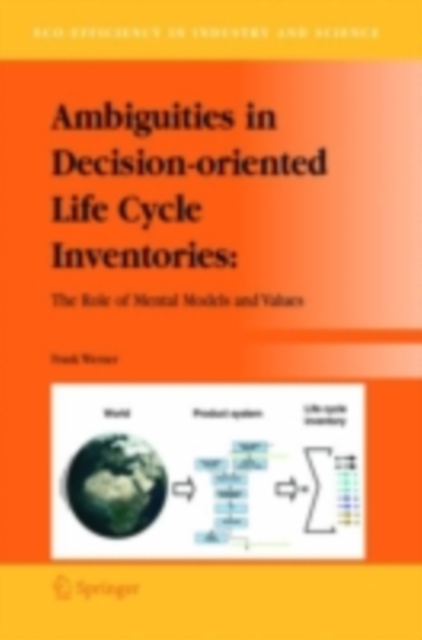
In an environmental life cycle assessment of products (LCA), an unambiguous, scientifically based, 'objective' attribution of material and energy flows to a product is pure fiction.
In 1992 Australia's Commonwealth and State governments announced the introduction of a National Drought Policy adopting an innovative risk management approach, which received broad support from Australia's major political parties and the policy community.
On April 22-23, 1988, approximately 432,000 gallons of San Joaquin Valley crude oil spilled from an aboveground storage tank at a Shell Oil Company refinery into the surrounding environment, including the northern reaches of San Francisco Bay (the Martinez spill).
EDOARDOCROCI IEFE - Universita Bocconi, Milano, Italy Voluntary approaches in environmental policy represent a "e;third wave"e; of regulation in the environmental field.
This is the third volume in the Environmental Management Accounting Network (EMAN) series of selected refereed papers on environmental management accounting drawn primarily from papers presented at EMAN-Europe's annual c- ferences.
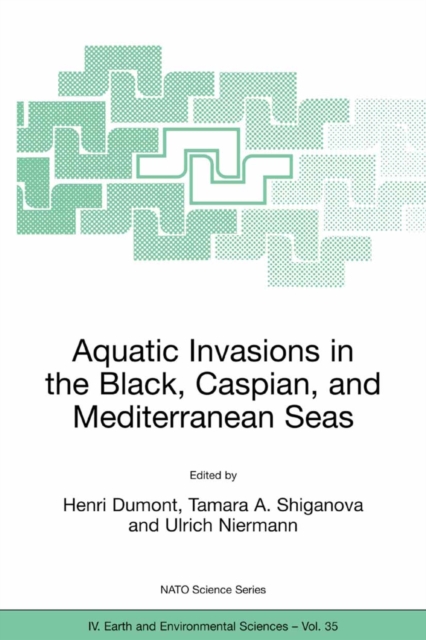
The present volume contains the presentations of a NATO advanced Research Workshop (ARW) entitled "e;The invasion of the Black, Mediterranean and Caspian Seas by the American Ctenophore, Mnemiopsis leidyi Agassiz: a multidisciplinary perspective and a comparison with other aquatic invasions"e;, held on 24 - 26 June 2002 in Baku (Azerbaijan).