International climate change policy can be broadly divided into two periods: A first period, where a broad consensus was reached to tackle the risk of global warming in a coordinated global effort, and a second period, where this consensus was finally framed into a concrete policy.
The issue of climate change is now widely recognised as one of the major challenges for mankind in the 21st century, not only because it may ultimately affect many areas of our environment, nature and human activity but also because its mitigation may have far reaching consequences for almost all sectors of the economy where energy conversion takes place.
Freer Trade, Sustainability, and the Primary Production Sector in the Southern European Union is the first full-scale academic work to cap- ture the primary production sector policy aspects of trade liberaliza- tion and sustainability with a detailed focus on a typical southern EU country, Greece.
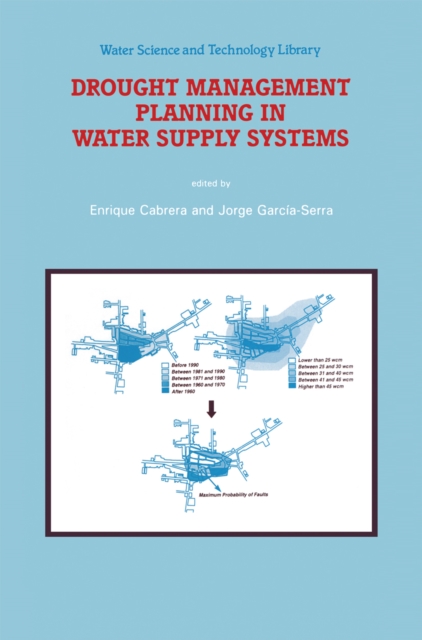
Taking advantage of the many specialists visiting Spain prior to the INFORMS Meeting in Barcelona, hold from July 14th to July 17th 1997, we organized a work- shop on Decision Analysis Applications at the Real Academia de Ciencias, Madrid, Spain, from J uly 11th to 12th 1997, under the sponsorship of de the Instituto Espaiia.
This book draws together contributions from forest economists in the Research Triangle of North Carolina, with co-authors from institutions around the world.
This book deals with voluntary approaches between farmers and water suppliers as an instrument to meet environmental standards, impacted by agricultural activities, more economically efficient and environmentally effective than by exclusive application of alternative instruments including command-and-control approaches.
Most of the chapters in this volume are authored by staff or associates of the Centre for Social and Economic Research on the Global Environment (CSERGE).
The theoretical claims for eco-tariffs are rigorously analyzed within a unified framework formed of an international trade model enriched with both a domestic and a global externality.
Climate change is one of the major global environmental problems, one that has the potential to confront us with great costs during the decades to come.
There is a complex relationship between the environment and the development of tourism, which this book discusses in a thorough and informative manner.
The complexity of issues requiring rational decision making grows and thus such decisions are becoming more and more difficult, despite advances in methodology and tools for decision support and in other areas of research.
Efficiency and Equity of Climate Change Policy is a comprehensive assessment of the economic effects of climate change policy, addressing the issues with a quantitative modelling approach.
In recent years, voluntary approaches to emission reductions have increasingly been adopted by major companies all over the world and have increasingly been supported by regulatory bodies and public administrations.
The analysis of the relationship between transport and environmental policy invites an interdisciplinary treatment and a variety of approaches, and rightly so.
Prefaced by Bjorn Stigson, President of the World Business Council for Sustainable Development, this book is one of the few that treats this topic by putting representatives of industry at centre stage.
Environmental decisions must satisfy a multitude of objectives and the matching of a plan, policy or project to such objectives is a matter of both facts and value judgements.
Meta-analysis is a formal synthesis of results and findings of scientific studies, which can assist in gaining new insights, explaining differences between results of similar studies, or determine useful directions of research.
Environmental issues continue to burden governments and economies throughout the post-communist countries of Central and Eastern Europe and the newly independent states of the former Soviet Union.
The European Union faces several interlinked challenges: how to protect the environment and favour sustainability; how to reduce unemployment and foster competitiveness in a context of growing globalization; how to reduce regional disparities among and within me mb er countries.
One of the central tenets of this book is that governmental policies must be designed to take into account market characteristics and environmental phenomena - simultaneously.
The purpose of this book is to develop a general economic model which integrates the quantity and quality issues of water resource management and to provide, along with a detailed criticism of the policy instruments now in use, alternative proposals concerning the efficient allocation and distribution of water.
During the last decades, environmental economics as a science has been very successful in improving our understanding of environment-economy interdepen- dence.
When approached by Warren Samuels, the series editor, about organizing a volume on natural resource economics, I was at a loss as to how one might possibly capture in "e;several major essays plus several shorter comments thereon"e; all of the diverse activities that fall within this exciting discipline.