This book provides the first comprehensive analysis of unbundling and, in particular, ownership unbundling policies from the perspective of international economic law.
This book presents the legal and political factors determining international relations, including the processes of integration in all their complexity.
This book provides an insight into commercial relations between large economies and Small States, the benefits of regional integration, the role of Small States as financial centres as well as B2B and State to State dispute resolution involving Small States.
"e;Bongiovanni's message should be heeded, especially in Brussels, Berlin and Paris"e; - John Peet, Political Editor, The EconomistFrancesco Bongiovanni returns with a sequel to The Decline and the Fall of Europe, a book Guardian journalist Nils Pratley labelled 'a wake-up call for the twenty-first century'.
This book focuses on the World Bank's sanctions system, which is an innovative instrument of global governance implemented by the leading multilateral development bank in order to impose penalties on legal entities and individuals that are involved in Bank-financed projects.
This book analyzes the relative balance of bargaining power between governments and the banks in charge of underwriting their debt during the first financial globalization.
The book focuses on the legal framework for the use of the bridging clauses of Article 48(7) TEU as well as on parliamentary participation in the process of activating these clauses.
Globalisation and the governance of the international financial system have arrived at the crossroads, where either a coherent level playing field for the cross-border activities of banks and multinational enterprises is settled upon, or the risk of another crisis will build up again.
The book brings together an international panel of experts on economic integration and international business to address the essential link between the two fields, namely the impact of integration processes on the business environment.
This proceedings volume provides current research on emerging issues in business, economics and finance in the global economy with particular emphasis on Eastern Europe.
This book presents an in-depth understanding of the transformation of modern economy in the twenty-first century by examining the interface and interplay of three key forces of contemporary global economy-Foreign Direct Investment (FDI), Multinational Enterprises (MNEs), and Global Value Chains (GVCs)-and how the emerging nexus of these forces has already ushered in revolutionary transformation in global production, investment, trade, and employment in recent decades.
This volume comprises papers presented at the 8th international conference "e;The Economies of the Balkan and Eastern European Countries in the Changing World"e; (EBEEC) held in Split, Croatia in 2016.
This book explores the role of national fiscal policies in a selected group of Euro-area countries under the European Economic and Monetary Union (EMU).
This book explores the intricate connection between the Single Market, characterized by the freedom of movement of goods, services, capital and labor within and across Europe, and the Digital Single Market, the virtual space that promotes freedom of movement of information and data.
This book addresses and explains the divergent economic and political outcomes of the financial crisis in the eight European Union member states which needed a bailout program: Cyprus, Greece, Hungary, Ireland, Latvia, Portugal, Romania and Spain.
This book provides a detailed assessment of current approaches to transfer pricing in the context of small- and middle-sized enterprises (SMEs), including the newest update of Transfer Pricing Guidelines from 10 July 2017.
The common roots of success and failure in economic growth and development lie in the systemic governance and fragmentation of institutional complementarities, respectively, but not in the unilateral adaptation of market-led or state-led models.
This book provides a detailed and comprehensive synthesis of the literature on growth-linked securities, which are an equity-like method of financing for sovereigns.
This volume presents selected papers on recent management research from the 20th Eurasia Business and Economics Society (EBES) Conference, which was held in Vienna in 2016.
This book provides an assessment of the evolution and dynamics of regional innovation systems (RISs) and the economic and social impact of resulting knowledge spillovers, presenting comparative case studies on the regions of several Central and Eastern European (CEE) countries (Czech Republic, Poland, Hungary, Slovakia, Lithuania and Estonia).
This book focuses on the implications of the South African labour market dynamics including labour market reforms and fiscal policy for monetary policy and financial stability.
This book provides an innovative perspective on class dynamics in South Africa, focusing specifically on how different interests have shaped economic and trade policy.
This book considers how emerging economies around the world face the challenge of building good institutions and effective governance, since so much of economic development depends on having these in place.
Corden has written a charming and insightful account of his professional and personal life, from his childhood in Breslau, Germany, until his retirement in Melbourne.
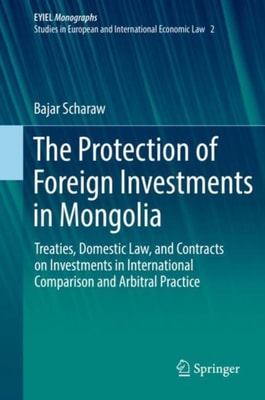
This book analyses the adequacy of Mongolia's legal system for foreign investment protection by conducting a multi-level assessment of international investment treaties, domestic legislation of the host State, and investor-State contracts from an international comparative perspective.
This book brings together analysis on the conditions of agricultural sectors in countries and regions of the world's peripheries, from a wide variety of international contributors.
This enlightening book offers a comprehensive historical analysis of the main development challenges of the last half century and the international community's response through aid and trade.
This book provides an overview of recent and future legal developments concerning the digital era, to examine the extent to which law has or will further evolve in order to adapt to its new digitalized context.