Problems facing manufacturing clusters that intersect information technology, process management, and optimization within the Internet of Things (IoT) are examined in this book.
This book provides an analysis of the institutional and constitutional effects of EU international agreements, with a particular focus on their potential effects on private parties.
This book analyzes the shifting global economic architecture, indicating the decentralizing authority in global economic governance since the Cold War and, especially, following the 2008-09 global financial crisis.
This book examines the macroeconomic and regulatory impact of domestic and international shocks on the South African economy resulting from the 2009 financial crisis.
This book provides the most comprehensive survey of mining activity and the principal challenges confronting the resources industry in the Asia-Pacific region today, and presents new theoretical and practical insights into the political and business risks faced by mining companies operating in the region from both academic and corporate perspectives.
This book is the result of recent research by contemporary scientists on topics which were discussed at the conference of the same name in Volgograd, Russia in April 2017.
This Palgrave Pivot investigates barriers to international agricultural trade caused by a lack of standardized maximum residue levels (MRL) for pesticides.
This book offers an assessment of new opportunities available for the agricultural sector and provides technical assistance to the Greek authorities with regards to its rural development and fishery sector.
This book analyzes how the EU referendum in the United Kingdom came to pass and what the foreseeable consequences are for the UK, Europe, US and world economy.
This book examines survey data to consider the extent to which public support for immigration, international trade, and foreign direct investment exists in a cohort of 38 heterogeneous countries.
This book provides expert advice on the practical implementation of the European Union's General Data Protection Regulation (GDPR) and systematically analyses its various provisions.
This book introduces the fundamental monetary law problems of cross-border economic activity and the solutions thereto in international monetary law, and in EU law.
This book discusses the contemporary trade dynamics necessary for companies to grow competitively in the global marketplace, extending the conceptual and analytical foundations of international trade and economy in North America.
This book provides an in-depth analysis of "e;Mega-Regionals"e;, the new generation of trans-regional free-trade agreements (FTAs) currently under negotiation, and their effect on the future of international economic law.
This book argues that the European integration process (Europeanisation) is pushing the member states and candidate countries toward a greater convergence with the EU's competition acquis.
This book brings together contributions from leading scholars around the world on the most relevant and pressing economic themes surrounding the UK-EU relationship.
This book focuses on the economic and political relationships between Russia and Europe, which are currently characterized by the existence and escalation of contradictions.
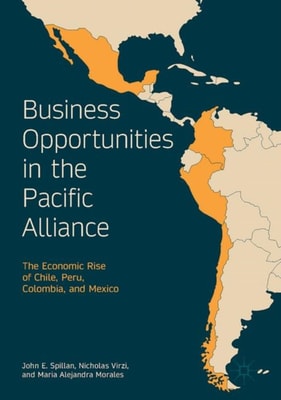
This book provides a solid overview of trade and business opportunities in the Pacific Alliance, focusing on the key drivers of economic growth and development in Chile, Peru, Colombia, and Mexico.
This book provides a thorough perspective on the realities of doing business in Ghana, outlining the economic, social, technological, and cultural dimensions of the society.
This book discusses how much other countries reflect the EU chemical regulation REACH (Registration, Evaluation, Authorization, Restriction of Chemicals), in the context of Europeanization theory.
This book examines how the US is dealing with the challenge of reconciling its global interests with regional dynamics and how it is able to produce and sustain order at the system level and within regional subsystems.
The book covers some of the major issues concerning the problematic relationship between respect for democratic principles and the new European Economic Governance.
This volume examines why the 2008 financial crisis with the subsequent Great Recession did not foster a major institutional transformation of the capitalist market economy.
This book analyses Jamaica's ability to satisfy its short and long run foreign currency obligations in light of recurrent balance of payment support from international lending agencies.
This book examines two types of transnational money laundering: the use of offshores and wire transfers to "e;invest"e; in real estate; and agribusiness, a nebulous activity that is difficult to regulate.
This book explores the diverse challenges facing the EU and in particular examines the impediments to financial stability and sustainable growth and how these can be overcome.
This book focuses on the impact of financial liberalisation and globalisation on economic growth and inequality worldwide over the past quarter century.