It is widely asserted, outside Japan, that the failure of foreign banks to penetrate Japanese financial markets is the direct result of stringent Japanese protectionist policies.
Keynes always intended to write 'footnotes' to his masterwork The General Theory, which would take account of the criticisms made of it and allow him to develop and refine his ideas further.
Keynes always intended to write 'footnotes' to his masterwork The General Theory, which would take account of the criticisms made of it and allow him to develop and refine his ideas further.
This second volume contains essays which relate to developments in Keynes' scholarship and theorizing in the years since his death and demonstrates the ongoing validity of the Keynesian tradition.
This second volume contains essays which relate to developments in Keynes' scholarship and theorizing in the years since his death and demonstrates the ongoing validity of the Keynesian tradition.
The European Union and the Nordic Countries provides an authoritative assessment of the intricate relationship between the EU and the Nordic countries.
The European Union and the Nordic Countries provides an authoritative assessment of the intricate relationship between the EU and the Nordic countries.
Lincoln Day assesses the demographic situation, the likely policy alternatives, the significance of future changes in fertility and mortality rates and analyses the likely losses and gains attendant upon an ageing, dwindling people.
Lincoln Day assesses the demographic situation, the likely policy alternatives, the significance of future changes in fertility and mortality rates and analyses the likely losses and gains attendant upon an ageing, dwindling people.
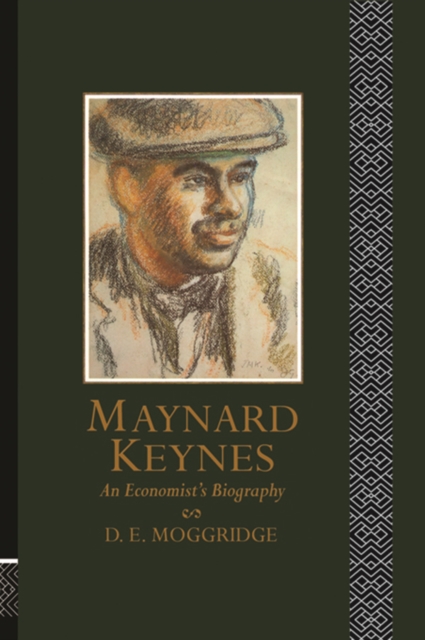
Based on an intimate knowledge of the subject and his environment, this biography of the most influential economist of the twentieth century traces Keynes' career on all its many levels.
The International Monetary Fund is the centre of a global financial system that encourages budgetary discipline and full integration into world trade to facilitate development and alleviate poverty.
The International Monetary Fund is the centre of a global financial system that encourages budgetary discipline and full integration into world trade to facilitate development and alleviate poverty.
The increased volatility of interest rates during recent years and the corresponding introduction of a variety of interest rate derivative securities like bond options, futures and embedded options in mortgages, underlines the need for a comprehensive financial theory to determine values of fixed income instruments and derivative securities consistently.
The increased volatility of interest rates during recent years and the corresponding introduction of a variety of interest rate derivative securities like bond options, futures and embedded options in mortgages, underlines the need for a comprehensive financial theory to determine values of fixed income instruments and derivative securities consistently.
For two decades thinking on economic policy has been dominated by the idea of economic liberalization in general and financial deregulation in particular.
In recent years, Japan's financial market has seen dramatic changes, in particular the explosive growth of currency trading and the increasing international role of the yen.
In recent years, Japan's financial market has seen dramatic changes, in particular the explosive growth of currency trading and the increasing international role of the yen.
In this volume an international team of distinguished monetary historians examine the historical experience of exchange rate behaviour under different monetary regimes.
In this volume an international team of distinguished monetary historians examine the historical experience of exchange rate behaviour under different monetary regimes.
This book considers the treatment of equilibrium by several of the most important schools of thought in economics, including:* neoclassical economics,* the neo-Ricardian economics,* Post-Keynesian economics - both those who follow Joan Robinson in denying any interpretative role to equilibrium in economic theorizing and those who use the notion of equilibrium, but re-defined from a Classical or Keynesian perspective.
This book considers the treatment of equilibrium by several of the most important schools of thought in economics, including:* neoclassical economics,* the neo-Ricardian economics,* Post-Keynesian economics - both those who follow Joan Robinson in denying any interpretative role to equilibrium in economic theorizing and those who use the notion of equilibrium, but re-defined from a Classical or Keynesian perspective.