This short primer distils Ruchir Sharma's decades of global analytic experience into ten rules for identifying nations that are poised to take off or crash.
The Cash Nexus is the controversial history of money's central place in the world, from Niall Ferguson, bestselling author of Empire and CivilizationGenerations of historians have shied away from the truth behind the cliche: money makes the world go around.
'A witty and timely debunking of some of the biggest myths surrounding the global economy' - ObserverHa-Joon Chang's 23 Things They Don't Tell You About Capitalism turns received economic wisdom on its head to show you how the world really works.
In The Conscience of a Liberal Paul Krugman, one of the US s most respected economists and outspoken commentators, lays out his vision of a New Deal for a fairer society.
What happens in the City has never affected us moreIn this excellent guide, now fully revised and updated, leading financial journalist Philip Coggan cuts through the headlines, the scandals and the jargon to explain the nuts and bolts of the financial system.
The fascinating untold story of digital cash and its creators-from experiments in the 1970s to the mania over Bitcoin and other cryptocurrenciesBitcoin may appear to be a revolutionary form of digital cash without precedent or prehistory.
Modern money, having now become a key tool of government economic policy and a source of massive tax revenues, has strayed far from its original purpose.
This book analyses the use of qualitative and quantitative content analysis methodologies for risk disclosure practices in the European banking industry.
This volume presents techniques and theories drawn from mathematics, statistics, computer science, and information science to analyze problems in business, economics, finance, insurance, and related fields.
This book assesses major schools of thought in macroeconomic theory between the Great Depression and the Long Recession, focusing on their analysis of cycles, crises and macro-policy.
Measuring Economic Growth and Productivity: Foundations, KLEMS Production Models, and Extensions presents new insights into the causes, mechanisms and results of growth in national and regional accounts.
This proceedings volume contains research trends, issues and developments in global economics and management with particular focus on the digital postindustrial economy-Economy 4.
This book analyses how the economic crisis in the 1970s led to the erosion of the regulated type of capitalism that came to be in place after World War II, and paved the way to a Neoliberal Globalisation.
A response to the pressing need to address and clarify the substantial ambiguity within current literature, this edited volume aims to deepen readers' understanding of the impact of foreign aid on development outcomes based on the latest findings in research over the past decade.
The Friedman-Lucas Transition in Macroeconomics: A Structuralist Approach considers how and to what extent monetarist and new classical theories of the business-cycle can be regarded as approximately true descriptions of a cycle's causal structure or whether they can be no more than useful predictive instruments.
Handbook of Economic Stagnation takes a broad view, including contributions from orthodox and heterodox economists who examine situations in countries and worldwide regions, including Japan and the Euro area.
This Palgrave Pivot assesses the impact of the regulatory framework for derivatives built post-crisis and examines its ambition to centralize and minimize credit risk, enhance transparency, and regain control.
This book offers a thorough introduction to the highly promising complex agent-based approach to economics, in which agent-based models (ABMs) are used to represent economic systems as complex and evolving systems composed of heterogeneous agents of limited rationality who interact with each other, generating the system's emergent properties in the process.
This book sheds new light on the critical importance of the Saudi Arabian Monetary Agency (SAMA), a remarkably successful central bank that is a model for developing oil exporters worldwide.
This book studies King Charles II's decision to stop all payments from his royal exchequer, a sordid but little-known event in English history with eerie similarities to the cause of the Great Recession of 2008.
This book explores how, through spirituality and the development of character, Islamic financial institutions and Muslim communities can integrate their businesses with contemporary social responsibility initiatives to produce positive social and environmental impact.
A powerful new understanding of global currency trends, including the rise of the Chinese yuanAt first glance, the modern history of the global economic system seems to support the long-held view that the leading world power's currency-the British pound, the U.
Economic Disturbances and Equilibrium in an Integrated Global Economy: Investment Insights and Policy Analysis helps readers develop a framework for analyzing economic events and make better, more consistent decisions.
Why society's expectation of economic growth is no longer realisticEconomic growth--and the hope of better things to come-is the religion of the modern world.
In mainstream economics, and particularly in New Keynesian macroeconomics, the booms and busts that characterize capitalism arise because of large external shocks.
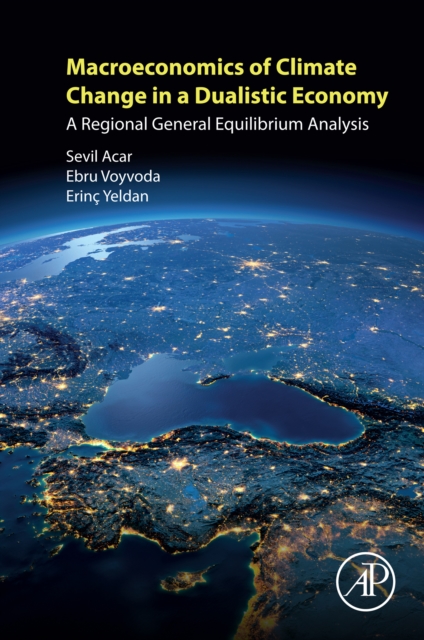
Macroeconomics of Climate Change in a Dualistic Economy: A Regional General Equilibrium Analysis generates significant, genuinely novel insights about dual economies and sustainable economic growth.
Introduction to Quantitative Macroeconomics Using Julia: From Basic to State-of-the-Art Computational Techniques facilitates access to fundamental techniques in computational and quantitative macroeconomics.
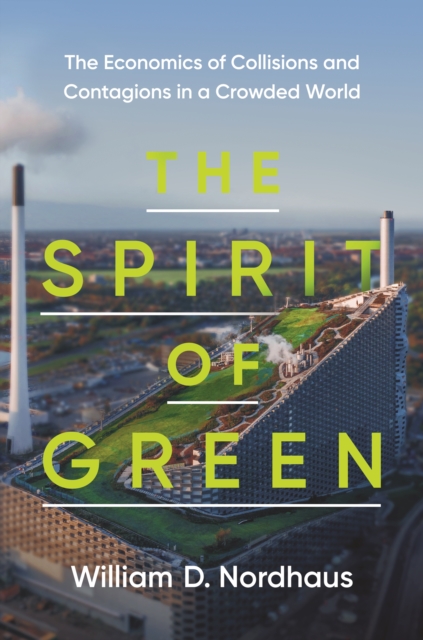
From a Nobel Prize-winning pioneer in environmental economics, an innovative account of how and why "e;green thinking"e; could cure many of the world's most serious problems-from global warming to pandemicsSolving the world's biggest problems-from climate catastrophe and pandemics to wildfires and corporate malfeasance-requires, more than anything else, coming up with new ways to manage the powerful interactions that surround us.