The evolution of capitalist economies through waves of liberalization of markets over the last five decades led to structural changes and greater systemic risks.
The European Union has fully committed itself to implementing the UN Sustainable Development Goals (UNSDGs) in all its policies by 2030 and encourages every single one of the member states to do the same.
The European Union has fully committed itself to implementing the UN Sustainable Development Goals (UNSDGs) in all its policies by 2030 and encourages every single one of the member states to do the same.
Gender Politics of Monetary Governance in Germany and the Eurozone provides a nuanced reading of how gender politics matter in monetary governance, contributing to a gendered critique of the political economy of Germany and the Eurozone and to efforts of 'de-patriarchalising' monetary and economic governance.
Gender Politics of Monetary Governance in Germany and the Eurozone provides a nuanced reading of how gender politics matter in monetary governance, contributing to a gendered critique of the political economy of Germany and the Eurozone and to efforts of 'de-patriarchalising' monetary and economic governance.
First published in 1983, The Eurodollar Market and the Years of Crisis embraces the wider concepts of the market's role in international monetary developments and examines the Eurodollar market within the context of the international monetary crisis of 1968- 1974.
This book explores the broad range of intellectual influences, ranging from the history of economic thought to political philosophy, that have shaped economics and its leading thinkers.
This book explores the broad range of intellectual influences, ranging from the history of economic thought to political philosophy, that have shaped economics and its leading thinkers.
In unpacking credit relationships and payments over the past 1000 years in addition to how technological innovations are shifting the credit relationships/payments landscape – from barter, commodity money, single layered to dual-layered financial money systems and from CBDC to stablecoins – this book systematically explores the various techniques that have been introduced in an attempt to improve the organisation, efficiency and stability of the IOU economy as a way to mitigate or prevent the universal challenge of the IOU economy from binding.
In unpacking credit relationships and payments over the past 1000 years in addition to how technological innovations are shifting the credit relationships/payments landscape – from barter, commodity money, single layered to dual-layered financial money systems and from CBDC to stablecoins – this book systematically explores the various techniques that have been introduced in an attempt to improve the organisation, efficiency and stability of the IOU economy as a way to mitigate or prevent the universal challenge of the IOU economy from binding.
This book presents the answers to the exercises in Macroeconomic Theory, Fluctuations, Inflation and Growth in Closed and Open Economies, 2nd Edition, by Fernando de Holanda Barbosa (Cham, Switzerland: Springer, 2024), hereafter referred as Macro Theory.
First published in 1983, The Eurodollar Market and the Years of Crisis embraces the wider concepts of the market's role in international monetary developments and examines the Eurodollar market within the context of the international monetary crisis of 1968- 1974.
Despite significant theoretical advances in social and behavioural macroeconomics, little has been done to synthesise the disparate developments in these fields and point the way forward to future research directions and policy implications.
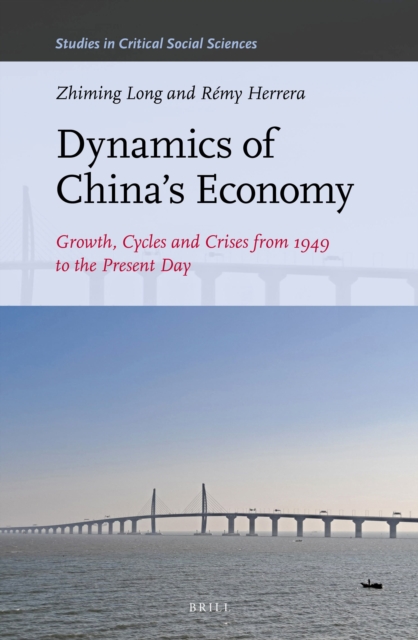
This book first analyzes the institutional changes and historical value orientations brought about by China's economic reforms and then explores the justice and progressiveness of changes in social production relations, as well as the uniqueness of economic growth and macro control in China's institutional changes.