Despite the negative press Asian economies have received in connection with the recent financial crisis, their record of spectacular growth over the past few decades remains irrefutable.
There can be no doubt, writes economist Melvyn Krauss, that the prosperity of the industrial nations since the Second World War has been due largely to global specialization and interdependence.
Faith in the free market--the idea that, for instance, profit-seeking managed care companies will improve the health care delivery system--has become a basic tenet of public policy debate.
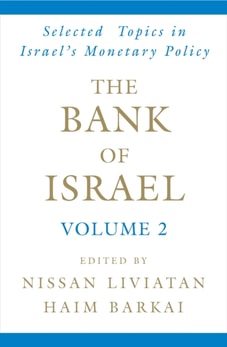
Volume II provides an in-depth analysis of important specific issues, detailed discussion of the independence of the Bank of Israel, and an econometric study of the central banks policies.
A clarion call for marketing to return to its roots and integrate sustainability principles, this book illustrates how the marketing function can drive organizations, delighting customers and impacting positively on society and the environment.
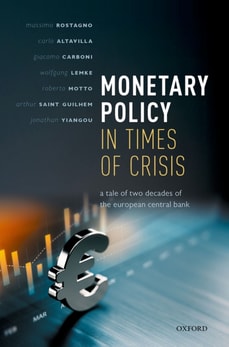
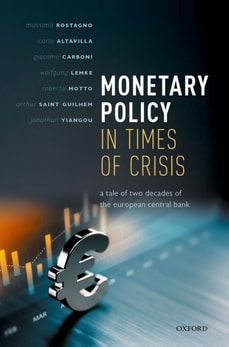
The first twenty years of the European Central Bank (ECB) offer a clear demonstration of how a central bank can navigate macroeconomic insecurity and crisis.
The first twenty years of the European Central Bank (ECB) offer a clear demonstration of how a central bank can navigate macroeconomic insecurity and crisis.
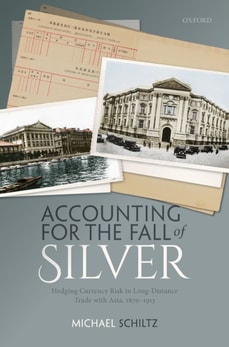
The second half of the nineteenth century is correctly known to have culminated in the emergence of the gold standard as the first truly international monetary regime.
The second half of the nineteenth century is correctly known to have culminated in the emergence of the gold standard as the first truly international monetary regime.
The Macroeconomics of Developing Countries provides a comprehensive discussion of the exogenous factors and macroeconomic policies that affect the business cycle, long term growth, and distribution of income in developing countries.
The Macroeconomics of Developing Countries provides a comprehensive discussion of the exogenous factors and macroeconomic policies that affect the business cycle, long term growth, and distribution of income in developing countries.
Monetary Policy in Low Financial Development Countries provides a broad coverage of the monetary policy issues faced by developing countries with low financial depth.
Monetary Policy in Low Financial Development Countries provides a broad coverage of the monetary policy issues faced by developing countries with low financial depth.
The last time global sovereign debt reached the level seen today was at the end of the Second World War, and this shaped a generation of economic policymaking.
The last time global sovereign debt reached the level seen today was at the end of the Second World War, and this shaped a generation of economic policymaking.
This book analyzes how the EU referendum in the United Kingdom came to pass and what the foreseeable consequences are for the UK, Europe, US and world economy.
Lectures in Macroeconomics: A Capitalist Economy Without Unemployment provides a systematic account of the principle of aggregate demand based on the work of Polish economist Michal Kalecki, best known as one of the originators of the Keynesian Revolution in macroeconomics.
Lectures in Macroeconomics: A Capitalist Economy Without Unemployment provides a systematic account of the principle of aggregate demand based on the work of Polish economist Michal Kalecki, best known as one of the originators of the Keynesian Revolution in macroeconomics.
Barely two decades after the Asian financial crisis Asia was suddenly confronted with multiple challenges originating outside the region: the 2008 global financial crisis, the European debt crisis, and finally developed economies' implementation of unconventional monetary policies.
Barely two decades after the Asian financial crisis Asia was suddenly confronted with multiple challenges originating outside the region: the 2008 global financial crisis, the European debt crisis, and finally developed economies' implementation of unconventional monetary policies.
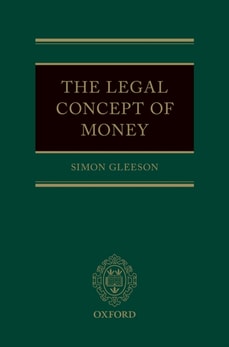
This new book analyses the challenge of how money (including coins, notes, credit, and virtual currency) should be defined from both a legal and an economic perspective.
This new book analyses the challenge of how money (including coins, notes, credit, and virtual currency) should be defined from both a legal and an economic perspective.