Research on the spatial aspects of economic activity has flourished over the past decade due to the emergence of new theory, new data, and an intense interest on the part of policymakers, especially in Europe but increasingly in North America and elsewhere as well.
How the great political thinkers have persistently warned against the dangers of economic inequalityEconomic inequality is one of the most daunting challenges of our time, with public debate often turning to questions of whether it is an inevitable outcome of economic systems and what, if anything, can be done about it.
New, practical approaches to confronting today's most daunting global issuesFighting climate change, saving democracy, and eradicating poverty are urgent global challenges, yet the world's leaders continue to pursue outdated policies that focus on one while worsening the tradeoffs between each of them.
How the euro survived a series of crises, and how to make it more resilientThe euro has survived crises unimagined at its founding: the financial meltdown of 20072009, the sovereign debt crisis of 20102012, the pandemic, and the Russian invasion of Ukraine.
Global business leader Mathias Dpfner offers a ';compelling' (Gideon Rachman, chief foreign affairs columnist for Financial Times) and revolutionary road map to reshape global trade, strengthen our democracy, and safeguard our freedoms.
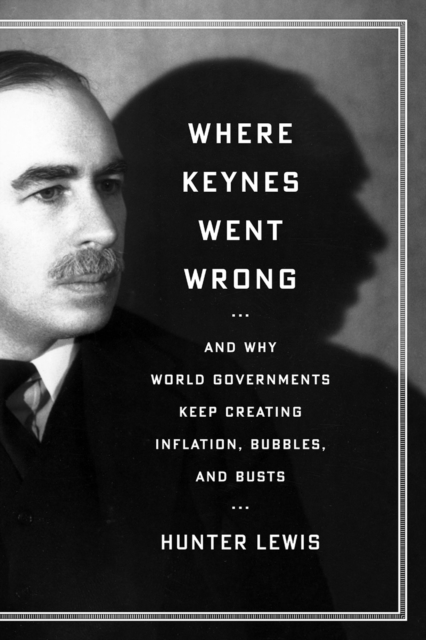
In responding to the financial crash of 2008, both the Bush Administration and the Obama Administration have relied on prescriptions developed by John Maynard Keynes, the most important economist since Marx.
A case study of why Third World countries are still poor, the premise of this book is that while some progress has been made in transforming the political economy of Ecuador, certain behaviors, beliefs and attitudes have kept the country from developing in ways that otherwise would have been possible.
The dramatic and action-packed story of the last mysterious place on earththe worlds seafloorand the deep-sea divers, ocean mappers, marine biologists, entrepreneurs, and adventurers involved in the historic push to chart it, as well as the opportunities, challenges, and perils this exploration holds now and for the future.
Dieses eBook: "Die Akkumulation des Kapitals" ist mit einem detaillierten und dynamischen Inhaltsverzeichnis versehen und wurde sorgfältig korrekturgelesen.
In a series of 50 accessible essays, Ed Conway introduces and explains the essential economic concepts needed to understand booms and busts, bulls and bears, and how economics influences every aspect of our lives, whether buying a house or what you ate for breakfast this morning.
'Packed with fresh and clear insights that will change the way you think about the world' Uri Gneezy'One of those books that you pick up and then can't put down' Steve Stewart-Williams'This is a book I will come back to again and again' Nichola RaihaniHow game theory - the ultimate theory of rationality - explains irrational behaviour.
'Superb' - Tim Harford, author of How to Make the World Add Up Money is essential to the economy and how we live our lives, yet is inherently worthless.
If you've read about self-driving cars, blockchain, and the internet of things (IoT), registered for a massive open online course (MOOC), considered dealing in cryptocurrencies, or asked Alexa to play your favourite song, the chances are you are one of the select few Indians adjusting to the reality of a brave new world driven by technology and automation.
El libro describe qué es la economía creativa, de moda en Latinoamérica y en el mundo entero, con una tendencia infinita a su aplicación; qué debemos hacer y cómo hacer para crearla, investigarla, desarrollarla e implementarla para ser más competitivos internacionalmente.
Los procesos de globalización e internacionalización de los mercados y las econo-mías de los países han hecho que la sociedad global internacional comprenda que el mundo del siglo xxi está conformado por países ricos y pobres, esto es países desarrollados y países en desarrollo.
Bagehot was one of the first writers to describe and explain the world of international and corporate finance, banking, and money in understandable language.
Weber wrote that capitalism in northern Europe evolved when the Protestant (particularly Calvinist) ethic influenced large numbers of people to engage in work in the secular world, developing their own enterprises and engaging in trade and the accumulation of wealth for investment.
From the author of The Shifts and the Shocks, and one of the most influential writers on economics, a reckoning with how and why the relationship between democracy and capitalism is coming undone We are living in an age when economic failings have shaken faith in global capitalism.
Protagoras - Plato - Plato is a Classical Greek philosopher, mathematician, student of Socrates, writer of philosophical dialogues, and founder of the Academy in Athens, the first institution of higher learning in the Western world.
In late 2008, under the long shadow cast by the most severe economic crisis in generations, a revolutionary new form of currency was quietly being shaped.
If you're like most people, you want nothing more than a fair shot in life: a chance to seek out opportunities, work hard, and make your own way in this world.
Technology Differences over Space and Time looks at how countries use their productive resources-such as workers, skills, equipment and structures, and natural resources.