This concise and timely book, written by one of the world's leading authorities on China, argues that the country is at a crossroads in its development and explores the challenges that lie ahead.
The literature on governmentality has had a major impact across the social sciences over the past decade, and much of this has drawn upon the pioneering work by Peter Miller and Nikolas Rose.
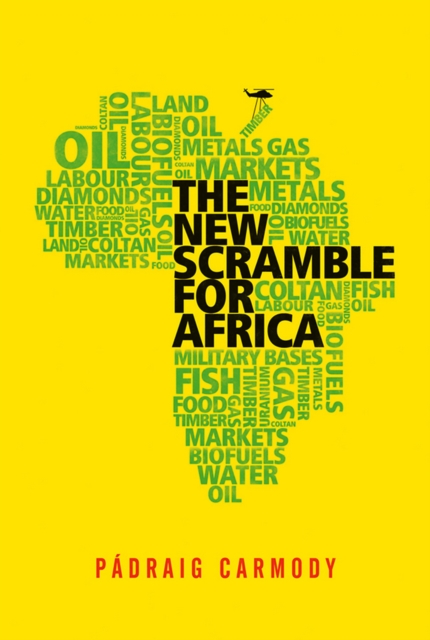
Once marginalized in the world economy, the past decade has seen Africa emerge as a major global supplier of crucial raw materials like oil, uranium and coltan.
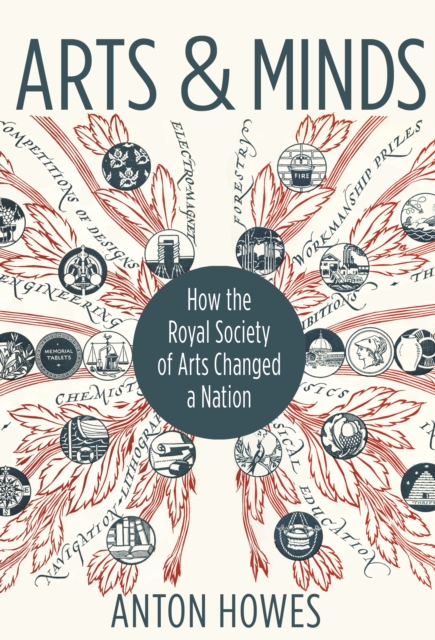
A history of the extraordinary society that has touched all aspects of British lifeFrom its beginnings in a coffee house in the mid-eighteenth century, the Royal Society for the Encouragement of Arts, Manufactures and Commerce has tried to improve British life in every way imaginable.
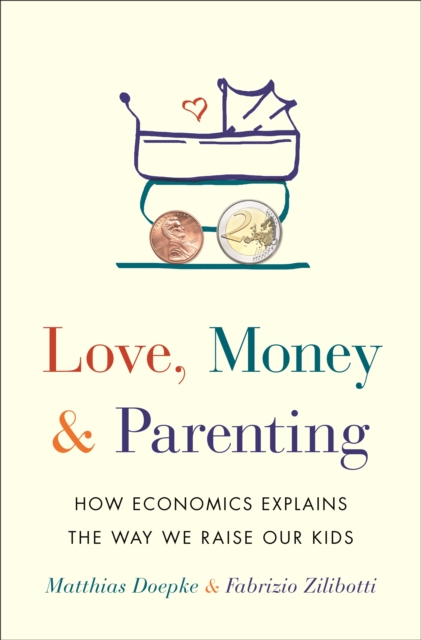
An international and historical look at how parenting choices change in the face of economic inequalityParents everywhere want their children to be happy and do well.
Create the personalized and compelling experiences that today's customers expect by harnessing AI and digital technologies to create smart connected products, with this cutting-edge guide from senior leaders at Accenture.
A global history of environmental warfare and the case for why it should be a crimeThe environmental infrastructure that sustains human societies has been a target and instrument of war for centuries, resulting in famine and disease, displaced populations, and the devastation of people's livelihoods and ways of life.
A practical, easy-to-follow guide to understanding and responding to Australian economic trends How does the fall in the Dow Jones or the rise in the Chinese yuan impact your personal finances?
A practical, easy-to-follow guide to understanding and responding to Australian economic trends How does the fall in the Dow Jones or the rise in the Chinese yuan impact your personal finances?
In The Shifts and the Shocks, Martin Wolf - one of the world's most influential economic commentators and author of Why Globalization Works - presents his controversial and highly original analysis of the economic course of the last seven yearsThere have been many books that have sought to explain the causes and courses of the financial and economic crisis which began in 2007-8.
The Democracy Project is an exploration of anti-capitalist dissent and new political ideas from David Graeber, author of Debt: The First 5,000 Years and a leading member of the Occupy movement.
En esta época de recesión económica y de incertidumbre financiera, el enfoque patentado de Peters para la administración empresarial y gestión, es más necesario que nunca.
A book that challenges everything you thought you knew about the online economyThe internet was supposed to fragment audiences and make media monopolies impossible.
How foreign lending weakens emerging nationsIn the nineteenth century, many developing countries turned to the credit houses of Europe for sovereign loans to balance their books and weather major fiscal shocks such as war.
In the first political analysis of unemployment in a socialist country, Susan Woodward argues that the bloody conflicts that are destroying Yugoslavia stem not so much from ancient ethnic hatreds as from the political and social divisions created by a failed socialist program to prevent capitalist joblessness.
How the booming Islamic finance industry became an ultramodern hybrid of religion and marketsIn just fifty years, Islamic finance has grown from a tiny experiment operated from a Volkswagen van to a thriving global industry worth more than the entire financial sector of India, South America, or Eastern Europe.
A pioneering account of the surging global tide of market power-and how it stifles workers around the worldIn an era of technological progress and easy communication, it might seem reasonable to assume that the world's working people have never had it so good.
How technological advances and colonial fears inspired utopian geoengineering projects during the late nineteenth and early twentieth centuries From the 1870s to the mid-twentieth century, European explorers, climatologists, colonial officials, and planners were avidly interested in large-scale projects that might actively alter the climate.
An in-depth look at the rising American generation entering the Black professional classDespite their diversity, Black Americans have long been studied as a uniformly disadvantaged group.
A comprehensive and illuminating account of the history of credit in America-and how it continues to divide the haves from the have-notsThe Economy of Promises is a far-reaching study of credit in nineteenth- and twentieth-century America.
How poor migrants shape city politics during urbanizationAs the Global South rapidly urbanizes, millions of people have migrated from the countryside to urban slums, which now house one billion people worldwide.
From the acclaimed authors of Capitalism without Capital, radical ideas for restoring prosperity in today's intangible economyThe past two decades have witnessed sluggish economic growth, mounting inequality, dysfunctional competition, and a host of other ills that have left people wondering what has happened to the future they were promised.
A sweeping account of how the sea routes of Asia have transformed a vast expanse of the globe over the past five hundred years, powerfully shaping the modern worldIn the centuries leading up to our own, the volume of traffic across Asian sea routes-an area stretching from East Africa and the Middle East to Japan-grew dramatically, eventually making them the busiest in the world.
Money in the history of political thought, from ancient Greece to the Great Inflation of the 1970sIn the wake of the 2008 financial crisis, critical attention has shifted from the economy to the most fundamental feature of all market economiesmoney.
A small but increasing number of economists have begun to use laboratory experiments to evaluate economic propositions under carefully controlled conditions.
From New York Times bestselling author and economics columnist Robert Frank, bold new ideas for creating environments that promise a brighter futurePsychologists have long understood that social environments profoundly shape our behavior, sometimes for the better, often for the worse.