Nearly seventy years after the last great stock market bubble and crash, another bubble emerged and burst, despite a thick layer of regulation designed since the 1930s to prevent such things.
Working Capital Management provides a general framework that will help managers understand working capital using a comprehensive approach that links operating decisions to their financial implications and to the overall business strategy.
In spite of theoretical benefits, Markowitz mean-variance (MV) optimized portfolios often fail to meet practical investment goals of marketability, usability, and performance, prompting many investors to seek simpler alternatives.
Working Capital Management provides a general framework that will help managers understand working capital using a comprehensive approach that links operating decisions to their financial implications and to the overall business strategy.
In spite of theoretical benefits, Markowitz mean-variance (MV) optimized portfolios often fail to meet practical investment goals of marketability, usability, and performance, prompting many investors to seek simpler alternatives.
The way in which securities are traded is very different from the idealized picture of a frictionless and self-equilibrating market offered by the typical finance textbook.
Nearly seventy years after the last great stock market bubble and crash, another bubble emerged and burst, despite a thick layer of regulation designed since the 1930s to prevent such things.
This book takes a global approach, with an emphasis on North and Latin America respectfully, by discussing one of today's most controversial topics in business; Dollarization.
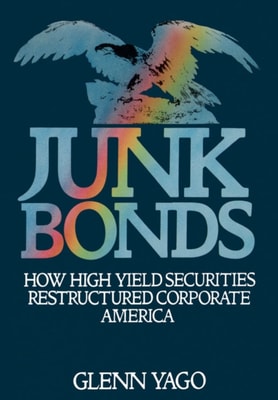
Fascinating as the corporate takeovers of recent years have been--with their "e;golden parachutes"e; and junk bonds, "e;greenmailers"e; and white knights--it is far from clear what underlying forces are at work, and what their long-term consequences will be.
Over the past decade, Japanese corporations have made a series of large, news-generating gifts to a variety of United States universities, museums, and research institutions.
Not since Edward Mason's classic book The Corporation in Modern Society appeared in 1959 has anyone compiled an authoritative overview of the American business firm.
Ein Buch, das auf die IHK-Weiterbildungsprüfung „Fachberater/in für Finanzdienstleistun-gen“ vorbereitet und gleichzeitig „Praxiswissen Finanzdienstleistungen“ heißt – widerspricht sich das nicht?
A clarion call for marketing to return to its roots and integrate sustainability principles, this book illustrates how the marketing function can drive organizations, delighting customers and impacting positively on society and the environment.
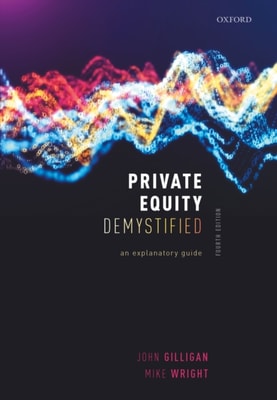
This book deals with risk capital provided for established firms outside the stock market, private equity, which has grown rapidly over the last three decades, yet is largely poorly understood.
This book deals with risk capital provided for established firms outside the stock market, private equity, which has grown rapidly over the last three decades, yet is largely poorly understood.
Predatory Value Extraction explains how an ideology of corporate resource allocation known as 'maximizing shareholder value' (MSV) that emerged in the 1980s came to dominate strategic thinking in business schools and corporate boardrooms in the United States.
Predatory Value Extraction explains how an ideology of corporate resource allocation known as 'maximizing shareholder value' (MSV) that emerged in the 1980s came to dominate strategic thinking in business schools and corporate boardrooms in the United States.