Although primarily a method of improving corporate results through motivating employees, ESOPs have a role in corporate finance as a provider of capital in a highly tax efficient manner.
Tax Havens for International Business is a special management report that shows how the establishment of a tax haven operation, in any of many locations worldwide, can save more money than any internal tax-shelter programme.
The Handbook of International Financial Management brings together a wide range of topical expertise on issues of immediate relevance to finance directors, bankers, advisers and consultants with the support of a powerful editorial board representing international financial institutions.
The books in this series aim to reflect the enormous economic and political changes that small and medium-sized nations in East and South-East Asia have been undergoing in the 1970s and 1980s and to show the impact of these changes on the world economy.
The objective of this book is to provide banks and the financial industry at large with an analysis of what is and what is not a network at their service.
Using the valuation framework based on the Law of One Price, top researchers Jonathan Berk and Peter DeMarzo have set the new canon for corporate finance texts.
The financial environment of small and entrepreneurial firms is changing rapidly and is a topic where significant disagreement remains amongst researchers and policy advisers.
The financial environment of small and entrepreneurial firms is changing rapidly and is a topic where significant disagreement remains amongst researchers and policy advisers.
Medical Group Management in Turbulent Times: How Physician Leadership Can Optimize Health Plan, Hospital, and Medical Group Performance provides you with proven methods and new strategies on how to deliver more effective health care, health products, and related services to patients and other consumers.
Medical Group Management in Turbulent Times: How Physician Leadership Can Optimize Health Plan, Hospital, and Medical Group Performance provides you with proven methods and new strategies on how to deliver more effective health care, health products, and related services to patients and other consumers.
Governance and the Market for Corporate Control is a textbook for use on business courses dealing with mergers, acquisitions, governance restructuring and corporate control.
Governance and the Market for Corporate Control is a textbook for use on business courses dealing with mergers, acquisitions, governance restructuring and corporate control.
Over the past decades, the total value of executive compensation packages has been rising dramatically, contributing to a wider pay gap between the chief executive officer and the average worker.
Over the past decades, the total value of executive compensation packages has been rising dramatically, contributing to a wider pay gap between the chief executive officer and the average worker.
The Link between Company Environmental & Financial Performance, first published in 1998, is a detailed investigation into the effects of environmental performance - resource efficiency, regulatory compliance, new product and service opportunities - on corporate financial performance.
The Link between Company Environmental & Financial Performance, first published in 1998, is a detailed investigation into the effects of environmental performance - resource efficiency, regulatory compliance, new product and service opportunities - on corporate financial performance.
This book develops a new framework - the stakeholder model - that helps to understand corporate finance and governance in modern society, where the sources of people's happiness have shifted from monetary to non-monetary factors.
This book develops a new framework - the stakeholder model - that helps to understand corporate finance and governance in modern society, where the sources of people's happiness have shifted from monetary to non-monetary factors.
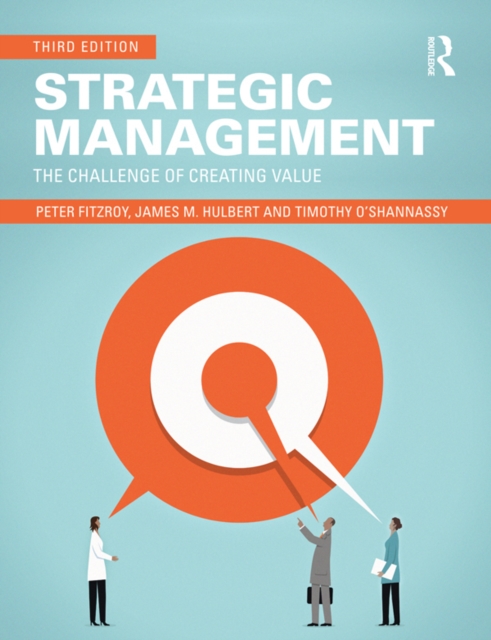
Strategy is often the capstone class in a business education - dealing with the big questions of what companies decide to do - innovate, diversify, acquire or even to employ a range of these strategies.
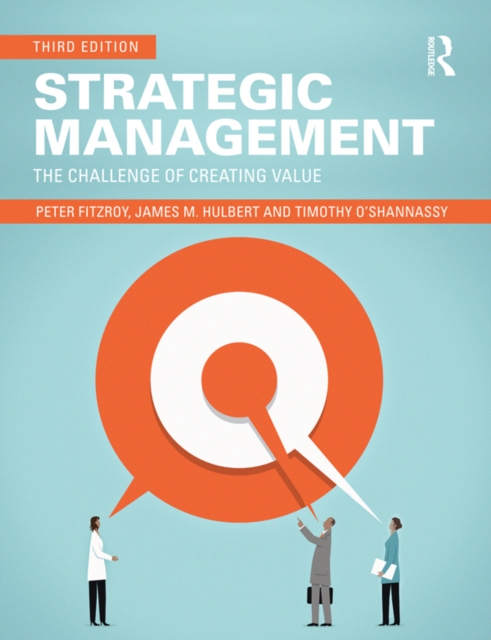
Strategy is often the capstone class in a business education - dealing with the big questions of what companies decide to do - innovate, diversify, acquire or even to employ a range of these strategies.
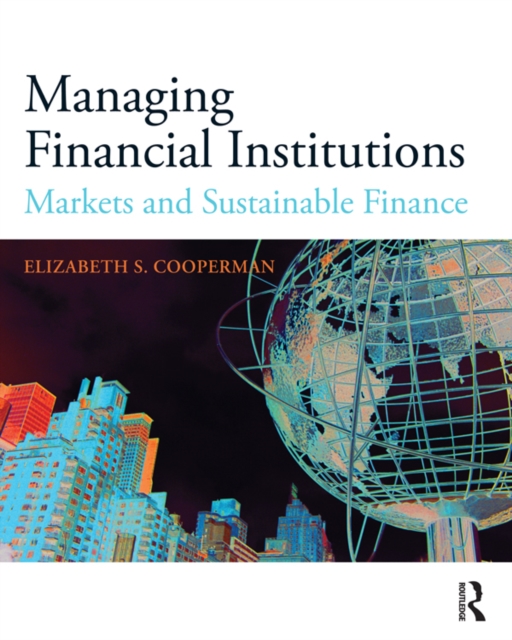
This book goes beyond traditional financial institutions textbooks, which tend to focus on mathematical models for risk management and the technical aspects of measuring and managing risk.
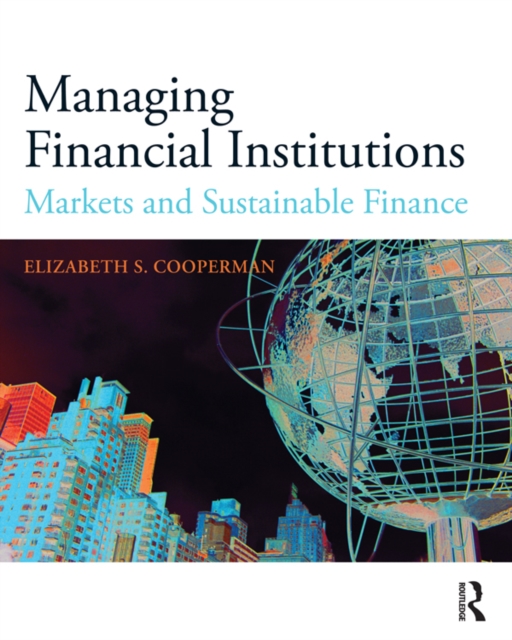
This book goes beyond traditional financial institutions textbooks, which tend to focus on mathematical models for risk management and the technical aspects of measuring and managing risk.