Over the last 20 years hedge funds and derivatives have fluctuated in reputational terms; they have been blamed for the global financial crisis and been praised for the provision of liquidity in troubled times.
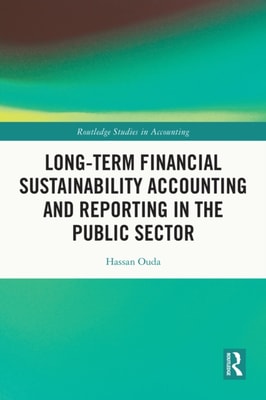
This book addresses a longstanding issue that emerged fifty years ago and continues to persist- the lack of an accounting and reporting system for financial sustainability.
This book is a timely addition to the fast-growing international debate on Integrated Reporting, which offers a holistic view of the evolution and practice of Integrated Reporting.
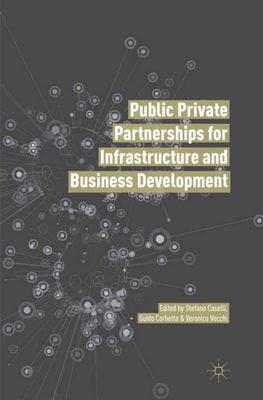
Public-Private Partnerships for Infrastructure and Business Funding is ideal for scholars and practitioners who work in the field of public policy design and implementation, finance and banking, and economic development.
This book focuses on extending the models and theories (from a mathematical/statistical point of view) which were introduced in the first volume to a more technical level.
A guide to expand and enhance the tools available to financial professionals to solve problems effectively, efficiently and to strengthen accounting controls.
Investor Relations for the Emerging Company provides enduring advice, insight, and procedures that will help companies communicate, legally and ethically, their commitment to enhancing shareholder value.
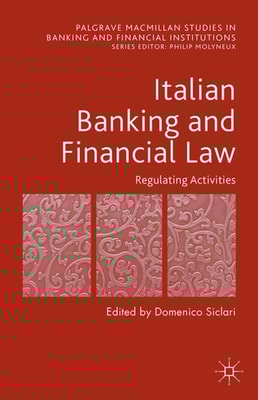
Within an environment made difficult by the continuing economic crisis, the Italian model for crisis management and resolution has helped to avoid many difficulties faced by intermediaries across the globe.
Italian Banking and Financial Law provides a thorough overview of the banking sector in Italy, offering historical perspectives, insight into current developments and suggestions for future evolution.
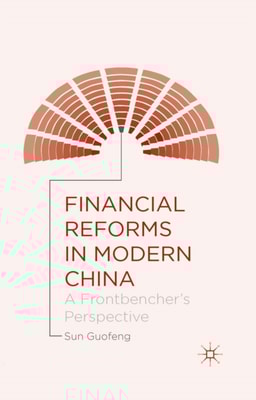
Collected here for the first time in English, this comprehensive book, written by an experienced insider privy to the inner workings of China's vigorous financial reforms, examines China's most important markets (money, bonds, foreign exchange, and stock) and the policies that regulate them.
As technology advancement has increased, so to have computational applications for forecasting, modelling and trading financial markets and information, and practitioners are finding ever more complex solutions to financial challenges.
This book explores the role of the rating system in creditworthiness assessment, looking into its current status, strengths and weaknesses and possible evolution in the light of Basel 3 and the Global Economic Crisis.
The lasting effects of corporate fiascos on business and the economy have spurred investigations, panel discussions, and research in an attempt to find out why these events happen and ways to prevent them.
As technology advancement has increased, so to have computational applications for forecasting, modelling and trading financial markets and information, and practitioners are finding ever more complex solutions to financial challenges.
By taking the long view on the evolution of this country's tax policies through the past few decades, Henrekson and Stenkula explain how Sweden developed the highest tax-to-GDP ratio in the world, until the beginning of the 2000s.
The International Handbook of Shipping Finance is a one-stop resource, offering comprehensive reference to theory and practice in the area of shipping finance.
Recent experience from the global financial crisis suggests that the future of corporate governance will bring radical changes, surprises and challenges.
The decision to engage in corporate social action (CSA), and the debates regarding its costs, benefits and implications to corporate performance represent a demanding issue for scholars and managers.
This book explores why Modified Internal Rate of Return (MIRR) and Net Present Value (NPV) are not necessarily accurate or efficient tools for valuation and decision-making.
This book examines the dramatic increase in automotive assembly plants in the former Socialist Central European (CE) nations of Czechia, East Germany, Hungary, Poland, and Slovakia from 1989 onwards.
Recent large-scale corporate collapses, such as Lehman Brothers, Enron, Worldcom, and Parmalat, highlight the implosion of traditional models of fraud prevention.
This project examines the concept of fraud loss measurement by critiquing existing measurement methodologies, and argues for the mandating of fraud loss measurement by enforced self regulation, the creation of a British Standard of fraud loss measurement, and the establishment of an information exchange matrix to develop best practice.
Nominal yields on government debt in several countries have fallen very near their zero lower bound (ZLB), causing a liquidity trap and limiting the capacity to stimulate economic growth.
The global financial crisis has reopened discussion surrounding the use of appropriate theoretical financial frameworks to reflect the current economic climate.
This book describes and analyses the impact of the 2007-2008 financial crisis upon the working conditions of employees in the financial services sector in Britain.
Value-Based Working Capital Management analyzes the causes and effects of improper cash flow management between entrepreneurial organizations with varying levels of risk.
Sovereign Debt and Credit Rating Bias rejects the notion that credit rating agencies' rigorous and transparent determination of ratings leaves no room for bias, and debunks the myth that the value CRAs place on their reputational capital precludes prolonged biases.
With Exchange Traded Fund (ETF) sponsors constantly making new types of ETFs available, there is now a variety of ETFs that provide investors with an opportunity to develop diversified investment portfolios.
Andria van der Merwe provides a thorough guide to the critical tools needed to navigate liquidity markets and value security pricing in the presence of market frictions and information asymmetries.