The objective of the present edited book is to encompass studies from both developed and developing countries of Asia, Africa Europe, and Americas, to understand and present a comparative scenario of the climate change and other environmental determinants of health and disease in geographically diversified countries.
Process Chemistry of Coal Utilization: Chemistry Toolkit for Furnaces and Gasifiers presents a broad range of quantitative methods for solving common problems surrounding the performance of coal utilization technologies.
Simply written, and with a view to taking the wisdom of Confucius out of the hands of the academics and the philosophers and making it accessible to the general reader, Confucius From the Heart gives us a contemporary Confucius, one who can teach us how to attain spiritual happiness, adjust our daily routines and find our place in modern life.
Theory and Technology of Multiscale Dispersed Particle Gel for in-depth Profile Control systematically introduces concepts surrounding preparation principles and methods of DPG particles.
Agricultural Nanobiotechnology: Biogenic Nanoparticles, Nanofertilizers and Nanoscale Biocontrol Agents presents the most up-to-date advances in nanotechnology to improve the agriculture and food industry with novel nanotools for the controlling of rapid disease diagnostic and enhancement of the capacity of plants to absorb nutrients and resist environmental challenges.
Citrus Fruit: Biology, Technology and Evaluation, Second Edition presents a comprehensive view of these globally important crops, from cultivars to consumer acceptability.
Deepwater Sedimentary Systems: Science, Discovery and Applications helps readers identify, understand and interpret deepwater sedimentary systems at various scales - both onshore and offshore.
Practical Petroleum Geochemistry for Exploration and Production, Second Edition provides readers with a single reference that addresses the principle concepts and applications of petroleum geochemistry used in finding, evaluating, and producing petroleum deposits.
Seismic Imaging Methods and Application for Oil and Gas Exploration connects the legacy of field data processing and imaging with new research methods using diffractions and anisotropy in the field of geophysics.
Hazardous and Trace Materials in Soil and Plants: Sources, Effects and Management explores the latest advancements in reducing, avoiding and eliminating soil contaminants that challenge the health and safety of agricultural plants.
Nano-Enabled Agrochemicals in Agriculture presents a targeted overview of the safe implementation of nanotechnologies within agricultural and horticultural settings, with the purpose of achieving enhanced production while maintaining ecological integrity.
Carbon Dots in Agricultural Systems integrates and crystallizes the emerging knowledge and application strategies of carbon dots as a powerful tool in agriculture systems.
Microbiome Under Changing Climate: Implications and Solutions presents the latest biotechnological interventions for the judicious use of microbes to ensure optimal agricultural yield.
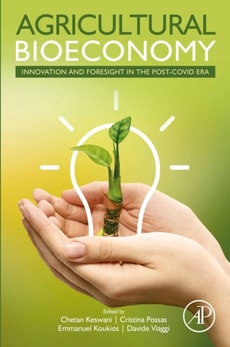
Agricultural Bioeconomy: Innovation and Foresight in the Post-COVID Era presents recent advancements in biotechnology, exploring the optimal utilization of technologies to provide rapid and impactful economic recovery and sustainable resources in a future that will bear the mark of COVID-19.
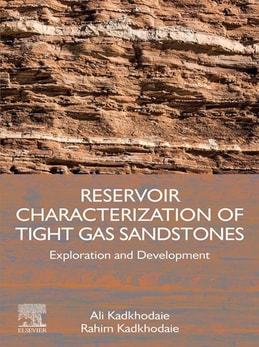
Reservoir Characterization of Tight Gas Sandstones: Exploration and Development is essential reading for those working in oil and gas exploration (both in industry and academia) as it contains chapters that help them further understand all aspects of tight gas reservoirs.
Process Chemistry of Coal Utilization: Chemistry Toolkit for Furnaces and Gasifiers presents a broad range of quantitative methods for solving common problems surrounding the performance of coal utilization technologies.
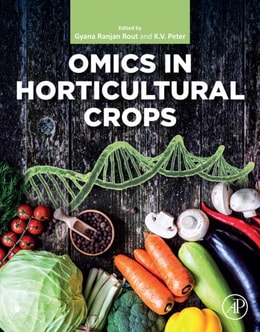
Omics in Horticulture Crops presents a comprehensive view of germplasm diversity, genetic evolution, genomics, proteomics and transcriptomics of fruit crops (temperate, tropical and subtropical fruits, fruit nuts, berries), vegetables, tuberous crops, ornamental and floricultural crops and medicinal aromatic plants.
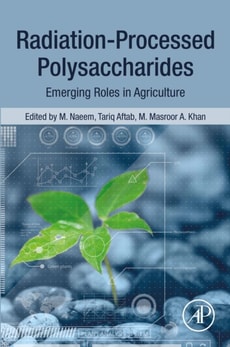
Radiation-Processed Polysaccharides: Emerging Roles in Agriculture is the first book to focus exclusively on this emerging and important option for reducing the overuse and negative impact of agrochemicals in agriculture.
Bioinformatics in Agriculture: Next Generation Sequencing Era is a comprehensive volume presenting an integrated research and development approach to the practical application of genomics to improve agricultural crops.
Methods and Applications in Petroleum and Mineral Exploration and Engineering Geology is an interdisciplinary book bridging the fields of earth sciences and engineering.
Agricultural Waste Diversity and Sustainability Issues: Sub Saharan Africa as Case Study presents solutions for overcoming limitations, guiding developmental processes, and improving knowledge transfer in agricultural waste management and development.
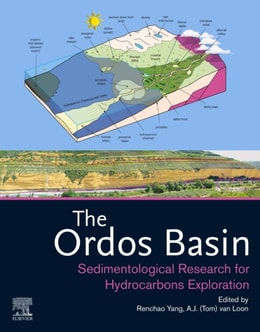
The Ordos Basin: Sedimentological Research for Hydrocarbons Exploration provides an overview of sedimentological approaches used in the lacustrine Ordos Basin (but also applicable in other marine and lacustrine basins) to make hydrocarbon exploration more efficient.
Plant Factory Basics, Applications, and Advances takes the reader from an overview of the need for and potential of plant factories with artificial lighting (PFALs) in enhancing food production and security to the latest advances and benefits of this agriculture environment.
Carbon Dots in Agricultural Systems integrates and crystallizes the emerging knowledge and application strategies of carbon dots as a powerful tool in agriculture systems.
A "e;conservative environmental tradition"e; in America may sound like a contradiction in terms, but as Brian Allen Drake shows in Loving Nature, Fearing the State, right-leaning politicians and activists have shaped American environmental consciousness since the environmental movement's beginnings.
This book offers a comprehensive overview of the contemporary international petrochemicals business and explains related managerial complexities, business challenges, and opportunities to enhance competitiveness.
In this innovative grassroots to global study, Kathleen Mapes explores how the sugar beet industry transformed the rural Midwest by introducing large factories, contract farming, and foreign migrant labor.
Economics of Food Processing in the United States aims to provide an economic overview of the food processing industries in the United States; to explore the firm-level implications of social, economic, technological, and institutional forces for selected food processing industries; and to uncover some of the implications for consumers, raw product producers, and the national economy of the major trends observed in food industries.
The emergence of a world economy depends on the reorganization of agriculture and food systems to provision the work force and the industries associated with the division of labor.
This work presents models that characterize the relationships between quantity and quality of irrigation water application, and agricultural production and the environment.
2015 NEW MEXICO-ARIZONA BOOK AWARD WINNER"e;This useful, entertaining guide gives prospective microfarmers the dirt on realistic essentials for turning a garden into a moneymaking enterpriseThe author advises on such basics as business plans and sales techniques; profiles a range of actual working microfarms, from flowers to killer bees; and relates hilarious stories from his own microfarming.
In this impressive biography, freshly updated, leading business writer Paddy Manning tells the story of Tinklers meteoric rise to wealth, and captures the drama of his equally rapid downfall.
In a vast society where environmentally conscious nonfarming voters and consumers have grown to greatly outnumber those directly engaged in agriculture, what happens in agriculture becomes increasingly subject to control by the general society, as policies and laws cater to constituents and consumers.
Developments in genomics and biotechnology are opening up new avenues for accelerating the domestication of forest trees in a climate change driven world.
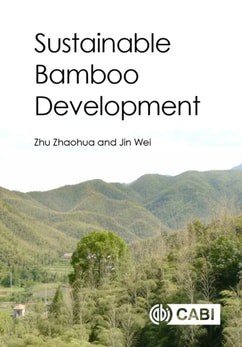
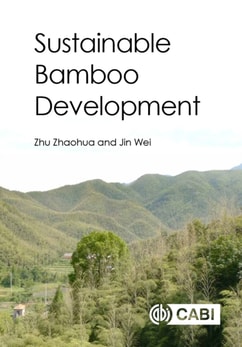
This book presents over 40 cases of bamboo development across 22 major bamboo-industry countries and explores the knowledge gained from their successes and failures.
This book presents over 40 cases of bamboo development across 22 major bamboo-industry countries and explores the knowledge gained from their successes and failures.
This is the narrative of a harpooner in the whale-ship Charles W Morgan, whose four-year voyage in 1849-1853 took him from New Bedford, Massachusetts, to the South Pacific and on around the world.
Lancashire Mining Disasters chronicles the effects, death and grief of the local ming communities in Lancashire, through colliery accidents and explosions from the early 1830s through to 1910.