Traditional narratives of capitalist change often rely on the myth of the willful entrepreneur from the global North who transforms the economy and delivers modernity-for good or ill-to the rest of the world.
For the first 150 years of their existence, "e;natural foods"e; were consumed primarily by body builders, hippies, religious sects, and believers in nature cure.
While there is enormous public interest in biodiversity, food sourcing, and sustainable agriculture, romantic attachments to heirloom seeds and family farms have provoked misleading fantasies of an unrecoverable agrarian past.
Revised and updated, this second edition of Cathodic Protection of Steel in Concrete and Masonry covers both reinforced concrete and masonry structures, describes in detail the overall design factors involved in cathodic protection (CP), and also provides a theoretical basis for why it works.
Adopting a multi-disciplinary approach to the practice of achieving a more acceptable acoustic environment, this book draws on the same basic principles to cover both the outdoors and indoor space.
Offers insights on currently-used concrete formwork structures, from classification, system components and materials' properties to selection and construction requirements and procedures, while considering product quality, labour, safety and economic factors throughout.
Since the 1980s in Europe high-speed rail has emerged rapidly as a means of transportation, and in the upcoming years many more tunnel, bridge and other infrastructure projects will be developed across the continent.
To obtain data about the stiffness and bearing capacity of a foundation pile, the Rapid Load Test could be an effective and economic alternative for a static load test.
This book provides a comprehensive analysis of the exploitation process of shovel-truck systems using modelling, analysis and calculations following specific procedures:- analyzing the reliability and accessibility of shovels- discussing the functioning of a truck-repair shop system- reliability of trucks- existence of haulers reserve- repair shop
Tailings and Mine Waste08 contains papers from the twelfth annual Tailings and Mine Waste Conference, held by Colorado State University of Fort Collins, Colorado.
An exclusive collection of papers introducing current and frontier technologies of special significance to the planning, design, construction, and maintenance of civil infrastructures.
Proper treatment of structural behavior under severe loading - such as the performance of a high-rise building during an earthquake - relies heavily on the use of probability-based analysis and decision-making tools.
Communication of risks within a transparent and accountable framework is essential in view of increasing mobility and the complexity of the modern society and the field of geotechnical engineering does not form an exception.
Over the last twenty years we have witnessed a revolution in ground stabilization in both underground and above-ground applications, thanks largely to the widespread adoption of shotcrete as a medium for support.
Mineral Beneficiation or ore dressing of run-of-mine ore is an upgrading process to achieve uniform quality, size and maximum tenor ore through the removal of less valuable material.
A comprehensive and illustrated desk reference with terms, definitions, explanations, abbreviations, trade names, quantifications, units and symbols used in rock mechanics, drilling and blasting.
COST is an intergovernmental framework for European Cooperation in Science and Technology, allowing the coordination of nationally-funded research on a European level.
Tailings and Mine Waste '10 contains the contributions from the 14th annual Tailings and Mine Waste Conference, held by Colorado State University of Fort Collins, Colorado in conjunction with the University of Alberta and the University of British Columbia.
This book gives an overview of the world,s literature on analytical data and theoretical concepts of the regularities of rare earth elements (REE) in ultramafic and mafic rocks of different chemical and mineral compositions , mantle restites (including those composing mantle xenoliths in alkali basaltoids), highly magnesium hypabyssal roc
Incorporating Sustainable Practice in Mechanics of Structures and Materials is a collection of peer-reviewed papers presented at the 21st Australasian Conference on the Mechanics of Structures and Materials (ACMSM21, Victoria, University, Melbourne, Australia, 7th , 10th of December 2010).
Use of the NEC4 suite of contracts continues to grow and the new edition of Understanding the NEC4 Term Service Contract includes significant additional materials and changes since its original publication immediately after the initial release of the NEC4 contracts.
Occupational Safety and Hygiene presents selected papers from the International Symposium on Occupational Safety and Hygiene , SHO2013 (Guimar,, Portugal, 14-15 February 2013), which was organized by the Portuguese Society for Occupational Safety and Hygiene (SPOSHO).
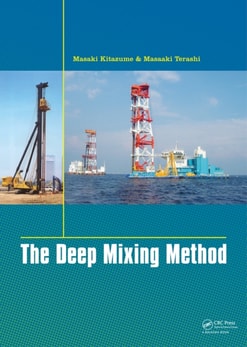
The Deep Mixing Method (DMM), a deep in-situ soil stabilization technique using cement and/or lime as a stabilizing agent, was developed in Japan and in the Nordic countries independently in the 1970s.
Blasting practices in mines have undergone many changes in the recent past and continue to be honed and reconfigured to meet the demands of today,s mining needs.
There is considerable scope for improving the outcome of any blasting operation through basic understanding and application of the principles of blasting science and technology.
Fragmentation characteristics influence mucking productivity, crusher throughput and energy consumption, plant efficiency, yield and recovery, or the price itself of the end product in the case of industrial minerals and aggregates.
This book examines the international causes of hunger and malnutrition and reveals how critical elements of the global economy heighten food insecurity in the developing world.
The TransNav 2011 Symposium held at the Gdynia Maritime University, Poland in June 2011 has brought together a wide range of participants from all over the world.
A Rapid Load Test (RLT), developed to determine the initial stiffness and bearing capacity, is an economical and practical alternative to a Static Load Test (SLT).
The book provides a guide to rock engineers and engineering geologists as to how to perform laboratory tests and how to use the existing data for solving practical rock engineering design and operating problems.