This volume surveys the complex relationships between economic activity and electricity use, showing how trends in the growth of electricity demand may be affected by changes in the economy, and examining the connection between the use of electrotechnologies and productivity.
The announcement of a hydrogen fuel initiative in the President's 2003 State of the Union speech substantially increased interest in the potential for hydrogen to play a major role in the nation's long-term energy future.
Used historically in urban areas but now mainly in institutions, district heating and cooling systemsefficient centralized energy systems that may use energy sources other than petroleumhave gained renewed interest.
This book examines the state of development and research progress of technologies being considered for a new generation of vehicles that could achieve up to three times the fuel economy of comparable 1994 family sedans.
Vision 21 reviews the goals of the Department of Energy's (DOE) Vision 21 Program (DOE's vision for the future of coal-based power generation) and to recommend systems and approaches for moving from concept to reality.
As national priorities have been focused both on reducing fuel consumption and improving air quality, attention has increased on reducing emissions from many types of vehicles, including light-duty, medium-duty, and heavy-duty diesel-powered vehicles.
The Department of Energy (DOE) is engaged in numerous multimillion- and even multibillion-dollar projects that are one of a kind or first of a kind and require cutting-edge technology.
In order to achieve the Army's envisioned Objective Force related to deployability, transportability, and mobility, the Committee on Lightweight Materials for the 21st Century Army Trucks was asked to identify research and technology development opportunities related to the introduction of new lightweight structural materials for light medium and heavy Army trucks.
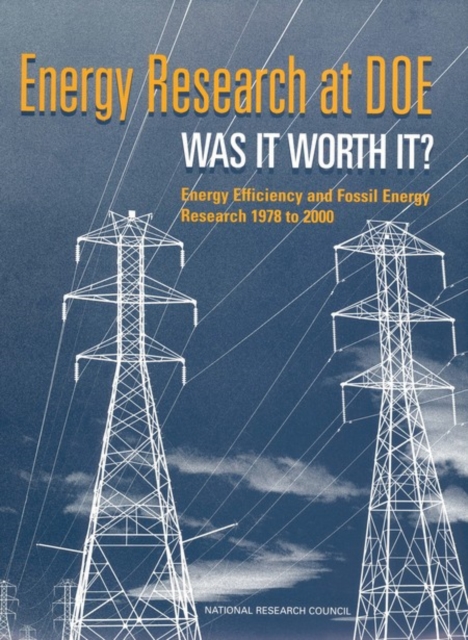
In legislation appropriating funds for DOE's fiscal year (FY) 2000 energy RD budget, the House Interior Appropriations Subcommittee directed an evaluation of the benefits that have accrued to the nation from the RD conducted since 1978 in DOE's energy efficiency and fossil energy programs.
The USGCRP's Carbon Cycle Working Group asked the National Research Council's Committee on the Human Dimensions of Global Change to hold a workshop on Human Interactions with the Carbon Cycle.
If the United States is to sustain its economic prosperity, quality of life, and global competitiveness, it must continue to have an abundance of secure, reliable, and affordable energy resources.
The 21st Century Truck Partnership (21CTP) works to reduce fuel consumption and emissions, increase heavy-duty vehicle safety, and support research, development, and demonstration to initiate commercially viable products and systems.
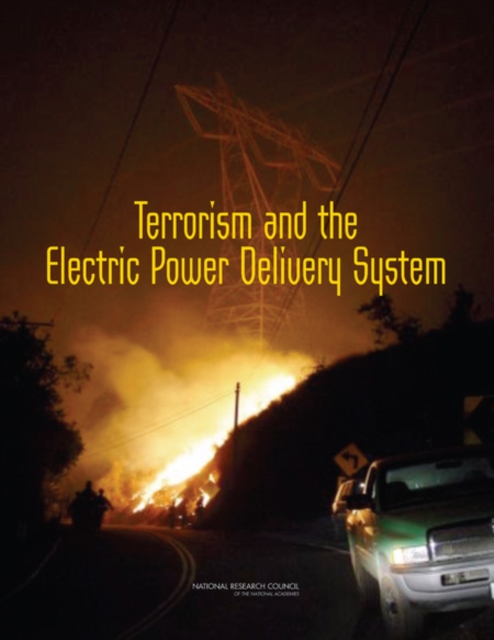
The Resilience of the Electric Power Delivery System in Response to Terrorism and Natural Disasters is the summary of a workshop convened in February 2013 as a follow-up to the release of the National Research Council report Terrorism and the Electric Power Delivery System.
The material that sustains the nuclear reactions that produce energy can also be used to make nuclear weaponsand therefore, the development of nuclear energy is one of multiple pathways to proliferation for a non-nuclear weapon state.
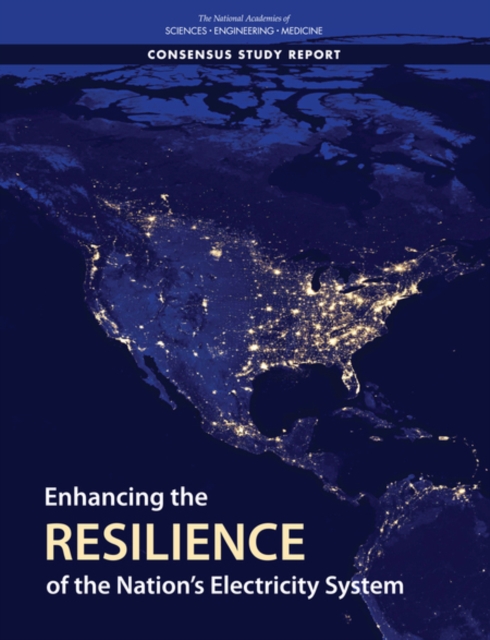
The electric power delivery system that carries electricity from large central generators to customers could be severely damaged by a small number of well-informed attackers.
A "e;sustainable society,"e; according to one definition, "e;is one that can persist over generations; one that is far-seeing enough, flexible enough, and wise enough not to undermine either its physical or its social system of support.
The mission of Department of Homeland Security Bioterrorism Risk Assessment: A Call for Change, the book published in December 2008, is to independently and scientifically review the methodology that led to the 2006 Department of Homeland Security report, Bioterrorism Risk Assessment (BTRA) and provide a foundation for future updates.
In response to HUD's request, the NRC assembled a panel of experts, the Committee for Oversight and Assessment of the Partnership for Advancing Technology in Housing, under the auspices of the Board on Infrastructure and the Constructed Environment.
As national priorities have been focused both on reducing fuel consumption and improving air quality, attention has increased on reducing emissions from many types of vehicles, including light-duty, medium-duty, and heavy-duty diesel-powered vehicles.
The 21st Century Truck Partnership (21CTP), a cooperative research and development partnership formed by four federal agencies with 15 industrial partners, was launched in the year 2000 with high hopes that it would dramatically advance the technologies used in trucks and buses, yielding a cleaner, safer, more efficient generation of vehicles.
The public-private partnership to develop vehicles that require less petroleum-based fuel and emit fewer greenhouse gases should continue to include fuel cells and other hydrogen technologies in its research and development portfolio.
In legislation appropriating funds for DOE's fiscal year (FY) 2000 energy RD budget, the House Interior Appropriations Subcommittee directed an evaluation of the benefits that have accrued to the nation from the RD conducted since 1978 in DOE's energy efficiency and fossil energy programs.
Vision 21 reviews the goals of the Department of Energy's (DOE) Vision 21 Program (DOE's vision for the future of coal-based power generation) and to recommend systems and approaches for moving from concept to reality.
The Department of Energy (DOE) is engaged in numerous multimillion- and even multibillion-dollar projects that are one of a kind or first of a kind and require cutting-edge technology.
The USGCRP's Carbon Cycle Working Group asked the National Research Council's Committee on the Human Dimensions of Global Change to hold a workshop on Human Interactions with the Carbon Cycle.
In order to achieve the Army's envisioned Objective Force related to deployability, transportability, and mobility, the Committee on Lightweight Materials for the 21st Century Army Trucks was asked to identify research and technology development opportunities related to the introduction of new lightweight structural materials for light medium and heavy Army trucks.
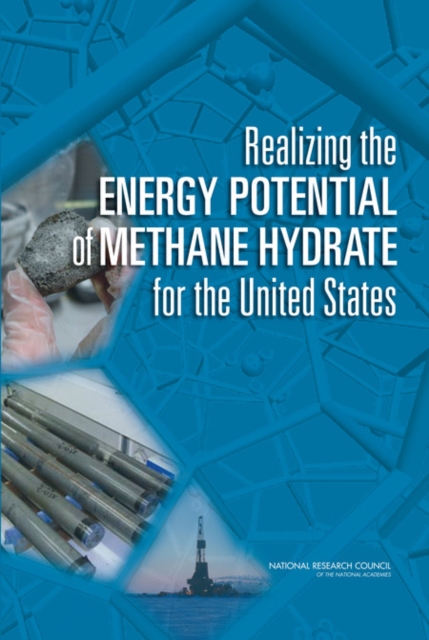
Natural gas, composed mostly of methane, is the cleanest of all the fossil fuels, emitting 25-50% less carbon dioxide than either oil or coal for each unit of energy produced.
A component in the America's Energy Future study, Electricity from Renewable Resources examines the technical potential for electric power generation with alternative sources such as wind, solar-photovoltaic, geothermal, solar-thermal, hydroelectric, and other renewable sources.