Tourism as a Resource-based Industry presents the conceptual framework of the Norwegian economic geographer Sondre Svalastog and functions as a practical tool for analyzing and identifying resources when working towards a more sustainable tourism industry.
Tourism as a Resource-based Industry presents the conceptual framework of the Norwegian economic geographer Sondre Svalastog and functions as a practical tool for analyzing and identifying resources when working towards a more sustainable tourism industry.
The hospitality industry relies on the sourcing and development of talent to deliver excellent customer experiences and interactions in a 24/7 environment.
The services sector including financial services, telecommunications, transportation, tourism, and professional services has become critical to the continued economic dynamism in the Americas.
Events and Economic Development explores the economic impact and developmental implications of designing, planning, and delivering major events - from cultural events like the Notting Hill Carnival and Day of the Dead, to sporting events like the Olympics to the Super Bowl.
Employer Branding (EB) aims to assist businesses in becoming the employer of choice for potential employees, and provides hands-on tools in attracting, developing and retaining people.
Employer Branding (EB) aims to assist businesses in becoming the employer of choice for potential employees, and provides hands-on tools in attracting, developing and retaining people.
Smart Technologies are revolutionizing tourism, as they promise to change the way tourists behave and how companies interact with them and generate profits.
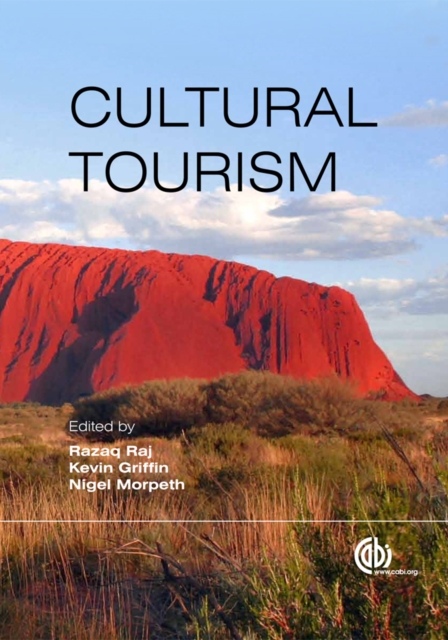
With contributions from international experts this book provides a broad discussion of cultural tourism as a concept and the way it is implemented in diverse regions around the world.
Tourism has huge significance as a global economic and social phenomenon, and given the growing reliance on the industry by service-dependent economies around the world, the lack of focus on tourism planning and development in South Asia is surprising.
This book focuses on the experiences of tourists visiting nature-based destinations, exploring current knowledge and providing insights into conceptual issues through the use of empirical evidence from five continents.
This book focuses on the experiences of tourists visiting nature-based destinations, exploring current knowledge and providing insights into conceptual issues through the use of empirical evidence from five continents.
Degrowth in tourism is the voluntary shift to rebuild destinations and local economies in a way in which consumption, production and the exploitation of resources are minimal.
Degrowth in tourism is the voluntary shift to rebuild destinations and local economies in a way in which consumption, production and the exploitation of resources are minimal.
The environmental quality and popularity of any tourist destination is the outcome of sustained development, shaped by the socio-economic and physical dimensions of the local environment.
The Asia-Pacific area is notable as one of the fastest growing tourism regions and not surprisingly, tourism in this region has become the major driver of global tourism in general.
*The first book to cover events management from a research angle*Includes a number of case studies to provide a well-rounded approach to the subject*Addresses key concepts, theories and discussions around subjects such as consumer behaviour, authenticity and new technology
Nautical tourism encompasses aspects of marine tourism such as sailing, yachting, cruising and diving, as well as harbour-side developments, coastal water sports such as jet skiing, boat shows, port tours, and marine heritage destinations.
There is an ever growing importance of events in modern society and until now existing literature on events has been dominated by the economic perspective.