Epidemiology has long played a critical role in investigating outbreaks of foodborne illness and in identifying the microbial pathogens associated with such illness.
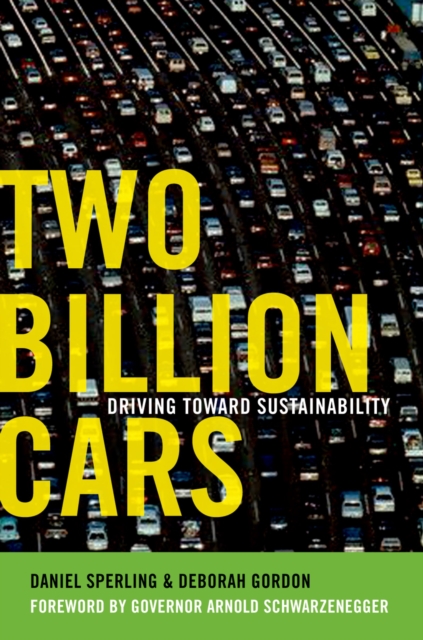
Today there are over a billion vehicles in the world, and within twenty years, the number will double, largely a consequence of China's and India's explosive growth.
Autos and Progress reinterprets twentieth-century Brazilian history through automobiles, using them as a window for understanding the nation's struggle for modernity in the face of its massive geographical size, weak central government, and dependence on agricultural exports.
Winner of the 2017 Quality of Communication Award presented by The Agricultural and Applied Economics Association As the importance of food and nutrition becomes more widely recognized by practitioners and researchers in the health sciences, one persisting gap in the knowledge base remains: what are the economic factors that influence our food and our health?
Winner of the 2017 Quality of Communication Award presented by The Agricultural and Applied Economics Association As the importance of food and nutrition becomes more widely recognized by practitioners and researchers in the health sciences, one persisting gap in the knowledge base remains: what are the economic factors that influence our food and our health?
In this book, Ulrich Krotz draws from two theoretical approaches--social constructivism and historical institutionalism--to reframe our understanding of how international relationships evolve.
This engrossing history of an extraordinary company, Corning Incorporated, chronicles how one of the oldest business enterprises in the world maintained its place as a global leader in technology for over 150 years.
In this compelling, readable narrative, Joe Sherman explores virtually every aspect of the Saturn project, America's biggest and most publicized industrial success of the last decade.
With more emphasis being placed on the cost and quality of new products and on reducing the lead time to develop them, attention is turning to the increasingly important topic of design for manufacturing (DFM).
Built by industrialists whose early businesses contributed to the escalation of the Industrial Revolution, company towns flourished in countries that embraced capitalism and open-market trading.
This book is an economic, historical, and sociological examination of rural textile industries in the Lower Rhineland beginning in the sixteenth century, culminating with the age of factory organization in the early 1800s.
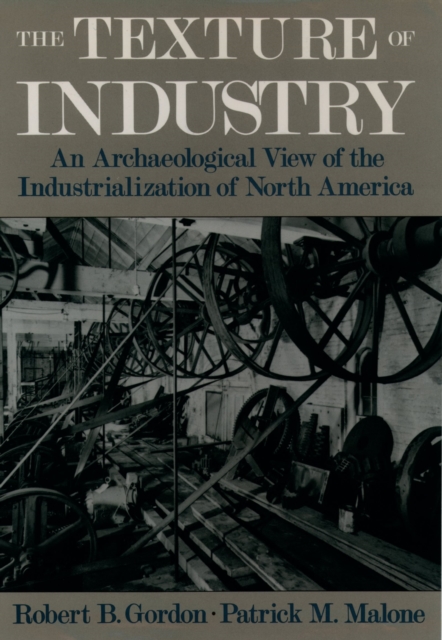
While historians have given ample attention to stories of entrepreneurship, invention, and labor conflict, they have told us little about actual work-places and how people worked.
The proliferation of lawsuits against the tobacco industry has had profound implications for American health policy, tort law, civil law, and welfare and social policy.
The fact that good manufacturing practice (GMP) audits in the pharmaceutical and biotechnology industries have to be evaluated, and with very limited resources, has created a gap in this field.
Many middle-income countries (MICs) that saw rapid growth in the 1990s and 2000s have been facing the danger of remaining in the 'middle-income trap' unless they shift from labour-intensive, low value-added production to higher value-added activities that require more advanced skills.
Many middle-income countries (MICs) that saw rapid growth in the 1990s and 2000s have been facing the danger of remaining in the 'middle-income trap' unless they shift from labour-intensive, low value-added production to higher value-added activities that require more advanced skills.
The book provides a critical analysis of electronic alternatives to documents used in the international sale of goods carried by sea, including invoices, bills of lading, certificates of insurance, as well as other documentation required under documentary credits, and payment processing arrangements.
The book provides a critical analysis of electronic alternatives to documents used in the international sale of goods carried by sea, including invoices, bills of lading, certificates of insurance, as well as other documentation required under documentary credits, and payment processing arrangements.
Carriage of Goods by Sea provides an extensive comparative analysis of the carriage of goods by sea, examining the principles, regulation, responsibilities, obligations, and immunities within this area of English law, and other common law jurisdictions, in a single volume.
Carriage of Goods by Sea provides an extensive comparative analysis of the carriage of goods by sea, examining the principles, regulation, responsibilities, obligations, and immunities within this area of English law, and other common law jurisdictions, in a single volume.
Edith Penrose was a remarkable woman and distinguished scholar who lived through, and witnessed at first hand, many of the major events of the 20th century; the great depression in the US; the rise of Nazism in Europe; the second world war when she worked as a special adviser to the US Ambassador in London; post-war reconstruction, assisting Eleanor Roosevelt with the drafting of the Universal Declaration of Human Rights; the McCarthy era; and the oil crisis of the 1970s.
From prompting a transition from hunter-gatherer to an agrarian lifestyle in ancient Mesopotamia to bankrolling Britain's imperialist conquests, strategic taxation and the regulation of beer has played a pivotal role throughout history.
From prompting a transition from hunter-gatherer to an agrarian lifestyle in ancient Mesopotamia to bankrolling Britain's imperialist conquests, strategic taxation and the regulation of beer has played a pivotal role throughout history.
This book examines how firms adapt to the pressures of increasing international competition by testing the arguments on 'strategy specialization' proposed in the competitiveness literature in general, and by contributors to the 'varieties of capitalism' debate in particular.