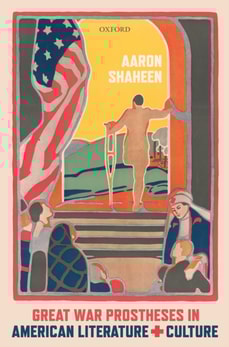
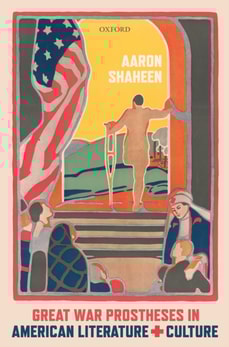
Drawing on rehabilitation publications, novels by both famous and obscure American writers, and even the prosthetic masks of a classically trained sculptor, Great War Prostheses in American Literature and Culture addresses the ways in which prosthetic devices were designed, promoted, and depicted in America in the years during and after the First World War.
Drawing on rehabilitation publications, novels by both famous and obscure American writers, and even the prosthetic masks of a classically trained sculptor, Great War Prostheses in American Literature and Culture addresses the ways in which prosthetic devices were designed, promoted, and depicted in America in the years during and after the First World War.
In A Song for Summer, bestselling award-winner Eva Ibbotson propels you into idyllic beautiful Austria and a love story set in the shadow of gathering war.
In the immediate aftermath of the armistice that ended the First World War, the Allied nations of Britain, France, and Italy agreed to put the fallen German Emperor Kaiser Wilhelm II on trial, in what would be the first ever international criminal tribunal.
In the immediate aftermath of the armistice that ended the First World War, the Allied nations of Britain, France, and Italy agreed to put the fallen German Emperor Kaiser Wilhelm II on trial, in what would be the first ever international criminal tribunal.
The War Guilt Problem and the Ligue des droits de l'homme is a significant new volume from Norman Ingram, addressing the history of the Ligue des droits de l'homme (LDH), an organisation founded in 1898 at the height of the Dreyfus Affair and which lay at the very centre of French Republican politics in the era of the two world wars.
The War Guilt Problem and the Ligue des droits de l'homme is a significant new volume from Norman Ingram, addressing the history of the Ligue des droits de l'homme (LDH), an organisation founded in 1898 at the height of the Dreyfus Affair and which lay at the very centre of French Republican politics in the era of the two world wars.
The two decades between the first and second world wars saw the emergence of nuclear physics as the dominant field of experimental and theoretical physics, owing to the work of an international cast of gifted physicists.
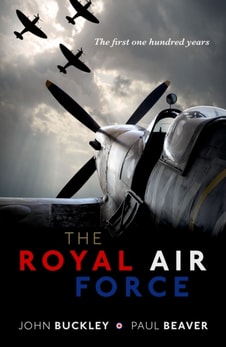
Aerial warfare which has dominated western war-making for over 100 years, and despite regular announcements of its demise, it shows no sign of becoming obsolete.
Aerial warfare which has dominated western war-making for over 100 years, and despite regular announcements of its demise, it shows no sign of becoming obsolete.
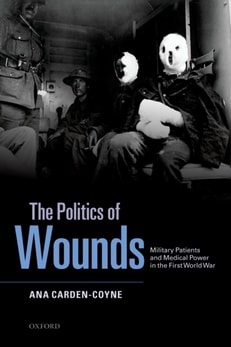
The Politics of Wounds explores military patients' experiences of frontline medical evacuation, war surgery, and the social world of military hospitals during the First World War.
Oxford Textual Perspectives is a new series of informative and provocative studies focused upon literary texts (conceived of in the broadest sense of that term) and the technologies, cultures and communities that produce, inform, and receive them.
The tragic slaughter of the trenches is imprinted on modern memory; but it is more difficult to grasp the wider extent and significance of the First World War.
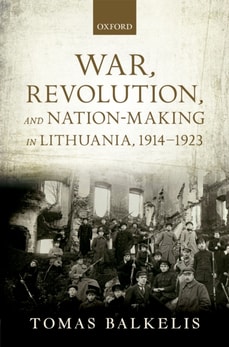
In this book, Tomas Balkelis explores how the Lithuanian state was created and shaped by the Great War from its onset in 1914 to the last waves of violence in 1923.
The First World War produced an extraordinary flowering of poetic talent, poets whose words commemorate the conflict more personally and as enduringly as monuments in stone.
The First World War produced an extraordinary flowering of poetic talent, poets whose words commemorate the conflict more personally and as enduringly as monuments in stone.
The story of the making of Adolf Hitler that we are all familiar with is the one Hitler himself wove in his 1924 trial, and then expanded upon in Mein Kampf.
The story of the making of Adolf Hitler that we are all familiar with is the one Hitler himself wove in his 1924 trial, and then expanded upon in Mein Kampf.
The First World War, now a century ago, still shapes the world in which we live, and its legacy lives on, in poetry, in prose, in collective memory and political culture.