Bringing together prominent scholars, this book shows how 21st-century research and theory can inform everyday instructional practices in early childhood classrooms (PreK-3).
Bringing together prominent scholars, this book shows how 21st-century research and theory can inform everyday instructional practices in early childhood classrooms (PreK-3).
Helping teachers move beyond fluency as measured by speed alone, this book focuses on building the skills that students need to read accurately, meaningfully, and expressively--the essential components of reading comprehension.
An acclaimed reference that fills a significant gap in the literature, this volume examines the linkages between spoken and written language development, both typical and atypical.
An acclaimed reference that fills a significant gap in the literature, this volume examines the linkages between spoken and written language development, both typical and atypical.
Thorough and accessible, this professional resource and text shows how the latest research in adolescent literacy can be translated into effective practice in middle and high school classrooms.
In this indispensable work, prominent authorities review the latest research on all aspects of ELL instruction (K12) and identify what works for today's students and schools.
Hundreds of thousands of teachers have used this highly practical guide to help K12 students enlarge their vocabulary and get involved in noticing, understanding, and using new words.
From leading experts, this indispensable resource presents a practical model for conducting reading assessments for screening, diagnosis, and progress monitoring in each of the three tiers of response to intervention (RTI).
Hundreds of thousands of teachers have used this highly practical guide to help K12 students enlarge their vocabulary and get involved in noticing, understanding, and using new words.
This highly regarded work brings together prominent authorities on vocabulary teaching and learning to provide a comprehensive yet concise guide to effective instruction.
Offering fresh alternatives to common instructional practices that fail to get results, this accessible, highly practical guide highlights ways to motivate middle school students while enhancing content-area learning.
From leading authorities in both adolescent literacy and content-area teaching, this book addresses the particular challenges of literacy learning in each of the major academic disciplines.
All too often, literacy assessments are given only for accountability purposes and fail to be seen as valuable resources for planning and differentiating instruction.
Boost grades with quick reference support where students, parents and teachers can easily find answers related to the specific core standards for English Language Arts.
Boost grades with quick reference support where students, parents and teachers can easily find answers related to the specific core standards for English Language Arts.
Boost grades with quick reference support where students, parents and teachers can easily find answers related to the specific core standards for English Language Arts.
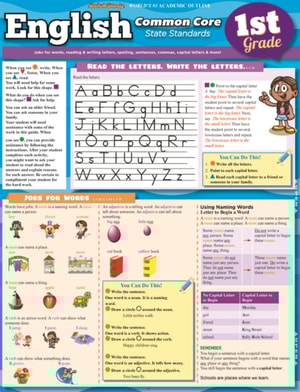
Parents and teachers can use this laminated 6-page guide with their kindergartener to hit specific learning requirements of The Common Core State Standards for English Language Arts.
BarCharts knows that having strong vocabulary knowledge and writing in-depth answers to essay questions are just some of the ways the AP English exam can be mastered; our up-to-date, 3-panel guide can give students the tools they need in order to succeed!
Students, parents and teachers can easily find answers related to the specific requirements of The Common Core State Standards for English Language Arts.
Students, parents and teachers can easily find answers related to the specific requirements of The Common Core State Standards for English Language Arts.
This collection of articles on the teaching of reading pulls together some of the bestand most clicked-onarticles on reading that Educational Leadership has published in the past few years from more than a dozen of the most respected experts in the field, including Richard L.
This collection of articles on the teaching of reading pulls together some of the bestand most clicked-onarticles on reading that Educational Leadership has published in the past few years from more than a dozen of the most respected experts in the field, including Richard L.
Handwriting analysis, or graphology, is the science involved in producing a personality profile of the writer by examining the characteristics, traits and strokes of an individual's handwriting.
A Step by Step Guide on how to get the most of your Kindle HD 8 10 and all other devices *Supports all Kindle Fire devices* If not the best feature of the Kindle Fire Stick is the ability to jailbreak them.
The definitive practitioner resource and text for developing excellence as a PreK12 literacy/reading specialist is now updated to reflect key changes in the field.
A user-friendly, concept-first approach to Middle School ELA that helps you improve your skills quickly and easilyMust Know Middle School ELA provides a fresh approach to learning.
This successful guide--now in a revised and expanded second edition--gives teachers effective strategies to support adolescents development of relevant literacy skills in specific disciplines.
IQ and psychometric tests are increasingly used in recruitment and selection procedures by those companies who want to ensure they employ workers of the highest calibre.
An aptitude test is designed to measure the potential for achievement in an individual, whilst an IQ test is a standardized test designed to measure intelligence.
Aptitude tests assess a person's abilities or intelligence, often as part of an IQ test, whilst personality questionnaires help to reveal an individual's characteristics or personality traits.
Tens of thousands of teachers have used this skillfully crafted book to build childrens word knowledge with engaging categorization activities organized by spelling stages.
This indispensable teacher resource and course text, now revised and updated, addresses the whats, whys, and how-tos of incorporating outstanding childrens literature into the K8 reading program.