This book is a comparative legal study of the private and public art collections in various states of the world, covering the most important issues that usually arise and focusing on the differences and the similarities of the national laws in the treatment of those issues.
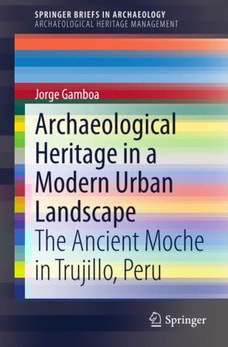
Archaeological Heritage in a Modern Urban Landscape evaluates issues about the preservation, social role and management of archaeological sites in the Trujillo area, north coast of Peru, specifically those of the Moche culture (100-800 AD).
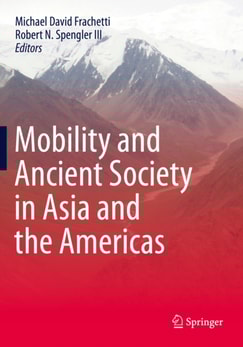
Mobility and Ancient Society in Asia and the Americas contains contributions by leading international scholars concerning the character, timing, and geography of regional migrations that led to the dispersal of human societies from Inner and northeast Asia to the New World in the Upper Pleistocene (ca.
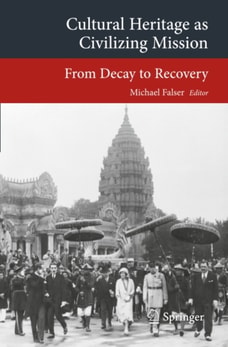
This book investigates the role of cultural heritage as a constitutive dimension of different civilizing missions from the colonial era to the present.
This book seeks to communicate to both a global and local audience, the key attributes of pre-industrial African metallurgy such as technological variation across space and time, methods of mining and extractive metallurgy and the fabrication of metal objects.
Holocaust Archaeologies: Approaches and Future Directions aims to move archaeological research concerning the Holocaust forward through a discussion of the variety of the political, social, ethical and religious issues that surround investigations of this period and by considering how to address them.
Field practice in archaeology varies greatly throughout the world, mainly because archaeological sites survive in very different ways in different counties.
This book will suggest new agendas for identity and heritage studies by means of presenting contentious issues facing archaeology and heritage management in a globalized world.
This volume examines the processes and patterns of Araucanian cultural development and resistance to foreign influences and control through the combined study of historical and ethnographic records complemented by archaeological investigation in south-central Chile.
This book provides a comprehensive, up-to-date overview on the most pressing issues in the conservation and management of archaeological, architectural, and urban landscapes.
This book focuses on the issues of resilience and variability of desert pastoralists, explicitly challenging a set of traditional topics of the discourse around pastoralism in arid lands of the Old World.
Informed by systems thinking, this book explores new perspectives in which culture and management are harmoniously integrated and cultural heritage is interpreted both as an essential part of the social and economic context and as an expression of community identity.
At the Mogao Grottoes, a World Heritage site near Dunhuang city in Gansu Province, visitor numbers have increased inexorably since 1979 when the site opened.
In this book, participation in the arts is analyzed as a substantial contributory factor to European citizenship, and also as a tool for improving individual and societal wellbeing through educational and inclusive policies.
This book is designed to act as a readily accessible guide to different methods and techniques of use-wear and residue analysis and therefore includes a wide range of different and complementary essential topics: experimental tests, observation and record methods and techniques and the interpretation of a diversity of tool types and worked raw materials.
The volume contributes to disrupt the old grand narrative of cultural contact and colonialism in Spanish and Portuguese America in a wide and complete sense.
This volume addresses the directions that studies of archaeological human remains have taken in a number of different countries, where attitudes range from widespread support to prohibition.
With a long history and deep connection to the Earth's resources, indigenous peoples have an intimate understanding and ability to observe the impacts linked to climate change.
This well-illustrated book offers an up-to-date synthesis of the field of historic preservation, cast as a social campaign concerned with the condition, treatment and use of the legacy of existing properties in the United States.
The Bible's grand narrative about Israel's Exodus from Egypt is central to Biblical religion, Jewish, Christian, and Muslim identity and the formation of the academic disciplines studying the ancient Near East.
This book explores the way in which the legacy of the German occupation of the Channel Islands has been turned into heritage (or, conversely, neglected) over the last 70 years.
This volume provides an up-to-date and in-depth summary and analysis of the political practices of pre-Columbian communities of the Araucanians or Mapuche of south-central Chile and adjacent regions.
This book examines methods for linking osteo-archaeological data with historical and environmental sources to shed light on the living conditions of past populations.
This manual pulls together-and illustrates with interesting case studies-the variety of specialized and generalized archaeological research strategies that yield new insights into science.
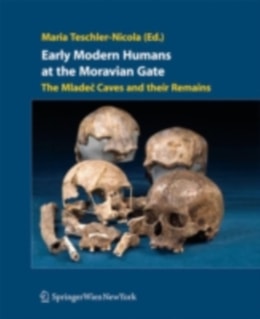
This beautifully illustrated monograph addresses - for the first time - the complete assemblage of the Mladec caves finds, including the human cranial, post cranial, teeth and jaw fragments of several individuals as well as faunal remains and archaeological objects.
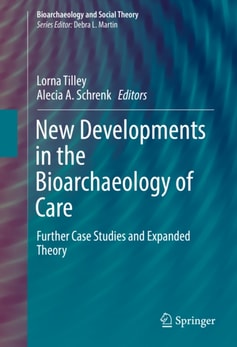
New Developments in the Bioarchaeology of Care evaluates, refines and expands existing concepts and practices in the developing field of bioarchaeological research into health-related care provision in the past.
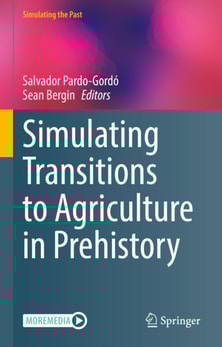
This book highlights new and innovative approaches to archaeological research using computational modeling while focusing on the Neolithic transition around the world.
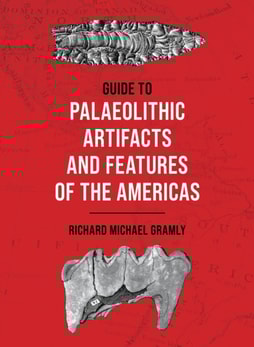
Guide to Palaeolithic Artifacts and Features of the Americas is the go-to reference for stone, bone, antler, ivory, and wooden artifacts of the Palaeolithic era in the Americas.
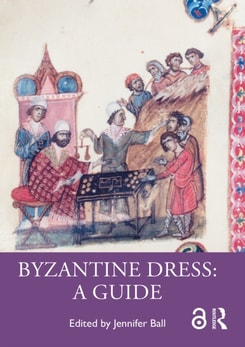
This book offers approaches to the study of Byzantine dress of elites and non-elites, in sacred and secular modes, from the beginning of the Empire in the fourth century until the fifteenth century.
Guide to Palaeolithic Artifacts and Features of the Americas is the go-to reference for stone, bone, antler, ivory, and wooden artifacts of the Palaeolithic era in the Americas.