The volume of Springer Proceedings in Geoarchaeology and Archaeological Mineralogy contains selected papers presented at the 9th Geoarchaeology Conference, which took place during September 19-22, 2022, at the South Urals Federal Research Center, the Ural Branch of the Russian Academy of Sciences, Miass, Russia.
Through the lens of the fashion industry, Iva Petkova explores not only how institutionalized organizations react and adapt to the rise of start-up outsiders, but also how these outside "e;disruptors"e; seek to cultivate legitimacy and win influence.
This book provides a cross-disciplinary perspective on the degradation and deterioration of the cultural record encompassed by urban headstones located in parish churchyards.
This volume presents a collection of articles which offer different perspectives for archaeological pottery studies, regarding the understanding of pre-Hispanic social practices in Quebrada de Humahuaca, Argentina.
Sauropodomorpha Huene 1932 is one of the most successful groups of dinosaurs, including the most abundant and diverse herbivorous forms with a worldwide record, extending from the late Triassic to the late Cretaceous.
This unique text/reference reviews the key principles and techniques in conceptual modelling which are of relevance to specialists in the field of cultural heritage.
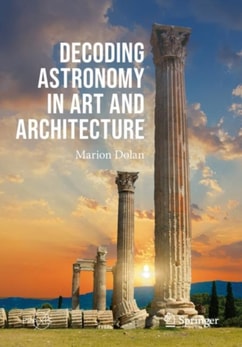
For centuries, our ancestors carefully observed the movements of the heavens and wove that astronomical knowledge into their city planning, architecture, mythology, paintings, sculpture, and poetry.
This two-volume set highlights the importance of Iberian shipbuilding in the centuries of the so-called first globalization (15th to 18th), in confluence with an unprecedented extension of ocean navigation and seafaring and a greater demand for natural resources (especially timber), mostly oak (Quercus spp.
This book addresses the application of Raman spectroscopic techniques to a range of diverse problems which arise in the study, conservation and restoration of artefacts and sites closely related to our cultural heritage as well as in authentication.
This book sets out the discussion on how cities can contribute solutions to some of the challenges the urbanised world is facing, such as the pressure of growing populations, mitigation of effects of, and adaptation to globally changing environmental, climate and public health conditions.
This book focusses on new technologies and multi-method research designs in the field of modern archaeology, which increasingly crosses academic boundaries to investigate past human-environmental relationships and to reconstruct palaeolandscapes.
Der spätantike habitus barbarus ist kein Phänomen, das nur mit dem Eindringen völkerwanderungszeitlicher Stämme mitsamt ihrer jeweils charakteristischen Kleidung in das römische Reich zu erklären wäre.
Completely revised and updated, this new edition provides a readable, beautifully illustrated journey through world cultures and the vibrant array of sky mythology, creation stories, models of the universe, temples and skyscrapers that each culture has created to celebrate and respond to the power of the night sky.
In der Frage, wie sich die Reformation auf den Alltag der damaligen Menschen, ihre Wahrnehmung und ihre Selbstrepräsentation ausgewirkt hat, wurden Gegenstände der materiellen Kultur bisher nur am Rande berücksichtigt.
This groundbreaking volume presents, for the first time in English, a broad historical review of the researches carried out over 170 years in the region of Lagoa Santa, Brazil, one of the most important archaeological regions in the Americas.
Previous volumes of Franz Kocher's series on Babylonian and Assyrian medical literature have provided autograph copies of cuneiform medical tablets with extensive indices listing all known parallel passages.
This book presents the integrated use of magnetometry and ground-penetrating radar geophysical mapping to understand the human presence within buried archaeological landscapes.
This book addresses a variety of topics within the growing discipline of Archaeoastronomy, focusing especially on Archaeoastronomy in Sicily and the Mediterranean and Cultural Astronomy.
This book addresses practical issues in connoisseurship and authentication, as well as the legal implications that arise when an artwork's authenticity is challenged.
As scholars have by now long contended, global neoliberalism and the violence associated with state restructuring provide key frameworks for understanding flows of people across national boundaries and, eventually, into the treacherous terrains of the United States borderlands.
A number of ritual texts have been handed down from the Hittite capital of Hattusha, written by authors from Kizzuwatna, a region in South-eastern Anatolia.
This book provides an extensive overview of the application of neutron characterization techniques in cultural heritage to a broad audience and will be of interest to both scientists and non-scientists in the field.
Sectarianism in Qumran: A Cross-Cultural Perspective explores the sectarian characteristics of the system of beliefs and laws of the two major Qumran sects of the Dead Sea Scrolls, the yahad and the Damascus Covenant, using theories of sectarianism and related topics in sociology, anthropology and the study of religion.