This volume contains contributions that consider new approaches to three areas: the documentation of rock art; its interpretation using indigenous knowledge; and the presentation of rock art.
Unlike most textbooks on heritage which discuss the creation of heritage as a cultural phenomenon or offer practical guides to heritage practices, Archaeology and Heritage takes a fresh approach by providing an introduction to themes in the field of heritage as it relates to the material legacy of our past.
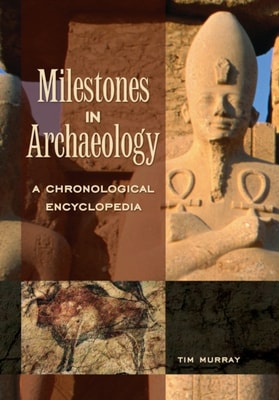
This engaging work uses key discoveries, events, people, techniques, and controversies to give the general reader a rich history of archaeology from its beginnings in the 16th century to the present.
Analytical Archaeometry describes this interesting and challenging field of research - on the border between natural sciences (chemistry, spectroscopy, biology, geology) and humanities (archaeology, (art-)history, conservation sciences).
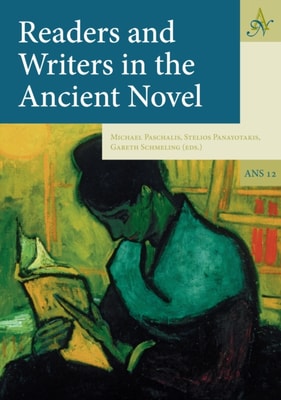
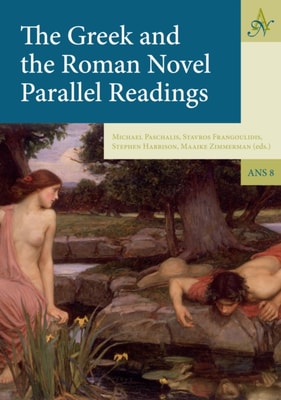
While nineteenth-century scholars debated whether the fragmentary Satyrica of Petronius should be regarded as a traditional or an original work in ancient literary history, twentieth-century Petronian scholarship tended to take for granted that the author was a unique innovator and his work a synthetic composition with respect to genre.
This sixth AN Supplementum, Lectiones Scrupulosae ('Scrupulous Rea¡dings'), is a Festschrift in honour of Maaike Zimmerman offered to her by a group of Apuleian scholars on the occasion of her sixty-fifth birthday.
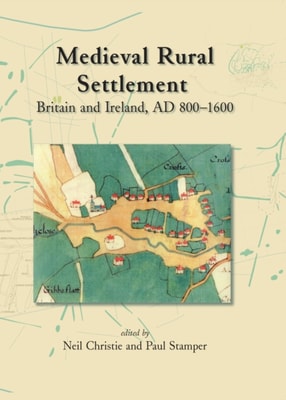
Medieval Rural Settlement: Britain and Ireland, AD 800-1600 is a major assessment and review of the origins, forms and evolutions of medieval rural settlement in Britain and Ireland across the period c.
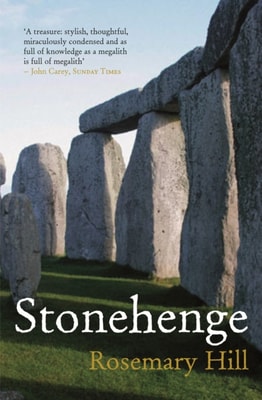
Stonehenge is woven into the earliest Arthurian legends and has been analysed by everyone from archaeologists, to town planners, to the Druids who have made it their spiritual home.
Heritage Science is emerging as a discipline that brings together chemists, physicists, microbiologists, conservation scientists, archaeologists and conservators.
In building up a scenario for the arrival on the shores of Alaska of speakers of languages related to Eskimo-Aleut with genetic roots deep within Sineria, this book touches upon a number of issues in contemporary historical linguistics and archaeology.
Human remains and society presents a groundbreaking account of the treatment and commemoration of dead bodies resulting from incidents of genocide and mass violence.
The volume is the first in nearly a decade to focus a wide range of scholarship on one of the most compelling periods in the antiquity of the Mediterranean and Near East.
The volume is the first in nearly a decade to focus a wide range of scholarship on one of the most compelling periods in the antiquity of the Mediterranean and Near East.
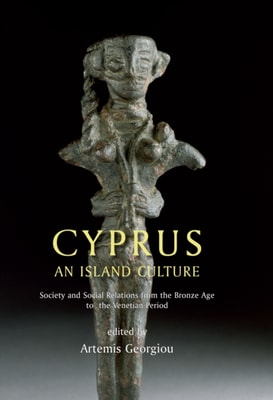
This volume, introduced by Edgar Peltenburg, presents the results of latest research by young scholars working on aspects of Cypriot archaeology from the Bronze Age to the Venetian period.
This volume, introduced by Edgar Peltenburg, presents the results of latest research by young scholars working on aspects of Cypriot archaeology from the Bronze Age to the Venetian period.
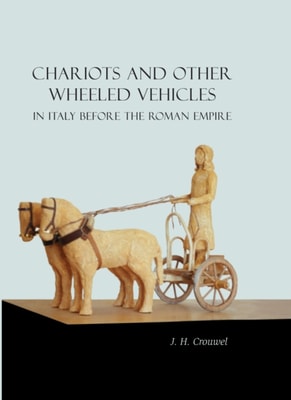
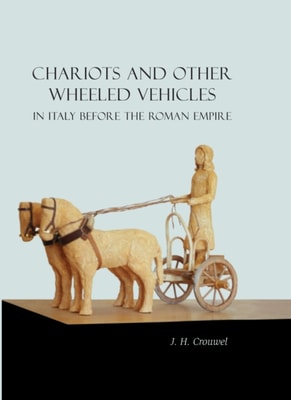
Chariots and Other Wheeled Vehicles in Italy before the Roman Empire presents evidence for transport by wheeled vehicle in Italy before the Roman Imperial period, the beginning of which is often thought to be marked by Augustuss conquest of Egypt in 30 BC.
Chariots and Other Wheeled Vehicles in Italy before the Roman Empire presents evidence for transport by wheeled vehicle in Italy before the Roman Imperial period, the beginning of which is often thought to be marked by Augustuss conquest of Egypt in 30 BC.
The Roman 'small town' of Ariconium in southern Herefordshire has long been known as an important iron production centre but has remained very poorly understood.
The Roman 'small town' of Ariconium in southern Herefordshire has long been known as an important iron production centre but has remained very poorly understood.
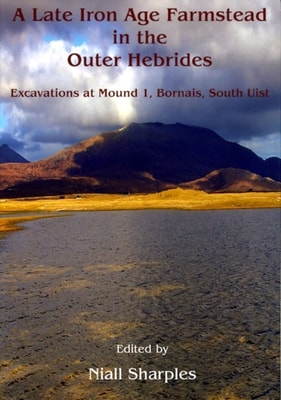
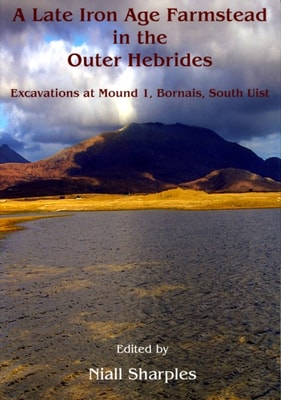
The settlement at Bornais consists of a complex of mounds which protrude from the relatively flat machair plain in the township of Bornais on the island of South Uist.
From about 5500 cal BC to soon after 5000 cal BC, the lifeways of the first farmers of central Europe, the LBK culture (Linearbandkeramik), are seen in distinctive practices of longhouse use, settlement forms, landscape choice, subsistence, material culture and mortuary rites.